Questions for ‘Looking for LUCA, everyone’s shared ancestor’
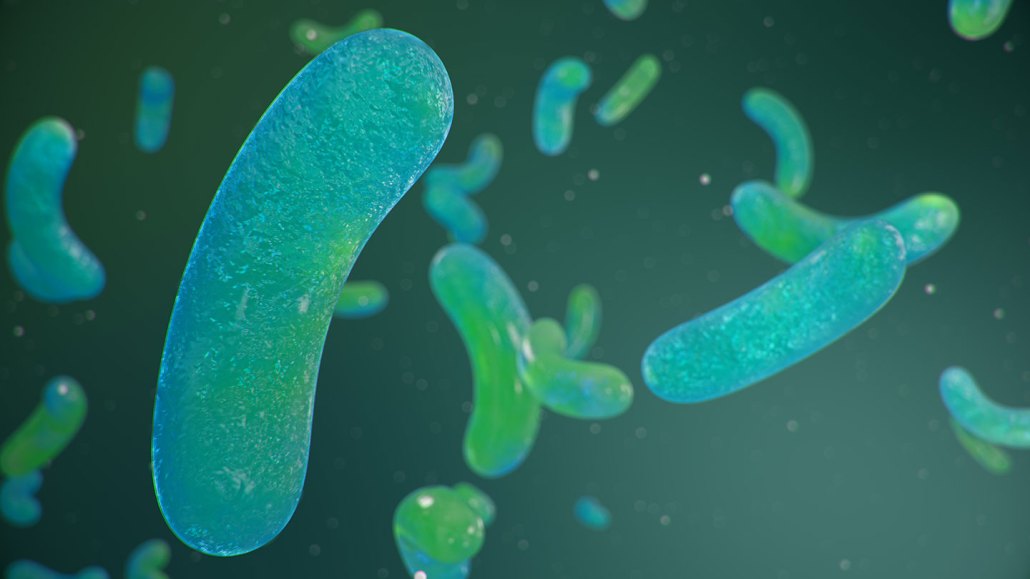
Grandma, is that you? Scientists who have tried to understand early life on Earth say LUCA, the last universal common ancestor, may have been a rod-shaped organism like this one.
Usis/iStock/Getty Images Plus
Share this:
- Share via email (Opens in new window) Email
- Share on Facebook (Opens in new window) Facebook
- Share on X (Opens in new window) X
- Share on Pinterest (Opens in new window) Pinterest
- Share on Reddit (Opens in new window) Reddit
- Share to Google Classroom (Opens in new window) Google Classroom
- Print (Opens in new window) Print
To accompany ‘Looking for LUCA, everyone’s shared ancestor’
SCIENCE
Before Reading:
- During the long process of evolution from the first life on Earth to the diversity of complex, multicellular life we see today, scientists believe that the development of new traits did not occur at a consistent rate. Instead, scientists believe there were times of explosive, exponential evolutionary changes separated by slower, more stable periods. Identify one evolutionary “success” — such as a new physical feature, a new capability or a new level of organization at the cellular level — that would allow life to diversify rapidly.
- In evolutionary biology, what does it mean for something to be a “common ancestor”? Give an example of a common ancestor to all humans. Now imagine a common ancestor to all life on Earth, not just humans. If this common ancestor existed, what might it have looked like? Draw a sketch to support your answer.
During Reading:
- What does LUCA stand for?
- Describe where scientists suspect LUCA probably lived.
- Besides bacteria, what is a second major category of single-celled organisms?
- Approximately how long ago did Earth form? Approximately how long ago did life begin?
- What physical characteristic sets eukaryotes apart from other living things on Earth?
- List three types of organisms that are eukaryotes.
- In what year did Charles Darwin propose the theory that all life arose from a common ancestor?
- What is the relationship between a “progenote” and a cell, according to Carl Woese?
- What is the role of ATP in living things?
- Write a definition for metabolism in your own words.
- Julia Schwartzman suggests the field of synthetic biology might help better understand ancient life on Earth. Explain why.
After Reading:
- Describe the general approach a scientist might use to identify “ancient” genes. What kinds of questions might the identification of “ancient” genes help us answer? Give two examples of such questions.
- How does the “late heavy bombardment” theory affect current ideas about LUCA’s origin? What is an example of geological evidence that would lend support to this theory? What is an example of biochemical or genetic evidence that would lend support to this theory? (The answers are not laid out directly in the story. You must use what you’ve learned to come up with examples of what might constitute evidence supporting this theory. Remember that the evidence need only support the theory. It need not prove the theory.)