Energy
- Animals
Analyze This: Electric eels’ zaps are more powerful than a TASER
Shocking! A biologist reached his hand into a fish tank and let an electric eel zap him. It let him measure precisely how strong a current it could unleash to defend itself.
- Physics
Explainer: Quantum is the world of the super small
The word quantum often gets misused. What does it mean? Think small. Really, really small.
- Physics
Disabilities don’t stop these experts in science and tech
People with disabilities are as varied as the careers some of them pursue in science, technology, engineering and math.
- Health & Medicine
Scientists Say: Acoustic
Acoustic is an adjective used to describe something involving sound. It’s also a noun that refers to the branch of physics that studies sound.
- Materials Science
Teen’s invention could help light up bikes at night
A teen researcher from Georgia has developed a light that could replace reflectors on bike wheels. Flexing tires provide all the power it needs.
- Physics
Why your shoelaces untie themselves
High-speed video shows how the combined motions of a shoe’s swinging and landing on the ground provoke shoelaces to come untied.
- Animals
Cool Jobs: A world aglow
Three scientists probe how the natural world makes light, in hopes of using this information to design new and better products.
- Computing
Germs power new paper batteries
New paper-based batteries rely on bacteria to generate electricity. These ‘papertronic’ power systems may be a safer choice for remote sites or dangerous environments.
- Physics
How to chill an object by sending its heat into space
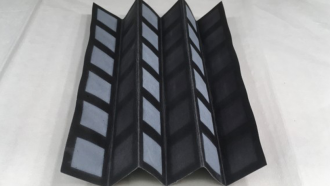
Researchers have designed a device that can cool an object by radiating its energy into outer space. Think of it as a solar panel in reverse.
- Tech
Speedy, springy robot ‘Salto’ catches some serious air
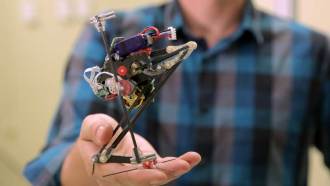
A lightweight robot nicknamed “Salto” can bound from floor to wall and back. Such fast and agile bots may someday aid in search-and-rescue operations.
- Computing
Wind power gets downsized — but in a good way
Two young scientists have developed ways to tap into wind power on a small scale.
- Computing
Star Trek technology becomes more science than fiction
On Star Trek, the characters used devices that seemed wild, futuristic and impossible. But those sci-fi gadgets are inspiring real-world, useful inventions.