HS-PS4-1
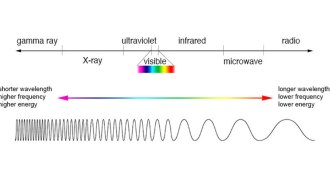
Use mathematical representations to support a claim regarding relationships among the frequency, wavelength, and speed of waves traveling in various media.
- Tech
Hot, hot, hot? New fabric could help you stay cool
A plastic fabric can let body heat escape efficiently, if the material is filled with tiny bubbles of just the right size
- Planets
Jupiter’s Great Red Spot is really, really hot
The Great Red Spot, a storm churning on Jupiter for at least 150 years, may be helping to keep the planet warm, a new study finds.
- Physics
Spinning black holes may ‘sing’ during a collision
The massive black hole in the movie Interstellar would create a unique gravity-wave signal when gobbling a smaller partner.
- Brain
Headed to a concert this summer? Pack earplugs
Wearing earplugs at concerts and other loud events may prevent hearing loss and permanent ear damage, a new study suggests.
- Brain
Explainer: When loud becomes dangerous
Many people don’t realize that sounds — even those of the music they love — can prove harmful when they get too loud.
- Materials Science
How to make window ‘glass’ from wood
Scientists have come up with a way to make wood transparent. The new material could be used in everything from windows to packaging.
- Physics
Scientists Say: Frequency
The distance between one wave peak and another is wavelength. But how fast those peaks are moving along is frequency.
- Space
Hurricane at this galaxy’s center is wicked fast
The gale-force winds around one quasar whip by at almost 200 million kilometers per hour. That’s 625,000 times faster than the strongest hurricanes on Earth.
- Materials Science
Sunlight + gold = steaming water (no boiling needed)
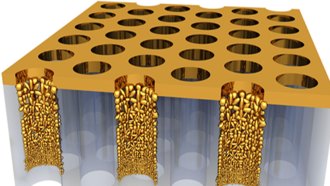
Nano-gold is the new black, at least when it comes to absorbing heat. When tiny gold particles get together, they become energy super-absorbers — turning them black.
- Earth
Cool Jobs: Mapping the unknown
Scientists find different ways of exploring places humans will never visit — and drawing maps to help us better understand such mysterious places.
- Computing
Feeling objects that aren’t there
A new technology uses high-frequency sound waves to create virtual objects you can feel. Its uses include better video games and safer driving.
- Physics
Scientists Say: Wavelength
When something travels as a wave — such as light — scientists can measure it by its wavelength, the distances between the peaks.