Physics
- Computing
A new frontier awaits — computing with light
Today’s computers process using electrical signals. But light shows promise as a new means of computing, especially for AI.
- Materials Science
Experiment: The surprising strength of eggshells
Architecture is full of arched doors, windows and other structures. But how strong is the natural arch of eggshells?
- Animals
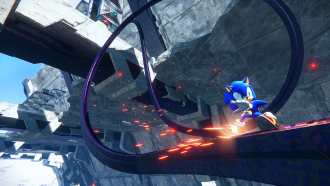
To clear loops, Sonic the Hedgehog must hit the right speed
Most animals don’t run through loops. Sonic would need the physics behind roller coasters and race cars to clear one.
- Health & Medicine
Science works to demystify hair and help it behave
Research explores new ways to classify hair — from loose curls to tight coils — along with ways to control it and improve its looks and health.
- Earth
It’s electric! Long-sought new field found in Earth’s atmosphere
This ambipolar electric field is weak. Yet it’s still strong enough to control the evolution of Earth’s upper atmosphere — and maybe life as we know it.
- Math
Math reveals how skateboarders can ramp up their half-pipe power
To pick up speed, half-pipe skaters pump — move between crouching and standing — as they roll. A new study shows the fastest way to the top.
- Materials Science
Scientists Say: Quantum dot
Quantum dots are nanosized specks whose properties are governed by the strange rules of quantum physics.
- Physics
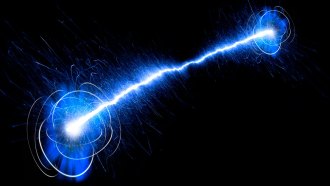
Let’s learn about entanglement
Entanglement is a special connection between particles that syncs up their properties — even when the particles are far apart.
- Earth
Thunderstorms churn up a ‘boiling pot’ of high-energy gamma rays
A thunderstorm seen in gamma ray vision plays out as a complex, frenzied lightshow above the clouds.
- Tech
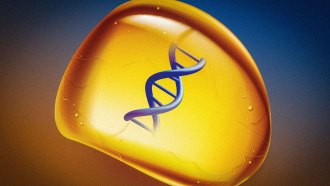
A Jurassic Park-inspired method can safely store data in DNA
DNA can store all types of data. An amber-like material can now protect its information long-term — or release it on demand for short-term use.
- Artificial Intelligence
Two AI trailblazers win the 2024 Nobel Prize in physics
John Hopfield and Geoffrey Hinton used brain-like networks based on principles of physics to jump-start machine learning.
- Science & Society
Let’s learn about the Nobel Prize
Nobel Prizes are the highest honors in science. But the prizes are far from perfect measures of scientific impact.