Physics
- Computing
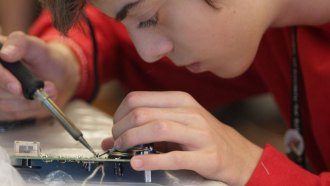
Radios: Build your own!
Building AM radios let young researchers from across the globe tune into electronics and engineering.
- Physics
Profile: Looking for life beyond the solar system
Planetary scientist and astrophysicist Sara Seager is a leader in the search for signs of life on planets beyond our solar system.
- Animals
These spiders can purr
This wolf spider can purr like no other. It makes vibrations and sounds to tell a female he’s interested in her.
- Physics
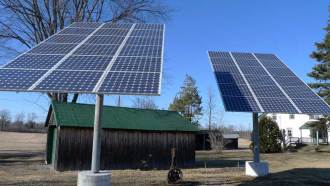
Scientists Say: Photovoltaic
This effect allows us to convert sunlight into electricity and is a popular renewable energy source.
- Earth
Keeping roofs cooler to cut energy costs
Cool it! A cheap paint-on coating for roofing shingles could help reduce a home’s heating bills and might even trim urban ozone levels, a teen shows.
- Climate
Scientists ‘see’ thunder for first time
Scientists have captured the first image of thunder. The map shows the relative strengths of the sound waves emanating from the loud clap.
- Chemistry
Cool Jobs: Saving precious objects
Museum conservators are experts at protecting and restoring precious objects. Along with art or history, many also have studied chemistry, physics, archaeology or other scientific fields.
- Climate
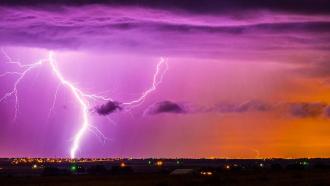
Cosmic rays offer clues about lightning
Space particles called cosmic rays pelt Earth. Scientists are using the rain of these particles to probe how lightning forms.
- Tech
Explainer: What are lidar, radar and sonar?
Radar, sonar and lidar and are three similar technologies. Each relies on the echoing of waves — radio, sound or light waves — to detect objects.
- Materials Science
Cool Jobs: Big future for super small science
Scientists using nanotechnology grow super-small but very useful tubes with walls no more than a few carbon atoms thick. Find out why as we meet three scientists behind this huge new movement in nanoscience.
- Physics
News Brief: As timely as it gets
A newly modified atomic clock won’t lose or gain a second for 15 billion years. This timepiece is about three times more precise than an earlier version.
- Physics
News Brief: Brrrrr — that’s really cold!
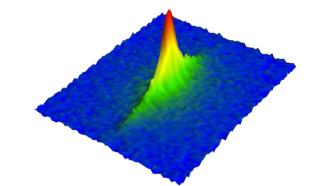
These atoms approached — and got oh so very close — to absolute zero.