Physics
- Animals
How do elephants eat cereal? With a pinch
Elephant trunks can grab everything from whole trees to cereal bits. To pick up fine grains, they press, then pinch.
- Chemistry
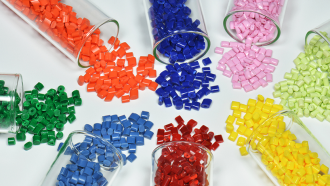
Some plastics learn to repair themselves
A new material can fix its own scratches and small cracks. One day, it also may make self-healing paints and plastics possible.
- Physics
Harry Potter can apparate. Can you?
In the world of Harry Potter, wizards apparate and disapparate with ease. How would that work in the non-magical world? Physics has some answers.
- Physics
Scientists vote to fix the world’s weight-loss problem
Scientists will soon vote to change the definition of the kilogram. The event shows how much we depend on a tiny metal cylinder locked in an underground vault in France.
- Chemistry
Super-water-repellent surfaces can generate energy
Scientists knew they could get power by running salt water over an electrically charged surface. But making that surface super-water-repellent boosts that energy production, new data show.
- Fossils
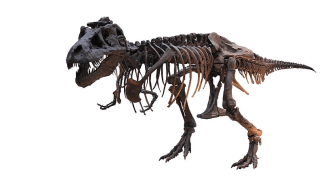
T. rex pulverized bones with an incredible amount of force
Tyrannosaurus rex’s powerful bite and remarkably strong teeth helped the dinosaur crush bones.
- Physics
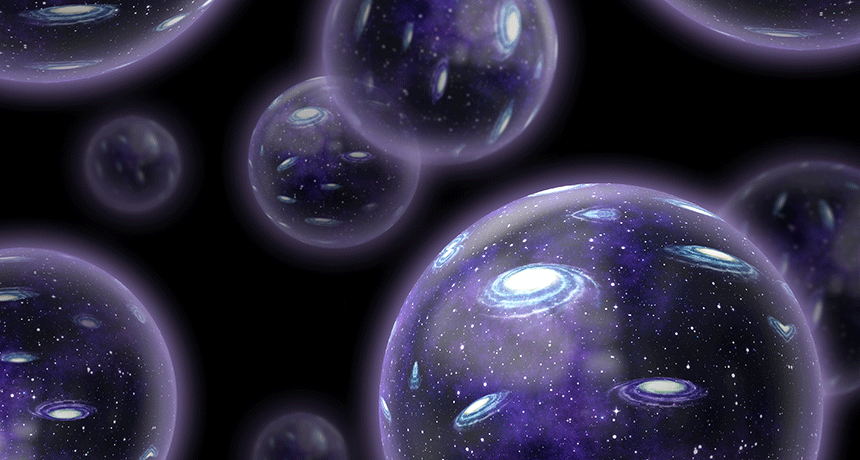
Scientists Say: Multiverse
The multiverse is an idea that there are many universes out there, including the one we live in. Each universe has an alternate reality.
- Physics
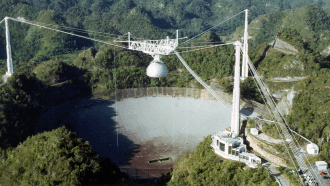
Only a small fraction of space has been searched for aliens
In their hunt for extraterrestrial intelligence, SETI searches have only scouted an area the equivalent of a hot tub out of Earth’s oceans, a new calculation indicates.
- Brain
Teens’ cell phone use linked to memory problems
A new study suggests teens who get more exposure to cell-phone radiation — and hold their phones up to their right ear — do worse on one type of memory test.
- Climate
Hurricane Michael slams into Florida, then speeds north
The 2018 hurricane season just brought Michael, another rapidly strengthening hurricane, to the U.S. coast. This one hit land with surprising power.
- Materials Science
Soft robots get their power from the skin they’re in
A flexible electronic “skin” embedded with air pouches or coils can wrap around inanimate objects, turning them into handy robots.
- Physics
Doctor Who’s TARDIS is bigger on the inside — but how?
The TARDIS looks like a old police box on the outside. But on the inside, it’s got plenty of space. How does that work? It just takes a wormhole and a tesseract or two.