Physics
- Physics
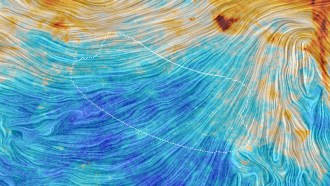
Dust erases evidence of primordial gravity waves
In March 2014, scientists claimed to have found the first echoes of the Big Bang — ripples in the very fabric of space. A new analysis shows the experts were mistaken. Dust appears to explain the confusion.
- Materials Science
Scientists Say: Colloid
When water hovers in the air as fog and when bits of fat disperse in water as milk, they form a type of substance called a colloid.
- Physics
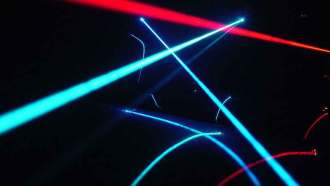
Sometimes light is not so fast
The speed of light is often called a “constant.” Experiments now show that light doesn't always reach its top speed.
- Animals
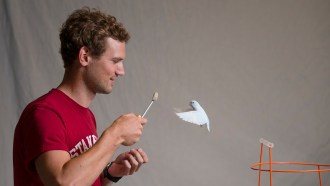
How birds stay in the air
The sensors inside a boxy device measure the forces generated with each stroke of a bird’s wings. Learning how much force is needed to keep a bird aloft could help in designing future drones that flap, hover and dart.
- Physics
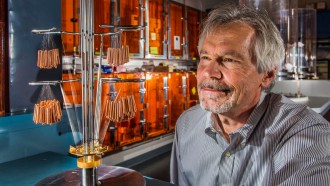
Machine simulates the sun’s core
A machine heats iron atoms to temperatures that match the interior of the sun. This has helped solve a solar mystery.
- Chemistry
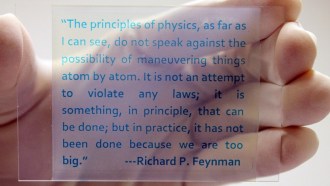
Rewritable paper: Prints with light, not ink
Rewritable paper could save money, preserve forests and cut down on waste — and all without using any ink.
- Climate
Thunderstorms can generate powerful radiation
Thunderstorms don’t just hurl lightning bolts. Some churn out high-energy radiation that can be seen by spacecraft. This radiation offers scientists a glimpse of the inner workings of thunderclouds.
- Physics
Picture This: Christmas from space
Satellite images show that cities brighten during holidays. Charting such changes can point to factors affecting energy use and contributing to global warming.
- Physics
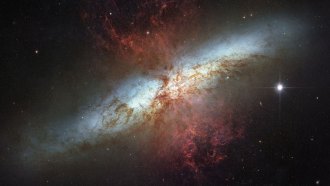
Light robs galaxy of star-making gas
Stars form from clouds of hydrogen and other gases. Astronomers have found the light from newborn stars can drive off that gas. That action can starve a galaxy of the ingredients needed to make more stars.
- Brain
Magnets may make helmets safer
Magnets in sports helmets could repel players’ heads as they move toward a collision. This should reduce the risk of the hard hits that lead to concussions.
- Physics
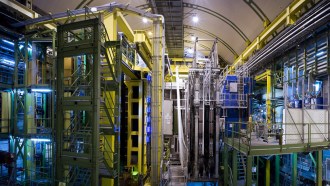
New particle may help probe strongest force in the universe
A newfound subatomic particle should allow scientists to better understand the strong force that holds together the nucleus of every atom.
- Physics
Detecting a single proton
Doctors typically use magnetic-resonance imaging, or MRI, to see tissues and organs inside the body. Physicists can harness a similar technology. And they did that to spotlight something even smaller — a single proton. But followup analyses, reported in January 2015, forced a retraction of their original claim.