Science & Society
- Science & Society
Large numbers of underage kids are on social media, study finds
Two in every three kids aged 8 to 12 have already been on social media, and one-tenth have been bullied there. Some kids report other bad experiences too.
- Agriculture
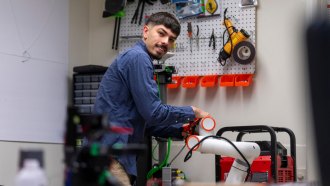
This engineer designed a device to make farm work easier
Juan Espinoza engineered a device to help ease physical demands on workers at citrus farms.
- Science & Society
Volcanic ash might have helped spread the Black Death to Europe
A volcanic eruption might have triggered events that led Italy to import grain — food that arrived in ships infested with plague-infected rats.
- Math
Ever wonder where our math symbols came from? Here are their stories
Their quirky history could help us better appreciate math as a living language — one whose symbols evolved over centuries.
- Health & Medicine
New study links early smartphone ownership to health risks
The earlier kids get smartphones, the more likely they’ll get too little sleep, gain weight — and possibly develop depression, a new study suggests.
- Space
This cosmologist studies the invisible parts of the universe
Katie Mack started out building solar-powered LEGO cars as a kid. Now she studies dark matter to better understand how galaxies form and evolve.
- Science & Society
Linking science to dance, culture and more expands who can take part
Through movement, sound, culture and community, some researchers are expanding the ways we learn, think about and communicate science and engineering.
- Physics
Chopping an onion? Sharp knives can keep its juice out of your eyes
Slow and steady cuts with a sharp blade, video shows, can reduce the pain-inducing spray of tiny onion-juice droplets.
- Math
Fractals describe patterns hidden all around us
Over the last 50 years, fractals have challenged ideas about geometry and pushed math, science and technology into unexpected areas.
- Science & Society
This game designer shares neurodivergent experiences through gaming
Inspired by her own experiences, Susannah Emery designs games that raise awareness about neurodivergence and social issues.
- Humans
How to invent a language — like that of Avatar’s Na’vi
Linguists can choose to follow, mix or break the rules of real-world languages to create interesting fictional ones.
- Animals
Liquid from African tulip trees may protect honeybees from pests
Liquid from the African tulip tree may keep ant invaders out of hives without harming honeybees.