Tech
- Computing
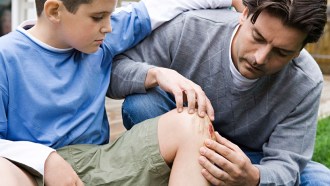
Virtual wounds: Computers probe healing
To better understand how the body heals wounds, scientists have begun creating computer programs that let virtual cells fight it out. These ‘computer games’ could lead to better medicines.
- Chemistry
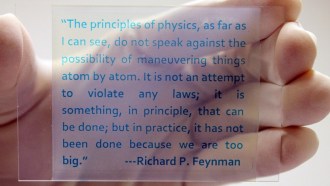
Rewritable paper: Prints with light, not ink
Rewritable paper could save money, preserve forests and cut down on waste — and all without using any ink.
- Computing
Explainer: What is a computer model?
Computer models use data, math and computer instructions to predict events in the real world.
- Tech
Make your own mini hovercraft
Hovercraft aren’t just the cars of the future. You can make your own with just a few household items.
- Tech
Wind power is looking up — to the clouds
Placing wind turbines high in the sky could let them harvest power from the faster, more reliable winds found at altitude.
- Physics
Detecting a single proton
Doctors typically use magnetic-resonance imaging, or MRI, to see tissues and organs inside the body. Physicists can harness a similar technology. And they did that to spotlight something even smaller — a single proton. But followup analyses, reported in January 2015, forced a retraction of their original claim.
- Agriculture
Drones put spying eyes in the sky
From keeping tabs on changing landscapes to protecting animals from poachers, scientists are using drones to push their fields forward.
- Tech
A cane that can ‘see’
Pre-teen’s invention clips onto a blind person’s cane and detects objects in a person’s path, helping them to avoid trip hazards.
- Physics
How science saved the Eiffel Tower
The Eiffel Tower was an engineering masterpiece. But Parisians initially thought it too ugly to let stand for more than 20 years. So Eiffel made the tower a bastion of science. And that would soon ensure that the structure was too valuable to tear down.
- Tech
Fun facts about the Eiffel Tower
Here are some details of what it took to design, build — and what it now takes to maintain — this icon of the Paris skyline.
- Computing
Models: How computers make predictions
They use numbers to model real-world activities. And new insights in math are streamlining models’ design.
- Physics
Nobel goes for creating the ‘nanoscope’
A regular microscope can’t bring into focus the nanoscale molecules from which cells are built. Using lasers and fluorescent molecules, three scientists found a way to view these tiny features. Their reward: the 2014 Nobel Prize in chemistry.