All Stories
- Planets
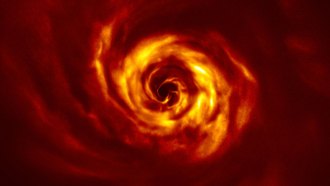
Developing planet emerges in a swirl of gas
Images of a young star 520 light-years away show a spiral of gas and dust swirling around it. A twist inside the spiral appears to be a planet forming.
- Space
Scientists Say: GPS
A GPS system relies on satellites orbiting the planet, constantly sending signals back to receivers on Earth.
- Animals
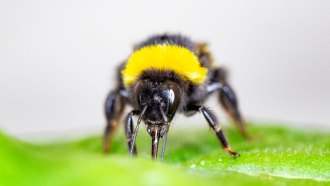
Bumblebees may bite leaves to spur plant blooming
In a pollen shortage, some bees nick holes in tomato leaves. This can speed up flowering and pollen production by weeks.
- Animals
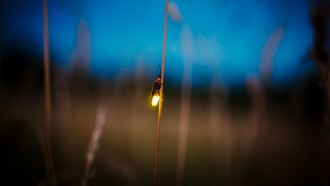
Let’s learn about bioluminescence
Some animals, bacteria and algae produce their own light. This bioluminescence can attract mates or protect from predators.
- Physics
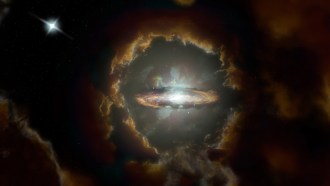
Oldest disk galaxy puts a new spin on galaxy growth
A spinning disk galaxy has been found in the early universe. Its existence is a surprise.
- Chemistry
Working up a sweat may one day power up a device
Tech that turns sweat into power may make for greener gadgets. A new device uses perspiration to charge a supercapacitor and run a sensor.
- Chemistry
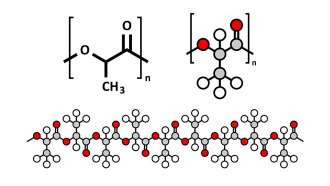
Scientists Say: Polymer
Polymers can be natural or man-made, but they are all big molecules made up of smaller units linked together.
- Planets
Wiggly wheels might help rovers plow through loose lunar soils
New design lets wheels ascend hills too steep for regular robots and paddle through loose soils without getting stuck.
- Animals
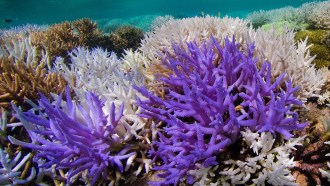
Going bright may help corals recover from bleaching
When some corals bleach, they turn neon colors. Flashy hues may be part of a response that helps these corals recover and reunite with their algae.
- Space
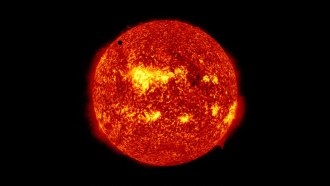
Let’s learn about the sun
The sun is our own personal star and the reason life exists on Earth.
- Animals
Toxic germs on its skin make this newt deadly
Bacteria living on the skin of some rough-skinned newts make tetrodotoxin. This paralyzing poison is also found in pufferfish.
- Health & Medicine
Common drug, dexamethasone, appears first to cut COVID-19 deaths
A drug used for decades to treat inflammation now appears useful in saving the lives of severely ill COVID-19 patients — ones who have trouble breathing.