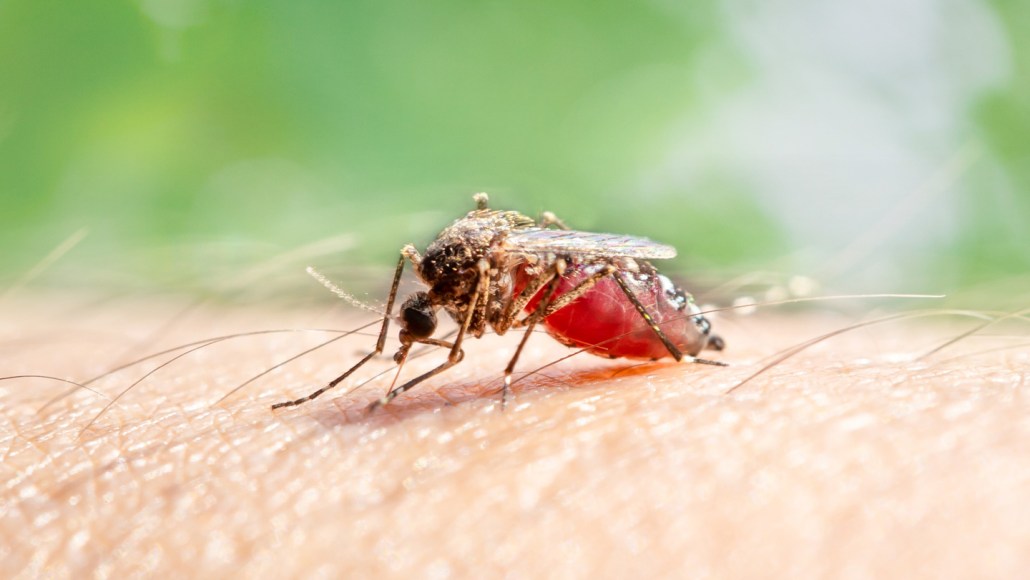
Aedes aegypti: A species of mosquito that can transmit the viruses responsible for several tropical diseases, including dengue fever, yellow fever and West Nile disease.
behavior: The way something (often a person or other organism) conducts itself or acts towards others.
biology: The study of living things. The scientists who study them are known as biologists.
chemical: A substance formed from two or more atoms that unite (bond) in a fixed proportion and structure. For example, water is a chemical made when two hydrogen atoms bond to one oxygen atom. Its chemical formula is H2O. Chemical also can be an adjective to describe properties of materials that are the result of various reactions between different compounds.
concentration: (in chemistry) A measurement of how much of one substance has been dissolved into another.
DEET: A common abbreviation for diethyltoluamide (N,N-diethyl-meta-toluamide). It is one of the most common active ingredients in insect repellents.
deter: An event, action or material that keeps something from happening. For instance, a visible pothole in the road will deter a driver from steering his car over it.
flask: A type of container with a narrow neck. In the laboratory, sterile flasks made from glass are used for conducting chemical and biological experiments.
gold standard: A common term used to mean what is currently the most reliable standard for judging the quality or authenticity of something.
insect: A type of arthropod that as an adult will have six segmented legs and three body parts: a head, thorax and abdomen. There are hundreds of thousands of insects, which include bees, beetles, flies and moths.
link: A connection between two people or things.
neuroscientist: Someone who studies the structure or function of the brain and other parts of the nervous system.
reward: (In animal behavior) A stimulus, such as a tasty food pellet, that is offered to an animal or person to get them to change their behavior or to learn a task.
unique: Something that is unlike anything else; the only one of its kind.
yellow fever: A disease that creates flu-like symptoms that can start with fever, chills, headache, backache and vomiting. Roughly 15 percent of patients may go on to develop more serious disease. This can lead to uncontrolled bleeding, the failure of multiple internal organs — and death.