Mystery solved: Why earthquakes haven’t wrecked Egypt’s Great Pyramid
Its materials, shape and internal design have helped this ancient wonder withstand strong shaking
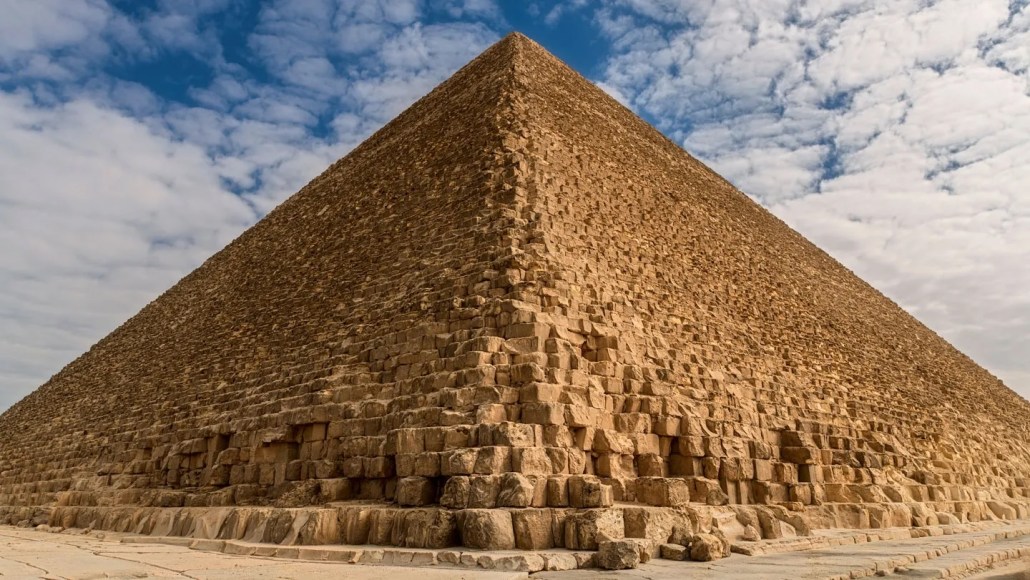
Egypt’s Great Pyramid is where the Pharaoh Khufu is entombed. Over 5,000 years, it has withstood damage from earthquakes. Now researchers show why.
Nicola Micheletti/Moment/Getty Images
This is a human-written story voiced by AI. Got feedback? Take our survey . (See our AI policy here .)
Civilizations may fall. But Egypt’s Great Pyramid of Giza has stood for nearly 5,000 years. Scientists finally know how it survived earthquakes.
The pyramid tends to vibrate differently than the soil around it. This prevents excessive shaking during an earthquake. The pyramid also has a sturdy shape and structures within it that spread out its mass. Together, these features have kept the structure intact and stable.
It’s “no surprise” that the pyramids resist earthquakes, says Sherif El-Tawil. But the new study offers important clues about how the pyramids have escaped damage, he says. A civil engineer at the University of Michigan in Ann Arbor, El-Tawil did not take part in this new work.
Of the ancient Seven Wonders of the World, the Great Pyramid is the last still standing. Ancient Egyptians built it in Giza around 2600 B.C. as the tomb of Pharaoh Khufu. It contains some 2.3 million stone blocks and took more than two decades to construct.
Egypt generally has low seismic activity. But it does occasionally experience strong quakes. These include a magnitude 6.8 in 1847 and a magnitude 5.9 in 1992. Such strong earthquakes can cause a lot of ground motion or vibration. Despite those powerful tremors, however, the Great Pyramid has suffered little damage.
Rumblings within
Mohamed ElGabry is a geophysicist at Egypt’s National Research Institute of Astronomy and Geophysics in Cairo. He and his team studied the origins of the Great Pyramid’s enduring stability.
They monitored subtle vibrations at 37 points within and around the structure. Intentionally shaking the pyramid might damage it. So the team relied on tiny disturbances from far-off ocean waves, traffic or other events that vibrated the structure.
At about three-quarters of the sites inside the pyramid, the structure vibrated back and forth between 2.0 and 2.6 times per second. That’s a fairly narrow spread of frequencies. This suggests that stress — such as forces from shaking — is evenly distributed throughout the pyramid.
The surrounding soil, meanwhile, vibrated more slowly. It shuddered a little more than once every two seconds.
Because the natural frequencies of the building materials and the soil differ, the structure is less likely to experience resonance. That’s when the pyramid absorbs energy from the soil’s movements. Resonance would boost the strength of the vibrations and the risk of damage during an earthquake.
Spaces inside the pyramid also helped ease the shaking.
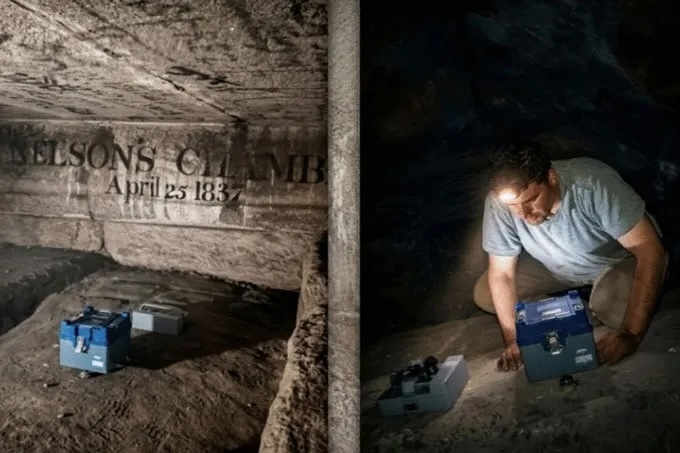
Ancient Egyptian builders constructed pressure-relieving chambers above the pharaoh’s tomb. This distributes the pyramid’s weight and protects the burial chamber in case of a collapse. Those chambers also decreased the strength of vibrations near the top of the pyramid, the team found.
The researchers shared their findings May 21 in Scientific Reports.
Most buildings are anchored in place at the ground. They have more room to sway and shake near the top, ElGabry says. In the Great Pyramid, this means that vibrations get amplified in the king’s chamber. This room is well above the bedrock and near the pyramid’s center. Vibrations there can be four times as strong as those at the ground.
But in the pressure-relieving chambers above the king’s chamber, the vibrations were only three times as strong. It’s not yet clear why.
Construction clues
“All of this is really amazing to look at from today’s engineering point of view,” ElGabry says. “But it’s more amazing and more impressive when you look into the tools and available resources we had 4,600 years [ago].” Still, the findings can’t confirm whether ancient Egyptians designed the pyramids with earthquakes in mind.
Modern builders can use similar strategies as they plan projects, choose materials and create enduring structures, ElGabry says. “When we design our buildings, we design for 100 years [or] for 500 years,” he says. To figure out how structures could last far longer, “it’s important to understand how this building has survived.”
Editor’s note: This story was updated on July 8, 2026 to correct the magnitude of the 1847 earthquake. It was 5.9, not 5.8, according to official records.