All Stories
- Animals
This bird nest becomes a ‘fortress’ using antibird spikes
The spikes were meant to keep birds away. But five nests found in Europe may use the bird deterrents for structure and to scare off predators.
- Physics
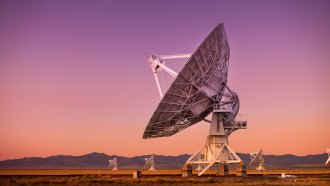
Scientists Say: Radio Waves
Lightning, stars, supermassive black holes and more give off radio waves.
- Tech
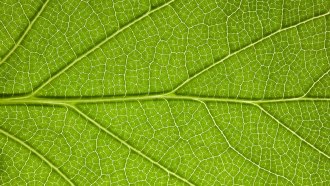
High-tech solar ‘leaves’ create green fuels from the sun
Chemists make a liquid alternative to fossil fuels from carbon dioxide, water and the sun. Their trick? They use a new type of artificial leaf.
- Earth
Canada’s Crawford Lake seems to mark when the Anthropocene began
Mud at the bottom of this lake holds a record showing how humanity has been changing our planet. But the Anthropocene isn’t an official new epoch yet.
- Tech
A ‘mini cyclone’ helps detect coronavirus in the air
A new device can detect from seven to 35 coronavirus particles per liter of air in minutes. That’s close to a PCR test’s sensitivity — but much quicker.
- Tech
New thermal ‘cloak’ keeps spaces from getting too hot or too cold
A prototype fabric could help keep cars, buildings and other spaces cooler during heat waves while also reducing greenhouse-gas emissions.
- Chemistry
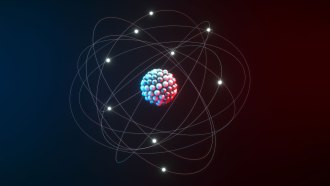
Scientists Say: Valence electrons
These far-out electrons do the hard work when it comes to chemical reactions.
- Tech
Horses are inspiring this roboticist to build trustworthy robots
Computer scientist Eakta Jain is looking at human-horse interactions for ideas about how to design robots that work well with people.
- Oceans
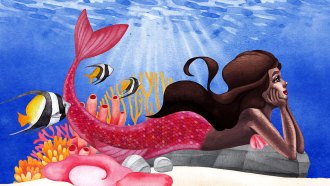
How would a mermaid sound underwater?
Human ears don’t work well in the water. A mermaid would need marine creature features to talk to and understand her aquatic friends.
- Space
Ghost particles paint a new picture of the Milky Way
Scientists tracked neutrinos from space to create a new map of our galaxy. It’s the first image of the Milky Way to be made without light.
- Fossils
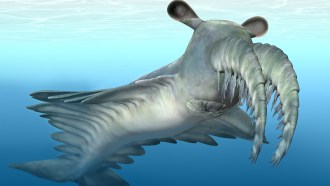
This bizarre ancient predator snagged soft prey
Scientists are rethinking how this extinct creature used the spiky limbs sticking out of its face to hunt.
- Space
Newfound gravitational waves may be from the biggest black holes in the universe
Observations of dead stars hint that ripples in spacetime — ripples light-years long — roll through our universe.