Uncategorized
- Agriculture
Soil (and its inhabitants) by the numbers
Teeming with life, soils have more going on than most of us realize.
- Ecosystems
What you can do to improve soils
Soils are the life-sustaining structures under our feet. Here are some tips for keeping soils healthy. First rule of thumb: Give more than you take.
- Animals
Unique dialects help naked mole-rats tell friends from foes
Computer analysis reveals that these social rodents communicate with speech patterns distinct to each colony.
- Chemistry
Let’s learn about acids and bases
Acids give away particles with positive charge. Bases accept positively charged particles. They are both critical for chemical reactions.
- Animals
A new chameleon species may be the world’s tiniest reptile
The newly described reptiles live in the northern forests of Madagascar. Deforestation there may also leave them on the brink of extinction.
- Planets
Scientists Say: Planet
Planets have to orbit a star, be big enough to form a sphere and keep other objects out of their path around their star.
- Chemistry
Extreme pressure? Diamonds can take it
Diamond retains its structure even at extreme pressures, which could reveal how carbon behaves in the cores of some exoplanets.
- Earth
Explainer: What are aerosols?
We may not see them, but tiny particles and droplets cloud the air, affecting its properties. Some may be pollutants, others all-natural products.
- Climate
Can wildfires cool the climate?
Severe wildfires are becoming more common. Science is showing that the tiny particles they release into the air can alter Earth’s temperature — sometimes cooling it.
- Materials Science
Super-absorbent swab could curb errors in COVID-19 testing
A new super-absorbent swab could cut down on false negatives from COVID-19 testing. And that could help slow spread of the disease.
- Animals
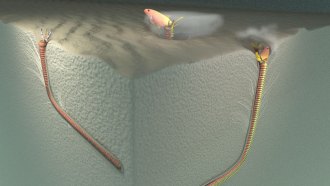
Giant worms may have hidden beneath the ancient seafloor to ambush prey
Twenty-million-year-old tunnels unearthed in Taiwan may have been home to creatures similar to today’s monstrous bobbit worms.
- Life
A robot made with a Venus flytrap can grab fragile objects
Scientists have “borrowed” the hair-trigger leaves of Venus flytraps to make a gentle grabber that can be controlled by a cellphone app.