Uncategorized
- Archaeology
This prehistoric woman from Peru hunted big game
Women in the Americas speared large prey as early as 9,000 years ago, new archaeological evidence suggests.
- Planets
Jupiter may have ‘sprites’ or ‘elves’ in its atmosphere
This is the first time that scientists have seen hints of these weird side effects of lightning storms somewhere other than on Earth.
- Computing
Let’s learn about virtual reality
Scientists use virtual reality to build new games and to help people fight their fears.
- Chemistry
Explainer: Our atmosphere — layer by layer
Earth’s five layers extend from the ground up and into outer space. Each has its own distinct features and serves as the site of different activities and phenomena.
- Animals
Ogre-faced spiders listen closely to snatch bugs from the air
Ogre-faced spiders can hear prey sneaking around behind them. Low frequencies can trigger a blind, backwards attack.
- Animals
Scientists Say: Apoptosis
When it’s time for cells to die, they need to do it carefully, so they don’t harm other cells.
- Animals
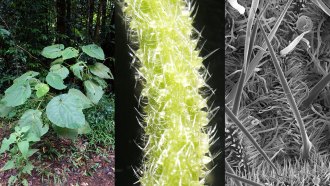
Please do not touch the Australian stinging tree
Stinging-tree leaves look soft and inviting, but one touch delivers agony. Structurally, the plant's painful chemical looks a lot like spider venom.
- Planets
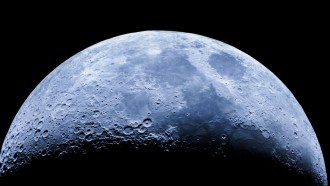
There’s water on sunny parts of the moon, scientists confirm
The new observations were made by a telescope on board a jet in Earth’s atmosphere. They confirm the presence of water on sunlit areas of the moon.
- Health & Medicine
Third major vaccine shows great promise against COVID-19
This vaccine, which may be easier to get to the public, appears to be 90 percent effective at halting disease and maybe spread of the new coronavirus.
- Animals
The diabolical ironclad beetle is nearly unsquishable
The diabolical ironclad beetle is an incredibly tough little creature. A peek inside its exoskeleton reveals what makes it virtually uncrushable.
- Brain
Scientists Say: Puberty
Puberty is a time when hormones surge and people develop the ability to have children. But it’s so much more than that.
- Materials Science
This artificial skin feels ‘ghosts’ — things you wish were there
Engineers have developed a wearable device that simulates the sense of touch. It may benefit robotic surgery and deep-sea exploration.