Uncategorized
- Planets
Let’s learn about Mars
Traveling to Mars offers many challenges, including life without gravity, cosmic rays and communication delays.
- Brain
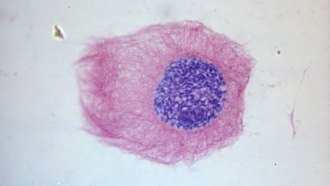
Scientists Say: Nucleus
Nucleus comes from the Latin term “nuc,” meaning nut or kernel. In science there are lots of nuclei. Every one of them is the center of something.
- Animals
Jumping ‘snake worms’ are invading U.S. forests
These bad-news invaders are spreading across the United States. As they turn forest debris into bare ground, soils and ecosystems are changing.
- Chemistry
Ordinary paper turns into flexible human-powered keypad
Engineers have figured out how to turn sheets of paper into rugged, low-cost electronic devices, such as a computer keypad.
- Animals
When physicians and veterinarians team up, all species benefit
When doctors for people and those for animals share their expertise, they can discover new ways to take better medical care of all species.
- Animals
A whale’s nearly four-hour-long dive sets a new record
Cuvier’s beaked whales may rely on large stores of oxygen, a slow metabolism and the ability to tolerate lactic acid to go for hours without surfacing for air.
- Materials Science
Analyze This: Insect shells could help builders on Mars
When mixed with rocky soil, a compound called chitin makes a strong material. It could be pulled from the shells of insects used for food.
- Animals
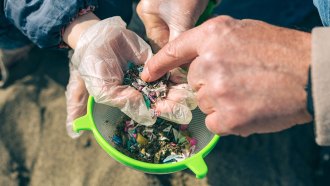
Polluting microplastics harm both animals and ecosystems
Researchers are beginning to uncover the real-world impacts of polluting microplastic bits on animals and the ecosystems they inhabit.
- Brain
Many student athletes face risk of concussions that heal slowly
High school girls and those with a history of concussions appear to take longest to recover.
- Earth
Scientists Say: Earthquake
An earthquake is a sudden and sometimes violent shaking of the ground.
- Agriculture
Learning what stresses queen bees could save their hives
Beehives often die off after the queen gets too stressed to make enough babies. New tests could identify what stressed her — and point to solutions.
- Animals
Here’s what bats ‘see’ when they explore the world with sound
High-speed cameras, fancy microphones and slick software are helping scientists get the best look yet at what bats perceive through echolocation.