Uncategorized
- Planets
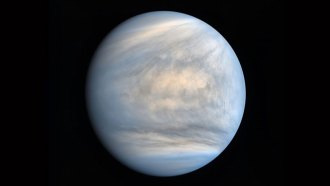
Here’s why Venus is so unwelcoming
Venus is hard to study. Scientists also find it hard to get money to send spacecraft there. But researchers have ideas about how to tackle both challenges.
- Animals
Tricky turns give prey a chance against lions and cheetahs
A bonanza of running data on wild predators shows that a successful hunt requires more than sprinting.
- Earth
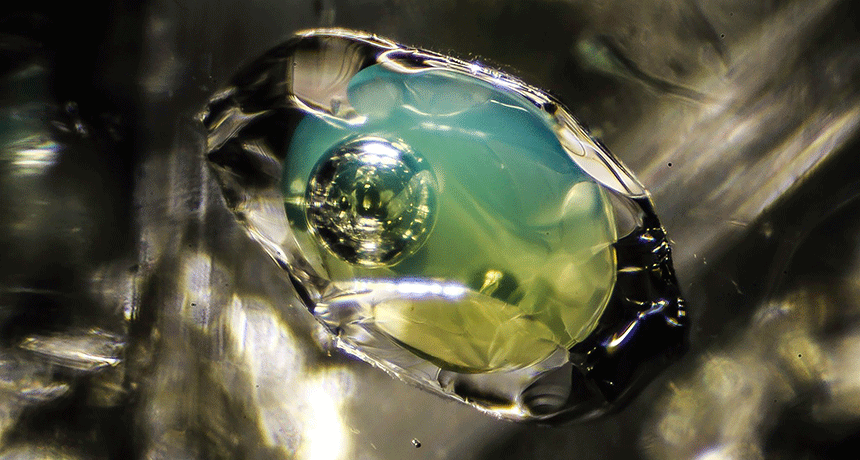
Scientists Say: Inclusion
As rocks form slowly, they can trap things in their timeless clutches. A material trapped inside a mineral is called an inclusion.
- Chemistry
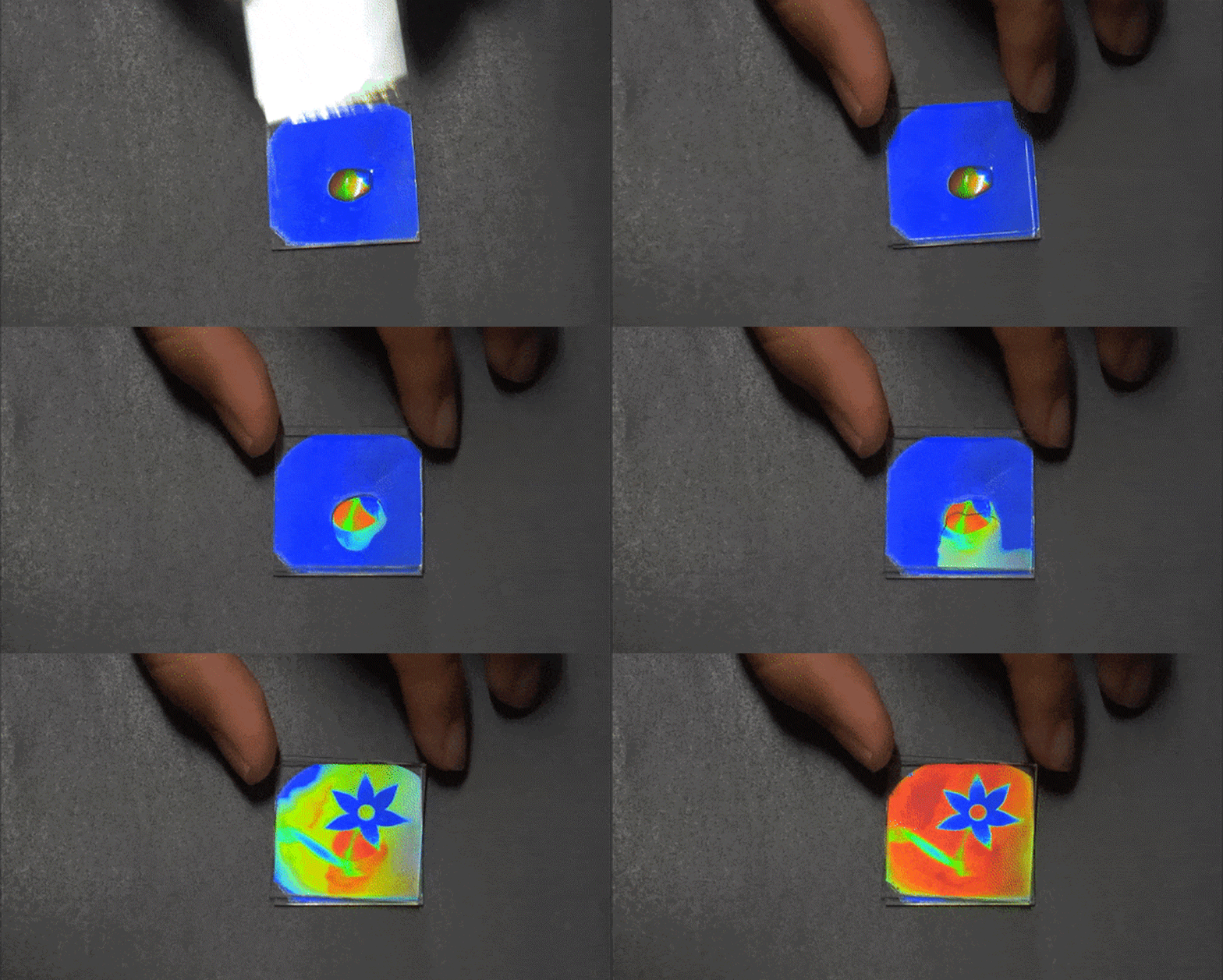
Moisture unmasks camouflaged message
Researchers have developed a new type of chemical that will mask some hidden message — until you add water.
- Animals
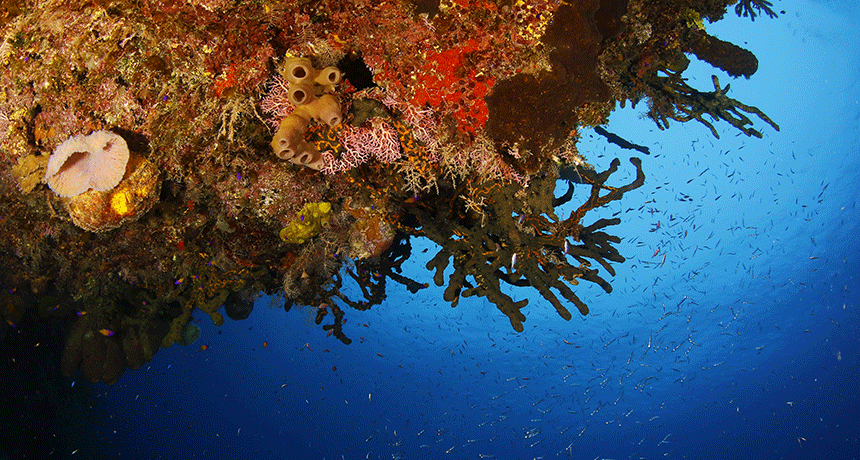
Exploring the mysteries of Cuba’s coral reefs
Researchers are studying the mysterious lives of creatures in and near Cuba’s coral reefs. What they learn could help protect ocean life globally.
- Animals
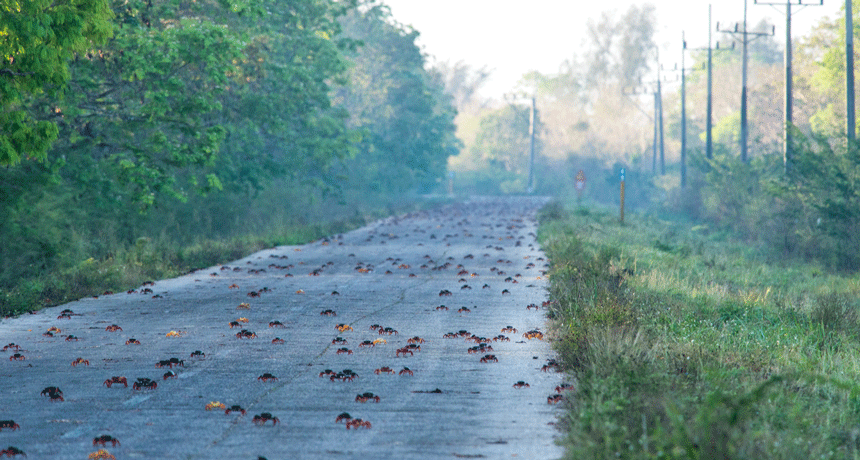
Migrating crabs take their eggs to the sea
Cuba’s colorful land crabs connect swamp and sea with their yearly mass migrations. Protecting their routes can help other animals too.
- Physics
Legendary physicist Stephen Hawking dies at 76
Theoretical research by Stephen Hawking helped shape how scientists and the public alike would come to understand black holes and other facets of astrophysics.
- Health & Medicine
How the body protects us from potentially toxic amounts of sugar
A study in mice shows the small intestine shields the liver from the potentially damaging effects of exposure to fructose — but only up to a limit.
- Animals
Scientists recruit bloodsucking leeches as research assistants
By analyzing a slimy, bloodsucking leech’s last meal, scientists can identify which animals had been living near it.
- Animals
Explainer: DNA hunters
Snippets of DNA can be left behind by a passing organism. Some researchers now act as wildlife detectives to identify the sources of such cast-off DNA.
- Animals
Venus flytraps tend not to eat their pollinators
A first-ever study of what pollinates a Venus flytrap finds little overlap between the critters that serve as pollinators and those that are prey.
- Animals
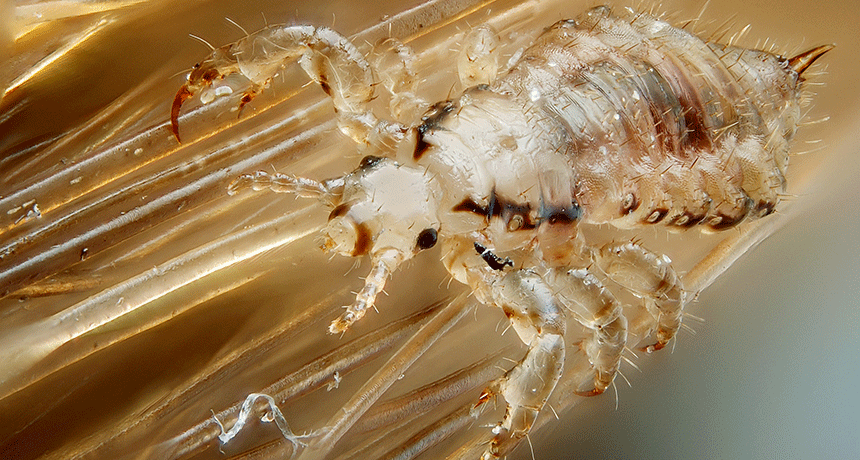
Scientists Say: Ectoparasite
Many people think of parasites as organisms that live inside their hosts. But some of them can be found on the outside instead.