Uncategorized
- Math
Scientists Say: Uncertainty
In science, uncertainty is a term used to express how much data might vary around a measured point.
- Computing
On Twitter, fake news has greater allure than truth does
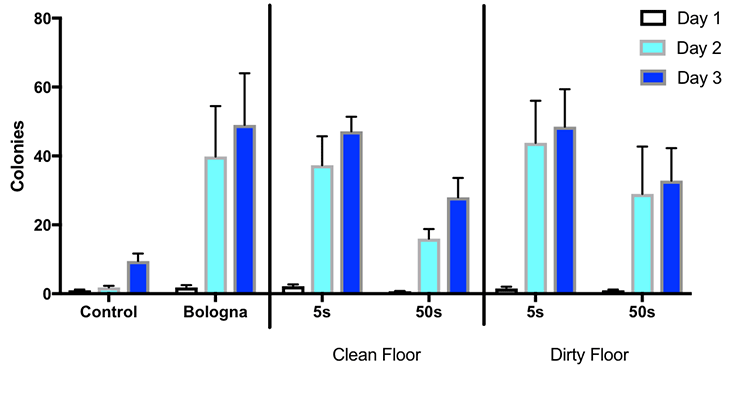
In the Twittersphere, fake news gets more views than real stories, based on an analysis of more than 4.5 million tweets.
- Physics
Wireless devices crowd out cosmic radio signals and more
Cell phones and other devices emit radio waves that can interfere with important scientific research. That’s why researchers are seeking ways to share the radio spectrum.
- Animals
The secrets of super-slurper bat tongues
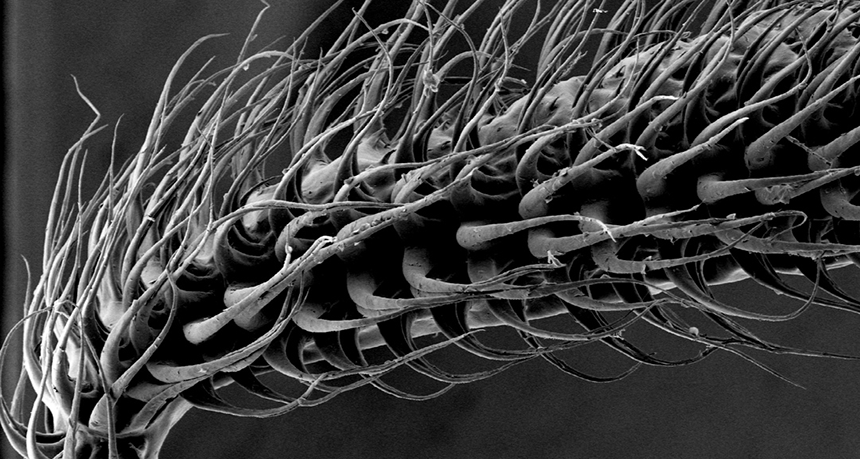
Tiny hair-like structures greatly boost the ability of some bats to slurp up nectar from flowers.
- Physics
Meet STEVE, the northern lights in mauve
STEVE is a nontraditional aurora. It might be a visible version of usually invisible charged particles drifting through Earth’s upper atmosphere.
- Animals
Compared to other primates, humans get little sleep
Short bouts of a sleep, called REM, separate humans from other primates, scientists find. Sleeping on the ground may have a lot to do with it.
- Health & Medicine
Scientists Say: Lactose
You might not think of dairy products having sugar, but they do. Milk is rich in a sugar called lactose.
- Brain
Bullying alters ‘bugs’ in the gut, hamster data show
A new study found that the microbes in a hamster’s gut changed in response to social stress.
- Animals
Living Mysteries: Meet Earth’s simplest animal
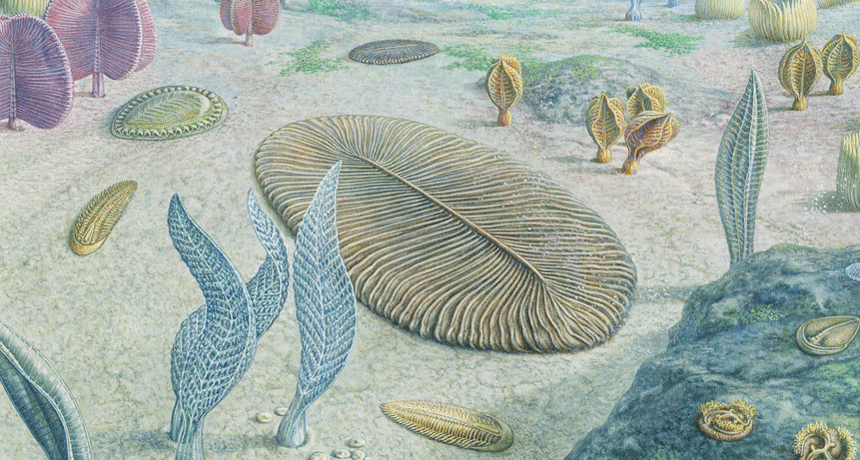
Trichoplax is the simplest animal on Earth. It has no mouth, stomach or brain. Yet it can teach how these and other organs evolved.
- Health & Medicine
Finding and helping teens for whom sadness is a disease
Adolescents should soon be screened for depression at their yearly check-up with their doctor.
- Climate
Analyze This: Climate change could make food less healthy
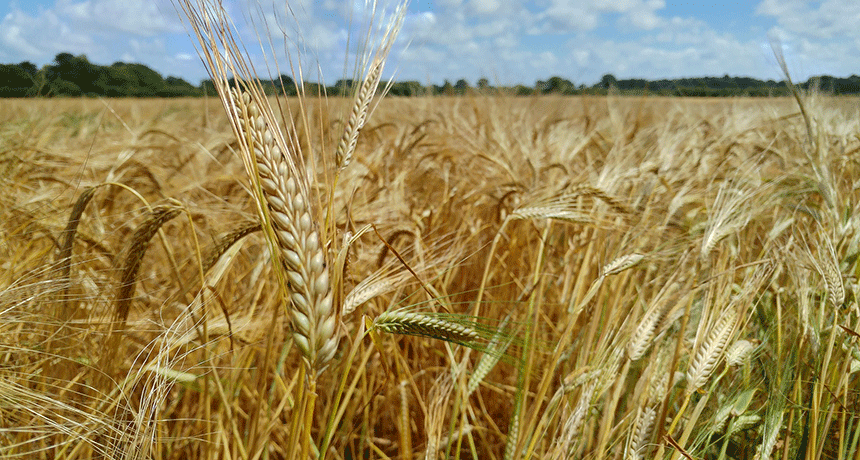
Levels of important nutrients are lower in crops exposed to high levels of carbon dioxide, a greenhouse gas. How high? Try levels expected to be typical 30 years from now.
- Health & Medicine
Woman’s eye hosts more than a dozen cattle eyeworms
Oregon woman is the first human known to become infected with a cattle eyeworm known as Thelazia gulosa.