Uncategorized
- Climate
Explainer: What is thundersnow?
Wacky weather produced lots of thundersnow during New England’s recent winter storms. Some scientists now suspect Mother Nature got some human help.
- Fossils
Ancient jaw suggests humans left Africa earlier than thought
A fossil jaw found in a cave in Israel is at least 177,000 years old. The scientists who found it think it shows humans left Africa much earlier than thought.
- Brain
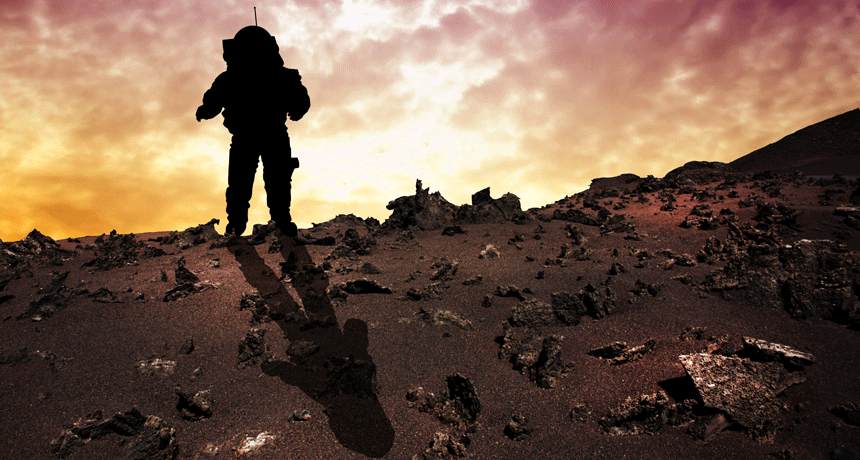
En route to Mars, astronauts may face big health risks
Going into space brings the thrill of a new frontier — and risks that scientists are racing to understand, from radiation to isolation.
- Animals
Yuck! Bedbug poop leaves lingering health risks
Chemical residues left by bedbugs can persist, even when the pests have been eradicated. This may explain lingering allergic symptoms in cleaned up homes, a new study concludes.
- Ecosystems
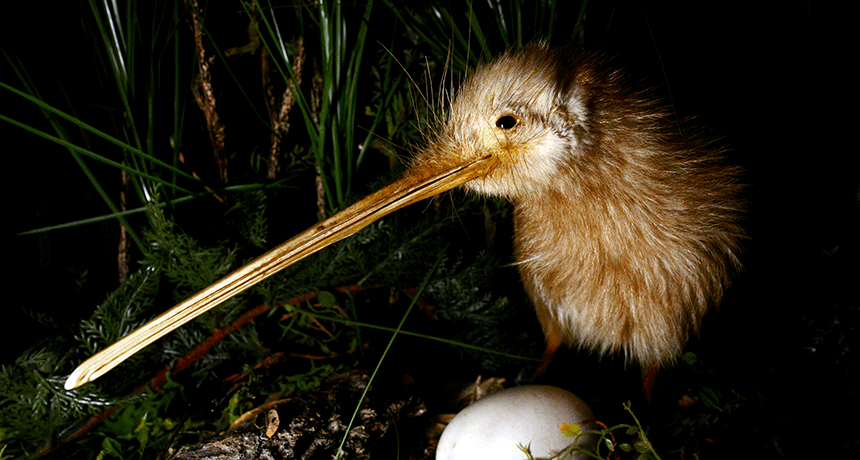
Can DNA editing save endangered species?
Scientists may be able to help endangered species by changing the genes of a whole population of wild animals. But some question whether that is wise.
- Chemistry
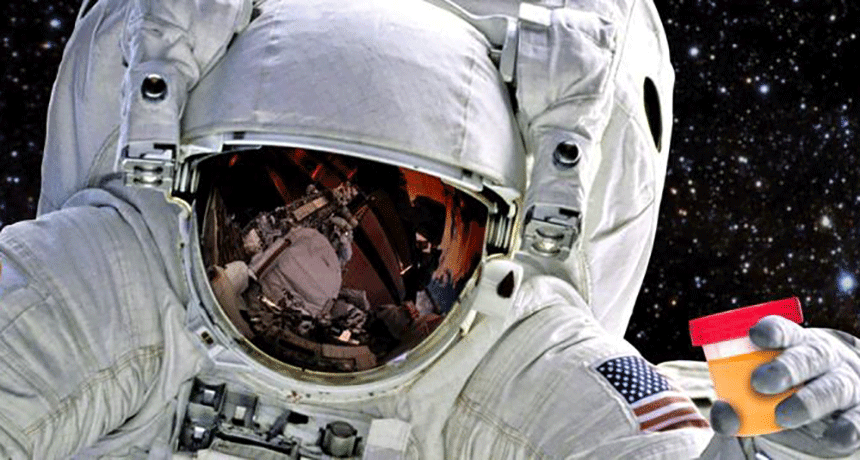
Human waste could power plastic-making in space
Someday recycled urine and exhaled breath could feed specially engineered yeast to make plastics and other useful chemicals on long space missions.
- Health & Medicine
Scientists Say: CT scan
Short for computerized tomography, this technique lets scientists and doctors see insides in detail.
- Health & Medicine
Human cells form the basis of this artificial eye
Real or fake — you be the judge. Human cells were used to create this test bed for studying both the eye and eye-disease therapies.
- Life
Defining a dinosaur is now far harder
New fossil finds are making it difficult to say for certain what makes dinosaurs unique.
- Materials Science
New device makes water give up its sounds
A new device can dramatically boost the ability of people above the water’s surface to hear what’s going on below.
- Earth
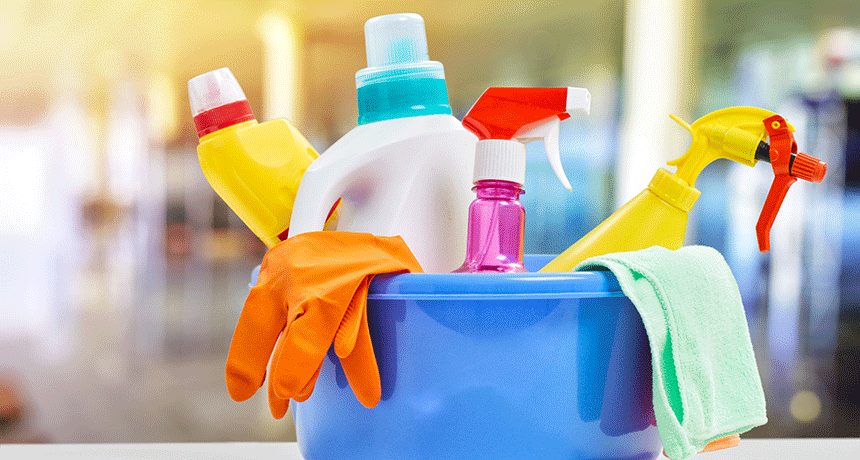
Household products can really pollute the air
Auto exhaust isn’t the only major sources of air pollution, indoors and out. A new study finds a laundry list of household products can — when used by millions — match the contributions of traffic.
- Animals
Fish get pooped living in polluted water
Living in polluted water can tire fish out, a new study finds. This can make it harder for them to find food and avoid being eaten, themselves, by predators.