Wind won’t keep hungry yellow jackets away from your picnic
The wasps can sniff out and track odors even when up against a stiff breeze
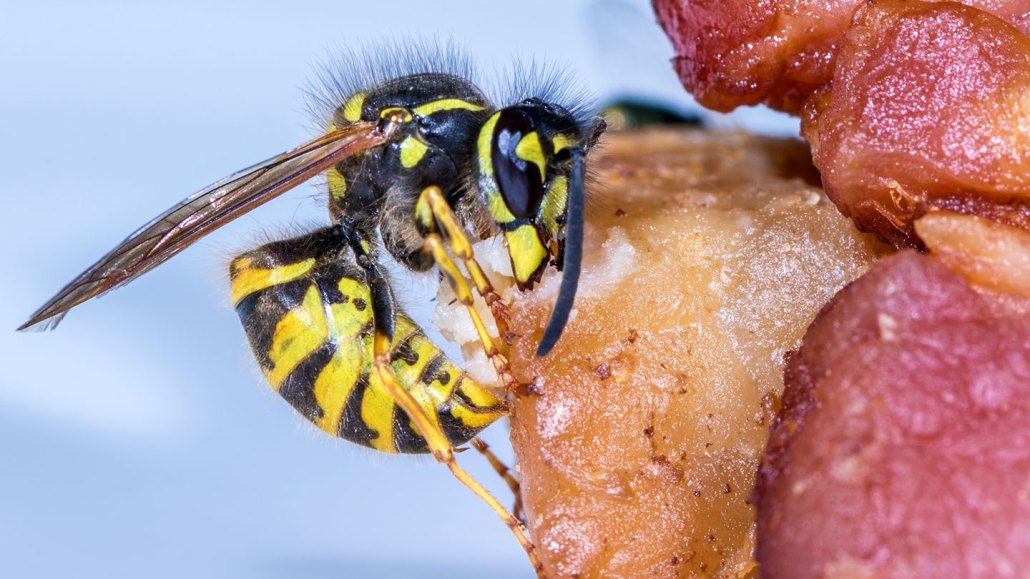
Some yellow jackets are ace trackers of potential food sources, such as roasted meat. The wasps can chew it into small bits for taking back to their nests.
EyeEm Mobile GmbH/iStock/Getty Images Plus
This is a human-written story voiced by AI. Got feedback? Take our survey . (See our AI policy here .)
Good luck keeping yellow jackets from hovering over your dinner plate at a backyard barbecue. These wasps can track tasty smells — and then hang out to grab a bite — even when it’s breezy. Very breezy. That’s the finding of a new study.
Scents wafting from a meal may be scattered by wind. But yellow jackets had no trouble detecting and following them, the study found. They could do it even when flying in winds that blow at over 21 kilometers per hour (13 miles per hour). For perspective, this moderate breeze can bend tree branches and send dust or paper flying.
“Insects are really great at finding the source of an odor across wind conditions,” notes Floris van Breugel. And that “provides extra motivation [to us] for figuring out how they do it.”
He and Jaleesa Houle work at the University of Nevada in Reno. His work focuses on how to make robots move like flying insects. Houle is investigating how wind affects the ability of insects to follow odors.
Together, the pair shared their new yellow jacket findings in the January Biology Letters.
Testing IRL conditions
Many insects rely heavily on their sense of smell. The odors their antennae detect can help them find what they need.
“They find their mates that way. They find environments that way. They find water that way. They certainly find flowers for foraging,” says Mark Willis in Cleveland, Ohio. “And if they smell flesh flies,” he adds, they’ll use that scent to find the “dead bodies to lay their eggs in.” Willis knows a lot about this. His own work at Case Western Reserve University focuses on how flying insects track scents.
Some of these aerial navigators are important to us. Honeybees, for instance, pollinate many plants that we eat. Mosquitoes, which can spread disease, track their next blood source by smell.
“You’re in the woods and all of a sudden mosquitoes find you in 30 seconds. Or you’re at a barbecue and you have wasps swarming your food immediately. Insects are clearly very good at finding us,” says Houle. “So the question is: how?”
“Understanding [that scent tracking] better is a good thing for us humans,” says Willis.
Past research on how flying insects find their food has used wind tunnels. These are special corridors used in lab experiments. Air sailing down the tunnels can test how insects will behave under different wind conditions.
But in the real world, winds often start and stop suddenly. They also abruptly gust or change direction. And this is hard to copy in a wind tunnel, notes Houle.
That’s why she and van Breugel decided to run their tests in the natural world. For test subjects, they turned to yellow jackets, a wasp common in Reno.
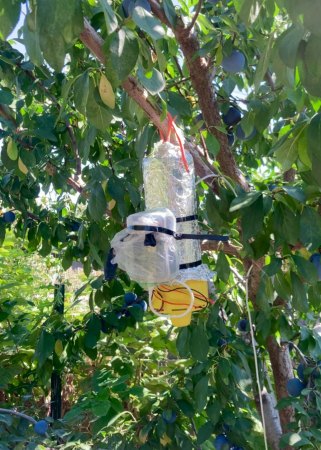
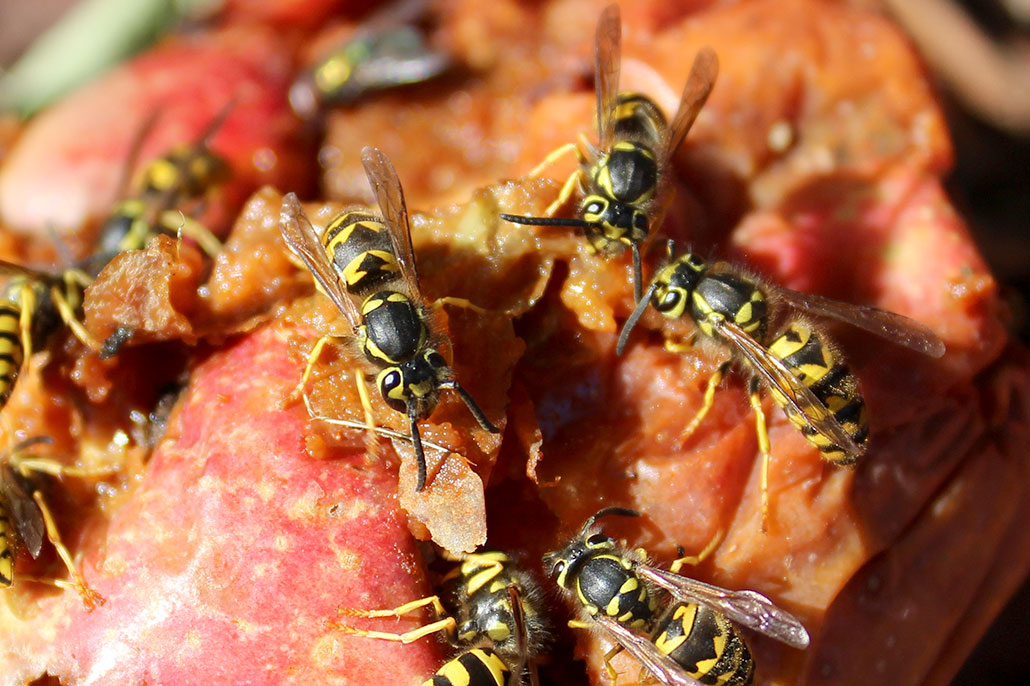
The researchers studied these insects from July to October 2023 at three sites: a forest, an urban area and a farm. They baited two traps at each site with a chemical whose scent the wasps couldn’t resist. Motion sensors on each trap logged when the yellow jackets arrived. More nearby sensors recorded winds and other weather conditions.
In all, nearly 400 yellow jackets came to the traps. Wind speed, the team reports, didn’t affect how many wasps arrived. The wind’s direction or how erratically it blew didn’t either. Yellow jackets reached their goal all the same.
Houle and van Breugel think their new data show that yellow jackets have adapted to sniff out attractive scents in a wide range of wind types. Other insects may do this, too.
Many have a “surge-and-cast” behavior, says Willis. When they get a whiff of something tasty, he explains, they surge upwind toward the smell. When they lose the scent, these insects zigzag back and forth until they find it again.
The team could look for this by putting a reflective marker on yellow jackets. Programmed drones could automatically follow and film those marked insects as they search for the traps, says van Breugel. Other researchers have already done something similar with honeybees.
One day, engineers might send out flying robots that copy the scent-tracking of insects. These might be useful in finding survivors in disaster areas — or in detecting leaks of dangerous chemicals.
“[Insects] are like little machines,” says van Breugel. “They’re capable of doing things that we engineers don’t know how to do. We don’t know how to make a little machine that could find the source of an odor as reliably as insects. So, it’s really an inspiration for engineers to see this is possible.”