
All Stories by Bethany Brookshire
- Life
Scientists Say: ATP
This chemical is a bit like a rechargeable battery. Cells build and break apart its chemical bonds to store and release energy.
- Science & Society
For minority students to succeed, teachers need to earn trust
Minority middle-school students begin to lose trust in their teachers when they see peers treated unfairly.
- Health & Medicine
Hibernation: Secrets of the big sleep
Mammals from bears to squirrels hibernate the winter away. Learning how they do it might one day help people mimic aspects of it to heal from brain injuries or voyage to Mars.
- Animals
Explainer: How brief can hibernation be?
Many animals frequently slow body functions and drop their temperatures — sometimes for just a day. Is that hibernation, or just torpor? Are the two even related? Scientists disagree.
- Planets
Scientists Say: Goldilocks zone
Not too hot, not too cold. Just right. This is the region around a star where water could be a liquid, instead of a solid or gas.
-
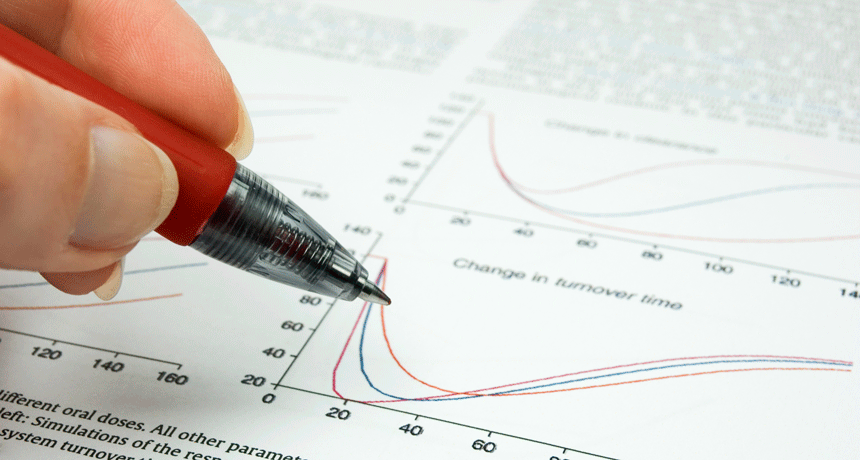
Four tips for reading a scientific paper
Don’t let dense writing and big words put you off. Use these handy tips to get through the jargon.
-
To understand a scientific paper, delve into its parts
Scientific papers can look very scary. But they don’t have to be. Here’s how journal articles are organized.
- Physics
Scientists Say: Dark matter
Most of the universe isn’t made of stuff we can see. Scientists think some of it might be made of dark matter — matter that emits no radiation.
- Animals
Scientists Say: Hibernation
Hibernation is more than a deep sleep. Animals that hibernate lower their body temperature and reduce their body activities for months.
- Health & Medicine
Sexist attitudes about smarts may emerge by first grade
People often think women can be smart, but that men are more likely to be brilliant. This stereotype may form as young as age six, new data show.
- Health & Medicine
Math attitude influences math achievement
Bad feelings about math beget bad grades, a new study shows. The good news? Positive feelings are associated with good grades, too.
- Health & Medicine
Scientists Say: Hyperthermia
If our body temperatures rise too high, we can suffer from hyperthermia.