This engineer designed a device to make farm work easier
Juan Espinoza is looking to automate agriculture — and maybe one day help you buy a car
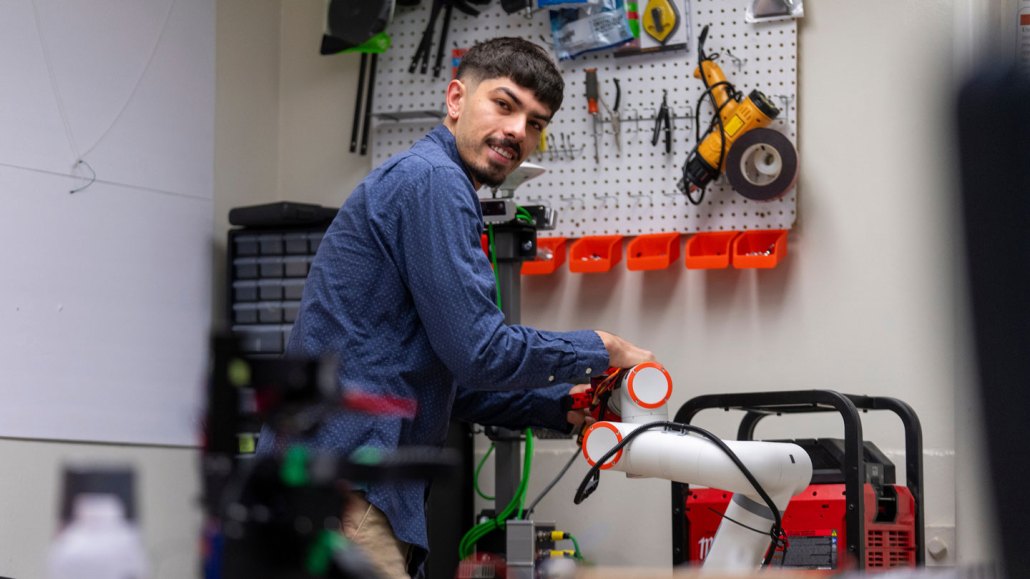
As a graduate student, Juan Espinoza designed an automated device that makes citrus picking easier. Improper picking can damage fruit, making it less valuable. Now he has his sights set on improving the cars everyday people drive.
J. Espinoza
This is a human-written story voiced by AI. Got feedback? Take our survey . (See our AI policy here .)
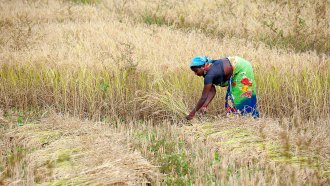
Mechanical engineer Juan Espinoza’s work in agriculture runs deep. In the 1990s, his parents immigrated to California from Mexico. With little formal education, the only work available to them at the time was picking crops such as almonds, grapes and roses. When Espinoza and his siblings reached working age — that was 15 for Espinoza — his parents required them to pick crops for at least one summer.
“They wanted to teach their children the value of a dollar,” he says. “They wanted us to aspire for more.” Espinoza would return to pick crops for several summers.
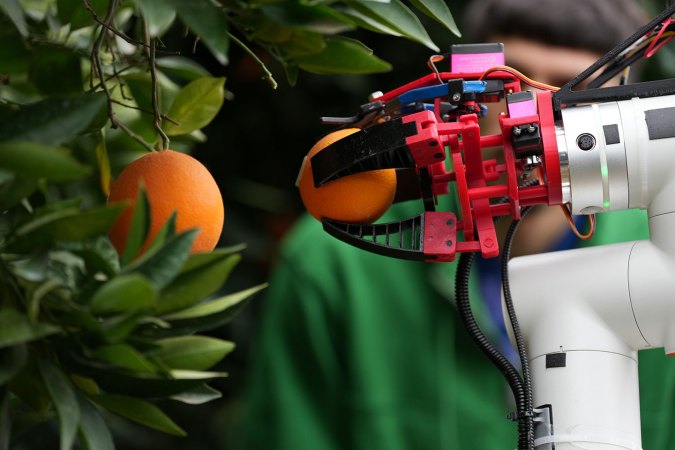
That experience inspired his work as an engineer. Improper picking can damage fruit, he had noticed, making it less valuable. Espinoza, now at California State University, Fresno, designed a device called an end effector for a citrus-harvesting machine. Found at the end of robotic arms, this device acts like mechanical hands. It includes both a gripper and a cutter. The cutter employs the specialized shears farmworkers use to cut stems. The gripper delicately grips the fruit. “It worked out beautifully,” he says. “I got to combine the things I learned in the classroom with my personal experience.”
The device could help farmers and workers alike. Working in California’s intense summer heat leaves laborers at risk of heat-related illnesses and injury, he notes. Farmers are also struggling to find laborers. Espinoza hopes his citrus harvester can help with worker shortages as well as ease the physical demands on farmworkers. In this interview, he shares his experiences with Science News Explores. (This interview has been edited for content and readability.)
What inspired your love for engineering?
The spark to be an engineer started in high school. There’s a program called Project Lead the Way that teaches students engineering and STEM technology. [STEM stands for science, technology, engineering and math.] We had computer-driven tools called CNC machines in class and learned about robotics. Before that, I didn’t even know what engineering was. Once I got a taste of it, it captivated my interest.
Then my interest in mechanical engineering came from growing up around vehicles. I had a lot of older family members who were into the ‘90s Honda scene. They would buy older vehicles and fix them up. Paint them, install sound systems, swap engines — the whole nine yards. My cousins and I would all hang out and go to car meets together.
What was a big challenge that you faced?
A big challenge for me was being a first-generation student. [A first-generation student is one who is in the first generation of their family to attend university.] Both of my older sisters started college, but neither of them finished due to starting families. I never had anybody in my family who knew how to navigate higher education. My parents and siblings would give me advice that came from the heart. They meant well, but they didn’t have the actual experience.
I had to figure it out on my own along the way. To some extent, that was better because I learned the hard way. That meant the lessons really stuck. If somebody is guiding you, you can become dependent on them to make decisions. You may not be able to confidently make decisions about what’s right for you. I had to be responsible for the mistakes that I made. I was better able to grasp those lessons because I had to struggle my way through.
How has agricultural tech changed since decades ago?
Historically, mechanical systems have been simple, robust and reliable. Unfortunately, that’s not how technology progresses. It tends to get more sophisticated and complex. Today, there are all kinds of technology that use sensors, GPS and automated controls. They’re these massive pieces of equipment that cost millions of dollars. You run into issues with not being able to repair your own equipment. The “right to repair” has been a huge topic across different sectors of tech. Did you know, when something breaks on your iPhone, you cannot buy or install an authentic Apple part directly as a consumer? You must either go through a third party or take it to Apple to fix.
In the past, repairing mechanical systems was very simple and straightforward. If something breaks, the farmer was the one to fix it. They had the tools and knowledge to service their equipment. Now, they can’t fix broken machines because they don’t have the right computer to hook up to them. They don’t have the special diagnostic tools or, in some cases, even permission. It needs to go through a licensed dealership that is authorized to repair it.
What’s next for you?
Agricultural tech was never really a career aspiration of mine. I enjoy it and do it now because it adds to an industry that got me to where I am today. Thanks to agriculture, my parents could provide for us and I could get an education.
My passion, though, is in automobiles. I want to improve vehicles that see the hands of everyday people. I want to work on the Honda Civics and the Toyota Corollas of the world. Those base models that get everyday people to where they need to go. My long-term career goal is to improve the quality of life for the general population. I want to provide everyday people who earn a minimum wage with reliable vehicles that are inexpensive to fix.