The sea surface covered by seaweed is now as big as South America
Satellite imagery shows algae ‘blooms’ are growing faster than scientists had realized
Fish hunt for food under a floating mat of Sargassum off the coast of Florida. This and other types of floating seaweed provide a habitat for marine life in the open ocean.
Brian Lapointe, FAU Harbor Branch
This is a human-written story voiced by AI. Got feedback? Take our survey . (See our AI policy here .)
What can stink up a beach, stall a boat and ruin a vacation? Too much seaweed. Floating mats of algae now cover a huge swath of the globe’s oceans. And they’re expanding at an accelerating rate, new data show.
Since 2003, seaweed has spread over the world’s seas at a yearly rate of 13.4 percent. Since 2013, it has grown even faster: by 16.7 percent. That means it’s getting almost one-sixth larger each year.
“Floating seaweed is a double-edged sword. In the open ocean, it’s great. It provides a habitat for marine animals,” says Chuanmin Hu. Turtles, fish, crabs, eels and shrimp live there. For sea creatures, mats of floating seaweed are an oasis in the “vast, homogeneous, boring ocean,” says Hu. An author of the new study, Hu is an oceanographer at the University of South Florida in St. Petersburg.
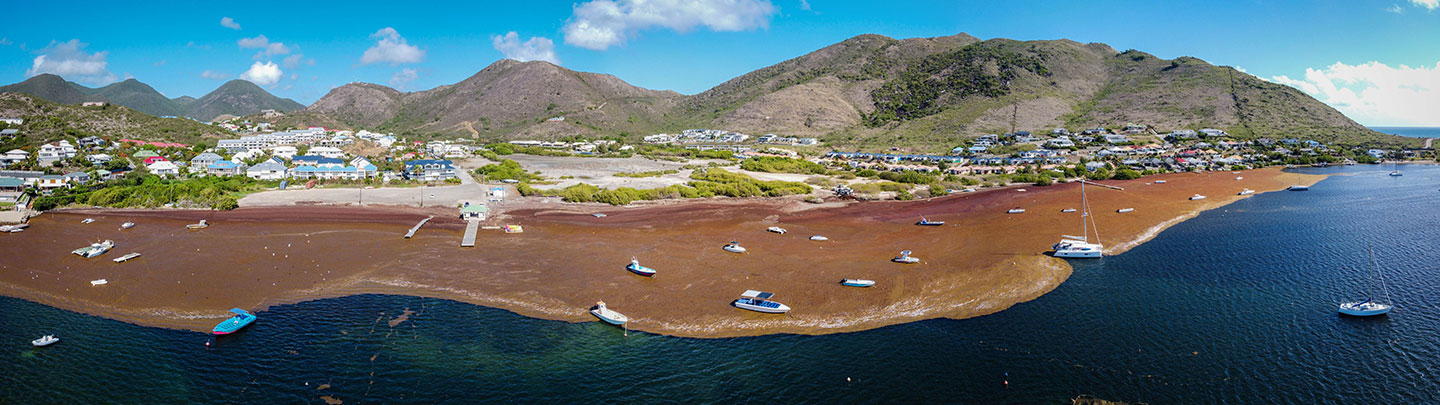
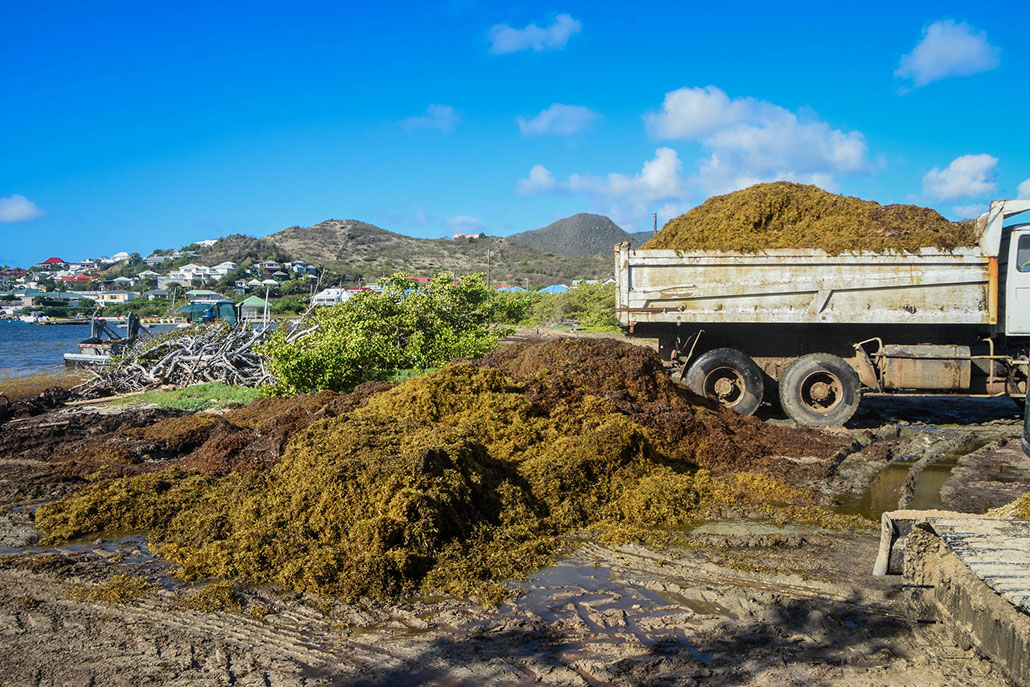
But here’s the problem: When tons of seaweed clog beaches and coasts, he says it becomes “a disaster in many ways.” These seaweeds are designed to float. When stranded on or near shore, they lose access to nutrients and oxygen. Eventually they’ll die.
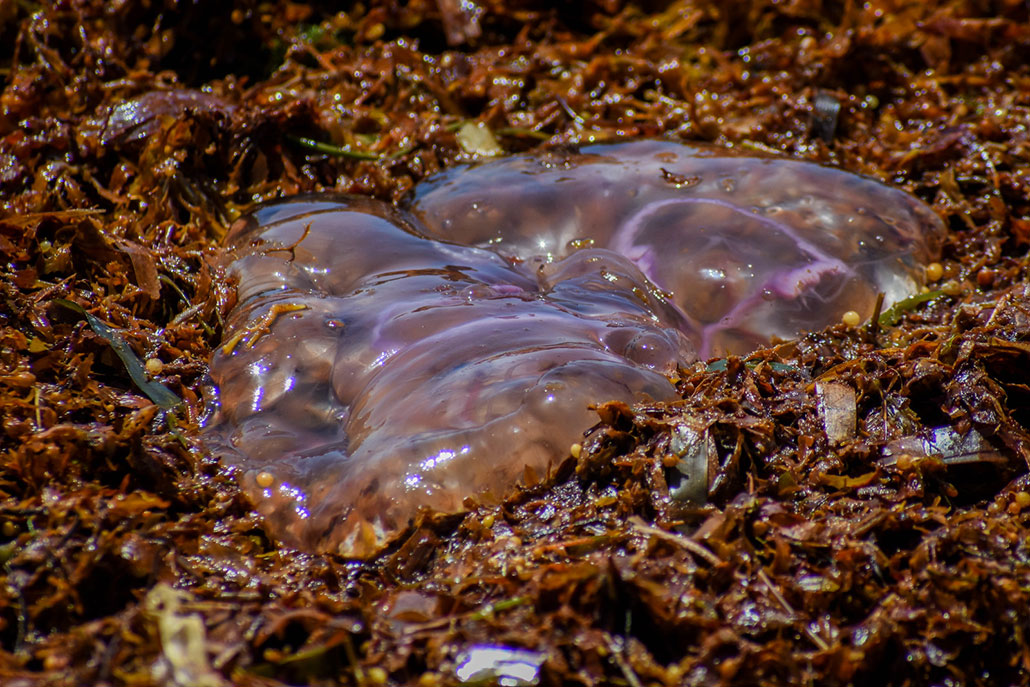
Bacteria and other decomposers will feast on this dead seaweed. As they do, they’ll use up oxygen in the water. Thick mats of algae also block sunlight from reaching the seabed. Starved of light and oxygen, that life below will die, Hu points out. At risk are everything from seagrass to corals and other animals.
And these mats can turn off people, too. That decaying seaweed “smells very bad, like a rotten egg,” Hu notes. When exposed to it, people can sicken and “tourists stay away.”
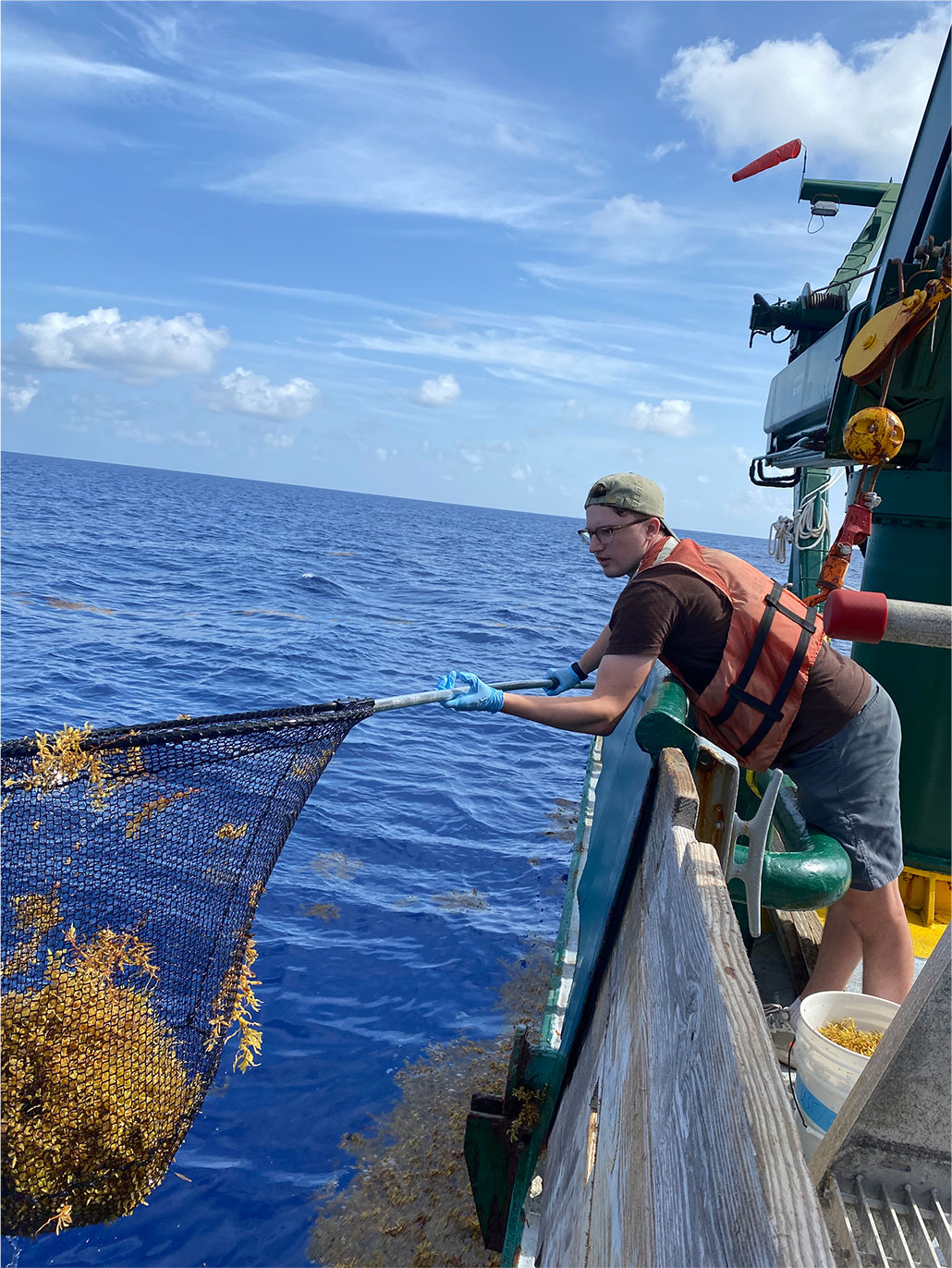
One type of seaweed grabbed scientists’ attention in 2011. Satellites had detected massive islands of Sargassum in the North Atlantic.
Unlike seaweeds that grow from the seabed, Sargassum has pea-sized air bladders that allow it to float on the surface. So to grow, “it doesn’t have to start out attached to [something],” notes Victor Smetacek. He’s a biological oceanographer who did not take part in the new study. He works at the Alfred Wegener Institute in Bremerhaven, Germany.
Scientists watched as the Sargassum bloom enlarged year after year. By 2018, it stretched from the west coast of Africa to the Caribbean Sea and Gulf of Mexico. That’s a distance of about 8,850 kilometers (5,500 miles)!
At the time, it set a record as the largest seaweed bloom ever recorded. By 2025, it was bigger still.
Hu and his colleagues wondered: Was this happening elsewhere?
On opposite sides of the Earth
For its new study, Hu’s team analyzed satellite images of Earth’s oceans taken from 2003 to 2022. With machine learning, a type of AI, they sorted through 1.2 million images.
As expected, they saw lots of Sargassum (the S. fluitans and S. natans species) in the North Atlantic Ocean. They also saw seaweed patches in the Western Pacific Ocean. There, they spotted big patches of devil weed (S. horneri) and branched string lettuce (Ulva prolifera) floating in the Yellow Sea and the East China Sea. In both oceans, these seaweeds multiplied in the spring and summer. In fall and winter, they shrank back.
Altogether, floating seaweed in warm months now covers about 18 million square kilometers (7 million square miles). That’s roughly the area covered by South America.
Hu’s team shared its findings January 19 in Nature Communications.
“The study is very timely,” says Brian Lapointe. He’s an oceanographer at Harbor Branch Oceanographic Institute. It’s part of Florida Atlantic University in Fort Pierce. “These macroalgae blooms in the Western Pacific and in the tropical Atlantic are happening so quickly. Just over the past 10 to 15 years or so.”
Is climate change propelling this?
That rapid growth may be signaling other worldwide changes. “We think the ocean is transitioning to a state that is more favorable to floating seaweed,” Hu says.
“Global warming has increased ocean temperatures within the seaweeds’ preferred range,” Hu points out. “So they are happier. They are healthier.”
His team thinks extra food may also be fueling the seaweed blooms. Seaweeds are not plants. But like plants, they make their own food through photosynthesis. In the open ocean, they’ll get all the sunlight they need.
Ocean water and the air supply their nutrients. When whales and other animals pee, poop or die, for instance, these wastes add nutrients to the water. “There’s also food in the air. Dust particles are full of iron and micronutrients,” Hu says. “These will not float in the air forever. Sooner or later that will sink to the ocean.” When winds and storms stir up the deep water, those nutrients can rise to the surface.
Even changes on land can drive algal blooms. Runoff from farms and cities is full of nutrients, such as phosphorus and nitrogen. “Nutrients go into creeks. Then these reach large rivers and the ocean,” Hu says. Winds and ocean currents can move those nutrients into the open ocean. Runoff in the Congo and Amazon rivers could be feeding Atlantic seaweed blooms. Fertilizers used in aquaculture — seafood farms — could be fueling big blooms near Asia.
Global sea temperatures and phosphorus are both projected to keep rising. So floating seaweed will likely continue to grow in its expanse.
“These [seaweed] blooms,” Lapointe says, “are indicators of increasing nutrient enrichment in our waters.” And that might signal more — and rapid — changes to come.