
All Stories by Bethany Brookshire
- Chemistry
Scientists Say: Toxin
It is safe to refer to any poison as toxic. But while all toxins are poisonous, most poisons are not toxins.
- Chemistry
Scientists Say: Cyanide
Cyanides are poisonous. But they are more than that. This group of compounds is used in everything from mining to capturing fish.
-
Ink leads way to terminating termites
Inspired by a classroom experiment, a teen has built a way to lure troublesome termites to their death — using the power of ink.
- Animals
Teens use science to worm through plastic waste
Some beetle larvae can eat plastic, which might be good for our pollution problem. But which types eat the most can vary a lot, these young scientists find.
- Space
Scientists Say: Wormhole
Scientists have predicted the presence of tunnels in space that connect two points in space and time. They are named for the shape they resemble.
- Earth
Fighting big farm pollution with a tiny plant
Fertilizer runoff can fuel the growth of toxic algae nearby lakes. A teen decided to harness a tiny plant to sop up that fertilizer.
- Life
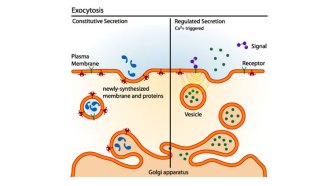
Scientists Say: Exocytosis
For a cell to remove something large from inside itself, it turns to a process called exocytosis.
- Chemistry
Scientists Say: Acidification
When a solution becomes more acidic, it’s acidifying. And that’s not always a good thing.
- Animals
Eating toxic algae makes plankton speedy swimmers
After slurping up harmful algae, copepods swim fast and straight — making them easy prey for hungry predators.
- Life
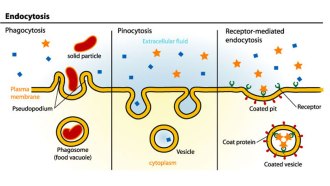
Scientists Say: Endocytosis
Small molecules can go into a cell through receptors or even just dissolve into it. But something big? That requires endocytosis.
-
Teen gymnast finds how best to keep her grip
Unsatisfied with anecdotal opinions on which type of gymnastics chalk was best, a teen used science to find out for herself.
- Physics
Scientists Say: Absolute zero
Even when we think it’s cold out, most molecules are moving. Only at absolute zero will all of their motions stop.