
All Stories by Bethany Brookshire
- Earth
Common water pollutants hurt freshwater organisms
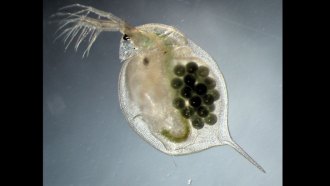
The germ killers we use and the drugs we take don’t just disappear. They can end up in the environment. There they can harm aquatic organisms, three teens showed.
- Animals
Snakes go dark to soak in the sun
Snakes are paler in the South and darker in the North. The darker species absorb heat more quickly, a teen showed.
- Animals
Scientists Say: Copepod
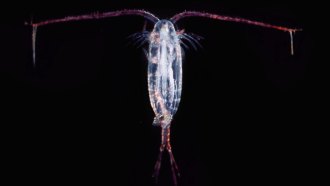
Copepods are tiny crustaceans. They eat phytoplankton and float in the water column, although some live in freshwater and on the sea floor.
-
Teens share what inspired them in STEM
What inspires kids to pursue science, technology, engineering and math? These teens share their stories.
-
Taking science to the track
An athlete took on science research with a few friends and a heart monitor.
- Chemistry
Keeping samples cool without electricity
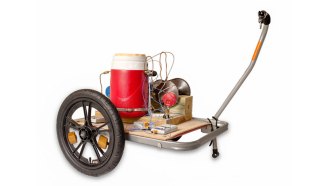
When vaccines and blood get too warm or cold, they can become useless. Two teens invented ways to keep their temperatures just right, no matter where they are.
- Animals
Insects can patch their broken ‘bones’
When insects suffer wounds, they can mend their ‘skeleton’ with a patch on the inside. This makes the leg strong again, new data show.
- Life
Scientists Say: Strain
These are organisms that belong to the same species, but have definable differences.
-
Help us fund the Eureka! Lab video series
I want to make a video series that turns demonstrations into real experiments. But to do it, I need your help.
- Life
Scientists Say: Vector
Vectors are used to transfer things. Sometimes the transferred item is a disease, but scientists can also use vectors to insert helpful genes.
- Physics
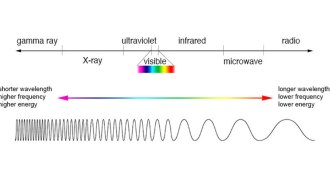
Scientists Say: Frequency
The distance between one wave peak and another is wavelength. But how fast those peaks are moving along is frequency.
-
A paper microscope magnifies on the go
Classroom microscopes can be clunky and costly. An inventor has designed one so small, tough and cheap that it can go home in every kid’s backpack.