
All Stories by Katie Grace Carpenter
- Chemistry
Scientists Say: Lipid
These oily, water-repelling molecules knit together, forming the membranes that sustain life.
- Physics
Scientists Say: Tauonium
No protons, neutrons or electrons. And yet, based on what scientists know about fundamental particles, this variety of atom just might exist.
- Tech
Scientists Say: Prototype
These rough draft models help engineers test how a concept translates from theory to reality.
- Earth
Scientists Say: Heat dome
Typically, weather enters an area, storms through, then leaves. Here's what happens when steamy summer air gets stalled.
-
- Ecosystems
Scientists Say: Ecosystem
The interplay between living things and the physical environment gives rise to Earth’s thriving, life-sustaining ecosystems.
- Space
Scientists Say: Quasi-satellite
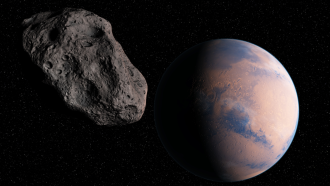
Unlike a true satellite, these tagalongs orbit outside a planet’s primary sphere of gravitational control.
- Environment
New ocean sanctuaries house young coral and even flee peril
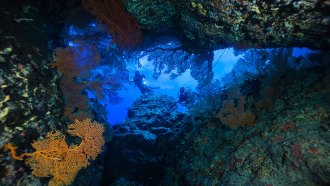
Two ISEF finalists want to foster growth of new coral reefs. So these teens designed and built self-navigating, undersea houseboats for coral larvae.
- Animals
Teens work to keep giant water bugs on the menu
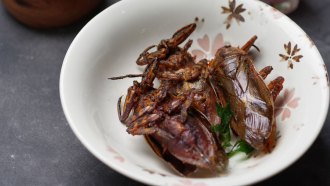
Many culinary cultures around the world prize these nutritious and flavorful insects. New approaches may help giant water bug farming efforts.
- Chemistry
Scientists Say: Chiral
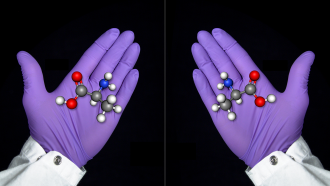
Many biological molecules come in a left- and right-handed form — and biology plays favorites.
- Environment
Eco-friendly sunscreen? That’s bananas!
Bananas make their own natural sunscreens. A teen thinks these could work to protect our skin as well, while being safe for aquatic life.
- Earth
Scientists Say: Caldera
These gigantic craters form when a volcanic eruption empties magma chambers underneath, allowing the mountain to crumble into the void.