
All Stories by Katie Grace Carpenter
- Animals
Scientists Say: Mammal
Humans, platypuses, whales and kangaroos show the diversity of this vertebrate group.
-
- Math
Scientists Say: Symmetry
From snowflakes to animal body plans, repeating patterns of shapes show up throughout nature.
- Humans
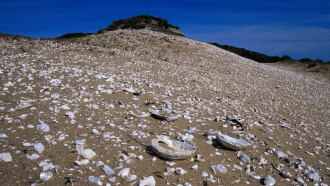
Scientists Say: Midden
One ancient person’s, or animal’s, trash may become an archeologist’s treasure.
- Life
Scientists Say: Phenology
This field of science identifies the environmental cues behind life cycle patterns.
- Chemistry
Scientists Say: Alloy
These metallic mergers support our tallest buildings and our finest jewelry.
- Earth
Scientists Say: Fjord
These dramatic, steep-sided sea inlets form when glaciers carve deep channels from the terrain.
- Space
Scientists Say: Event horizon
Past this boundary, nothing that enters a black hole can ever leave — not even light.
- Chemistry
Scientists Say: Fluoride
This electrically charged form of fluorine boasts powerful tooth-strengthening abilities.
- Earth
Scientists Say: Snow line
On Earth, this line marks the edge of snow-covered ground. In space, it marks a spot where a certain molecule might freeze.
-
- Genetics
Caffeine may dial down genes crucial for brain development, teen finds
Data from animal studies point to a troubling possibility: Caffeine may alter brain development.