
All Stories by Stephen Ornes
- Humans
Stone Age stencils: Really old art
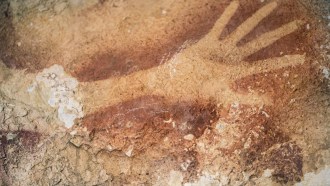
Scientists thought that cave art started in Europe. New analyses now dash that assessment. Stencils in an Indonesian cave are every bit as old as the better-known drawings in caves in France and Spain.
- Chemistry
Sunlight might have put oxygen in Earth’s early air
High-energy bursts of ultraviolet light can break apart carbon dioxide, yielding oxygen gas. The experiment may mimic what happened on Earth billions of years ago.
- Brain
Strong body helps the mind
Study finds new link between the body and brain in mice and may help explain how exercise heals.
- Chemistry
Space cloud may hold clue to life’s origins
Scientists probing a cloud of dust and gas some 26,000 light-years away found a chemical with a structure resembling molecules critical for all life on Earth.
- Health & Medicine
Artificial sweeteners may evict good gut microbes
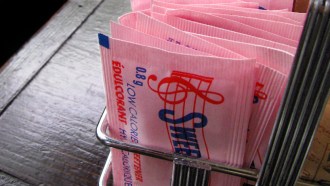
People use saccharin and other artificial sweeteners to try to stay healthy. A study now suggests such sweeteners might actually cause harm by encouraging the wrong bacteria to grow in our guts.
- Tech
Squishy robot propelled by ka-pow!
This is not your average robot. It flies through the air, propelled by an explosion in one of its arms. It could prove useful in disaster areas or war zones.
- Fossils
Early dino-era start for modern mammals
Fossils of an extinct group of rodent-sized mammals suggest they were related to modern mammals. These ancient remains push back the origin of mammals by many millions of years.
- Computing
3-D printers are making cars!
3-D printing technology makes it possible to print anything — even a car. A team of engineers designed the Strati and then printed the electric cars at events in Chicago and New York.
- Tech
Explainer: What is 3-D printing?
A new type of computer printer is already doing a lot more than spraying ink onto paper. Some dispense metal, plastic, food — even cells. In short order, people may be able to manufacture almost anything from their home or office.
- Archaeology
Pyramids’ blocks: Possibly rock ‘n’ rolled
No one knows how the ancient Egyptians moved the big stones needed to build their pyramids. A new study suggests they could have rolled them, by attaching wooden posts to the sides.
- Planets
This moon’s surface slides, just like Earth’s
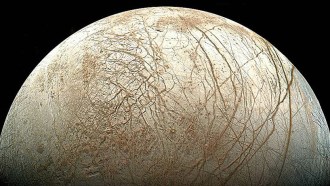
Europa is one of Jupiter’s giant, icy moons. Scientists say it has plate tectonics, which means its surface is covered by moving, giant slabs.
- Archaeology
Mummies existed before Egypt’s pyramids
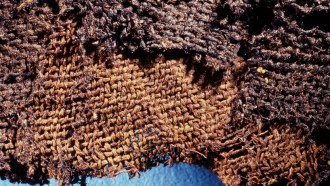
Materials from an ancient Egyptian cemetery suggest people were preserving their dead long before the pyramids and pharaohs.