
All Stories by Stephen Ornes
- Space
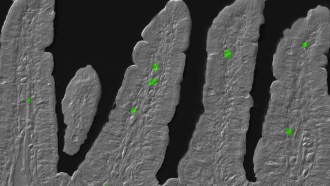
The sun’s giant heat elevators
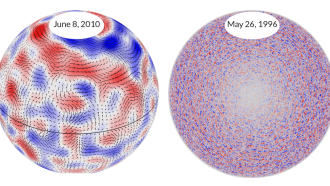
Scientists have long known that plumes of hot plasma rise from the sun’s interior to its outer layers. New observations have now identified especially big plumes that can be 15 times as wide as Earth’s diameter and last for months.
- Animals
How seahorses use their heads
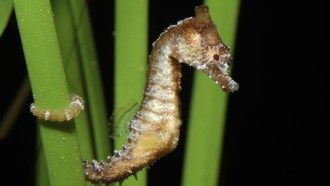
A dwarf seahorse’s head may look funny, but its shape allows the creature to sneak up on fast-moving prey.
- Planets
Jupiter’s long-lasting storm
Most studies of Jupiter’s centuries-old Great Red Spot suggest this giant storm should have petered out after a few decades. A new study traces the storm’s staying power to the vertical movement of its gases.
- Computing
The data flood
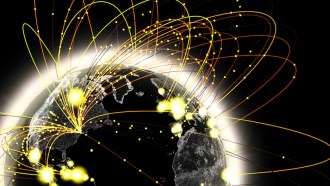
Mountains of data drive advances in science, medicine and other fields. Here’s how they might affect you.
- Computing
Explainer: Understanding the size of data
Data are beginning to accumulate in quantities of mammoth size.
- Science & Society
Human ancestors threw spears
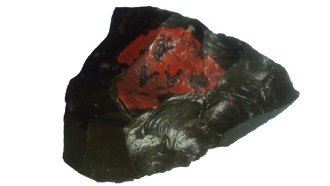
Who threw first? Scientists had long believed that ancient people who lived 80,000 years ago were the first to throw spears with stone tips. But the discovery of 279,000-year-old stone spear tips in Ethiopia pushes that date back, and suggests prehuman species hunted with spears too.
- Science & Society
Bigger groups make better tools
As the size of a population grows, so too does its ability to quickly create clever new tools. Lab experiments suggest that connections between people give rise to the new creations.
- Health & Medicine
New problem linked to ‘jet lag’
The body’s internal clock can be thrown off when people alter their day and night routines. That mix-up may lead to a buildup of immune cells that can cause inflammation, according to a new study on mice.
- Health & Medicine
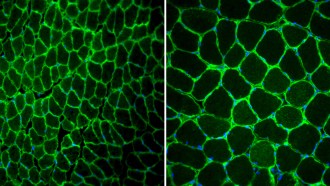
Mice on steroids
A new mouse study suggests the effects of steroids can last at least months. That’s long after most sporting authorities would be able to identify signs of doping in athletes.
- Earth
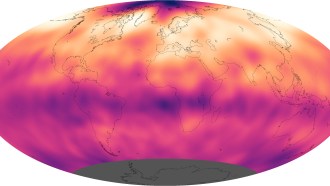
Energy companies triggered quakes, study says
Injecting carbon dioxide underground seems like a good way to slow down global warming. A new study shows, however, that the process could trigger earthquakes.
- Brain
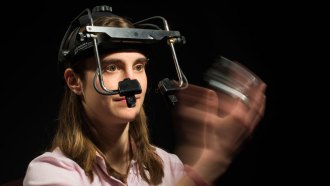
Seeing without light
Many people report seeing their own hands moving in the dark, a new study finds. In these people, brain areas responsible for motion appear to fool vision centers into seeing what they would have — if there had been enough light to do so.
- Brain
Sleeping brains take a bath
During waking hours, litter builds up in the spaces between brain cells. A new study shows that during sleep, fluid from the brain and spinal cord takes out this trash.