Mummies suggest a way to help reintroduce cheetahs to Arabia
The extinct cats were close relatives of African cheetahs, which might launch new populations
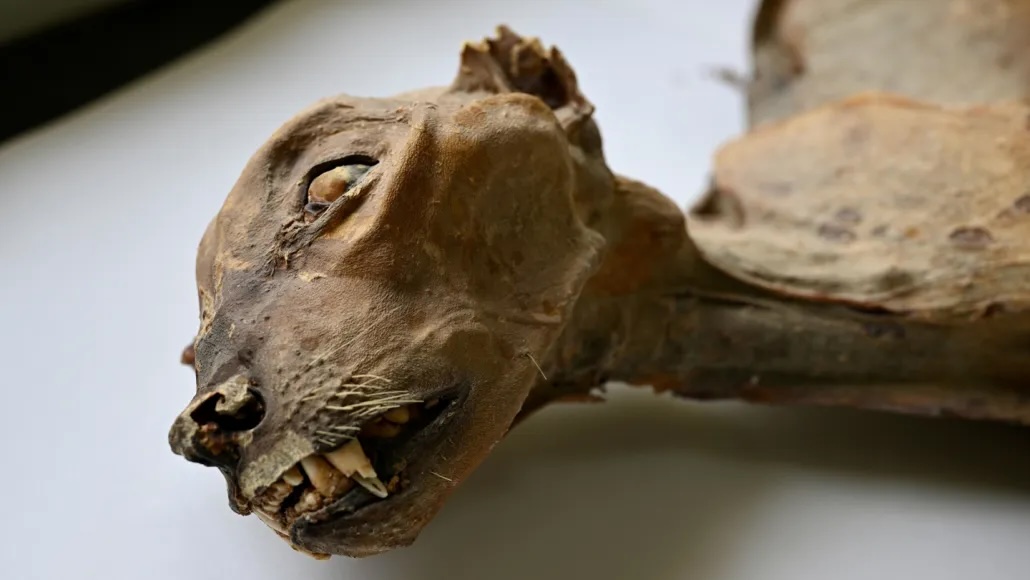
Researchers found this cheetah mummy, shown in a laboratory, while exploring caves on the Arabian Peninsula. DNA from skeletons and mummified remains of these wildcats show they were close relatives of cheetahs living in northwest Africa.
Ahmed Al-Boug et al/Communications Earth & Environment
This is a human-written story voiced by AI. Got feedback? Take our survey . (See our AI policy here .)
Dozens of millennia-old Arabian cheetahs lie frozen in time.
Researchers uncovered the ancient skeletons and mummies in Middle Eastern caves. No wild cheetah has roamed this region for decades. But DNA from the remains of these now-extinct wildcats might help scientists reintroduce cheetahs here.
Genetic analyses suggest the ancient cats had been close relatives of two living subspecies. Those cheetahs might be used to establish new populations in Arabia.
The team published its findings January 15 in Communications Earth & Environment.
Cheetahs once roamed across Africa and large tracts of South Asia. On the Arabian Peninsula, habitat loss and human hunters may have led to the cats’ extinction. None have been seen there since the 1970s.
Ahmed Al-Boug works at the National Center for Wildlife in Riyadh, Saudi Arabia. In 2022 and 2023, this wildlife biologist went looking for remains of the extinct Arabian wildcats. He was part of a team that surveyed 134 underground caves in the north of that country.
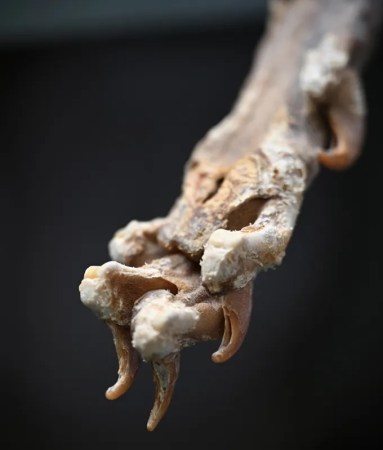
Cheetah remains turned up in five of those caves. In all, there were 54 skeletons and seven mummies. The cats may have fallen into the underground caves and been unable to get out. Over time, the region’s extreme heat would have dried out their bodies.
This discovery is a rare find, says molecular ecologist Liz Kierepka. She works at the North Carolina Museum of Natural Sciences, in Raleigh. “The fact that they went into over 100 caves and were able to find mummies — that’s highly unusual,” she points out.
Al-Boug and his team used carbon dating on several of the cheetahs. Their age ranged from about one century to more than 4,200 years old.
The team mapped the full genomes of two cheetah skeletons and a mummy. One of these cats was a close relative to Asiatic cheetahs (Acinonyx jubatus venaticus). Scientists thought this was the only version of this species to ever live in Arabia. But surprisingly, the other two cats were relatives of cheetahs from northwest Africa (A. jubatus hecki).
Cheetah rewilding
These findings provide a second gene pool to help scientists bring cheetahs back to the region. It’s ideal to use populations that might have adapted to local conditions, Kierepka points out. Northwest Africa’s cheetahs might share some of those traits with the former Arabian cats.
But both modern subspecies are endangered, notes Kierepka. And that could pose problems. Any relocated African cheetahs would come from tiny, struggling populations, she notes. And that could strain the survival of those donor groups.
Kierepka says she would like scientists to look for other useful traits when selecting donor cheetahs. “If they really want to pursue rewilding,” she says, that could boost chances of success.