
All Stories by Stephen Ornes
- Environment
Burning to learn
Fires cause billions of dollars of destruction to homes and forests every year. But not all fires are bad, especially for forests. With a better understanding of fire, scientists can both help people prevent dangerous fires — and identify which ones it would be better to let burn.
- Environment
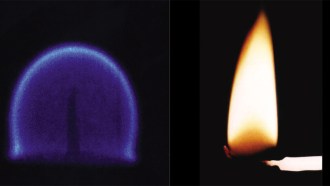
Explainer: How and why fires burn
A fire’s colorful flame results from a chemical reaction known as combustion.
- Animals
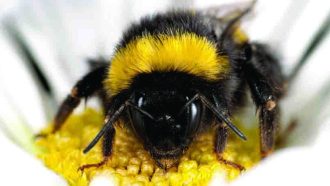
Passing diseases from bee to bee
A study finds that the viruses and parasites that plague honeybees can infect bumblebees too, sickening another important pollinator.
- Health & Medicine
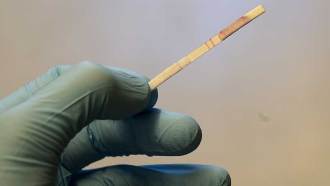
Simple test for cancer and heart disease
Disease diagnosis often requires expensive equipment and tests to probe deep inside the body. But a new test relies on a fast, cheap and easy technique. And its answers appear on a strip of paper — just as they do on a pregnancy test.
- Brain
Mapping the brain’s highways
A new map may explain why some brain injuries are worse than others. Even relatively minor injuries that disrupt message superhighways may have a more devastating impact than some seemingly catastrophic injuries.
- Animals
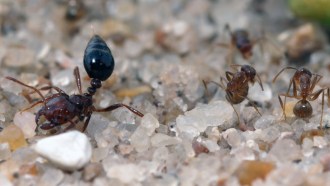
‘Crazy’ ant fight
By neutralizing the poison produced by fire ants, ‘crazy’ ants can survive heated battles. And that may help explain why crazy ants are edging out fire ants in parts of the southern United States.
- Animals
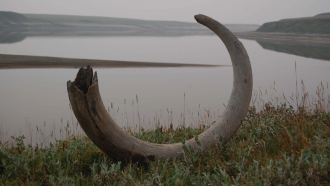
Flower loss doomed the mammoths
Woolly mammoths roamed the Arctic until about 10,000 years ago. Why they died out may trace to the vanishing of the mostly flowering plants on which they had been dining.
- Health & Medicine
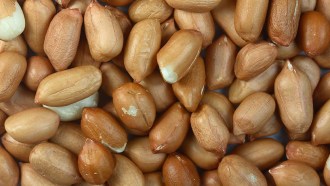
When a nut allergy comes back
Eating small amounts of peanuts may help people overcome an allergy to the food. But for most people undergoing the treatment, its benefits vanish after they stop eating peanuts.
- Animals
Birds versus windows
Buildings in the United States can be deadly obstacles to flying birds. A new study estimates that as many as 1 billion birds die every year after colliding with windows. And low buildings — not skyscrapers — account for most of those deaths.
- Physics
Closing in on fusion energy
Scientists blasted a tiny capsule of hydrogen with laser beams, setting off a reaction that released more energy than in earlier experiments. Still, scientists remain a long way from creating a reaction that releases more energy than it needs to get started.
- Planets
New evidence of a wet Mars
Ten years in to its tour of Mars, the Opportunity rover finds another place on the Red Planet that once might have hosted water.
- Life
How to reset a cell
Scientists had reported they had figured out how to turn a specialized cell into any other type of cell the body may need. All it took was an acid bath. But now in July, big doubts have emerged about the quality of that work and whether the results will hold up.