Antarctica faces a green and weedy future
Warming is allowing alien species to invade a land isolated for 30 million years
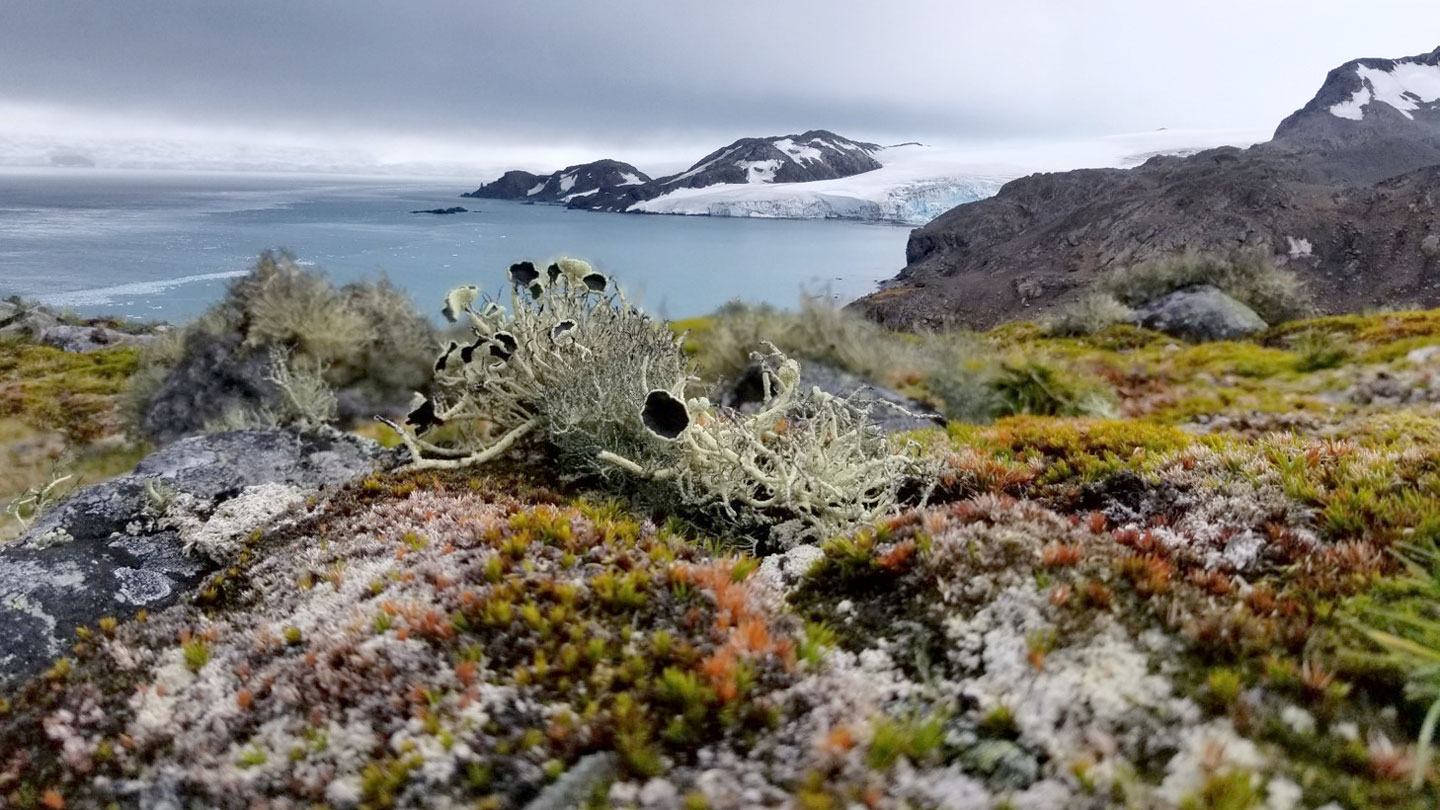
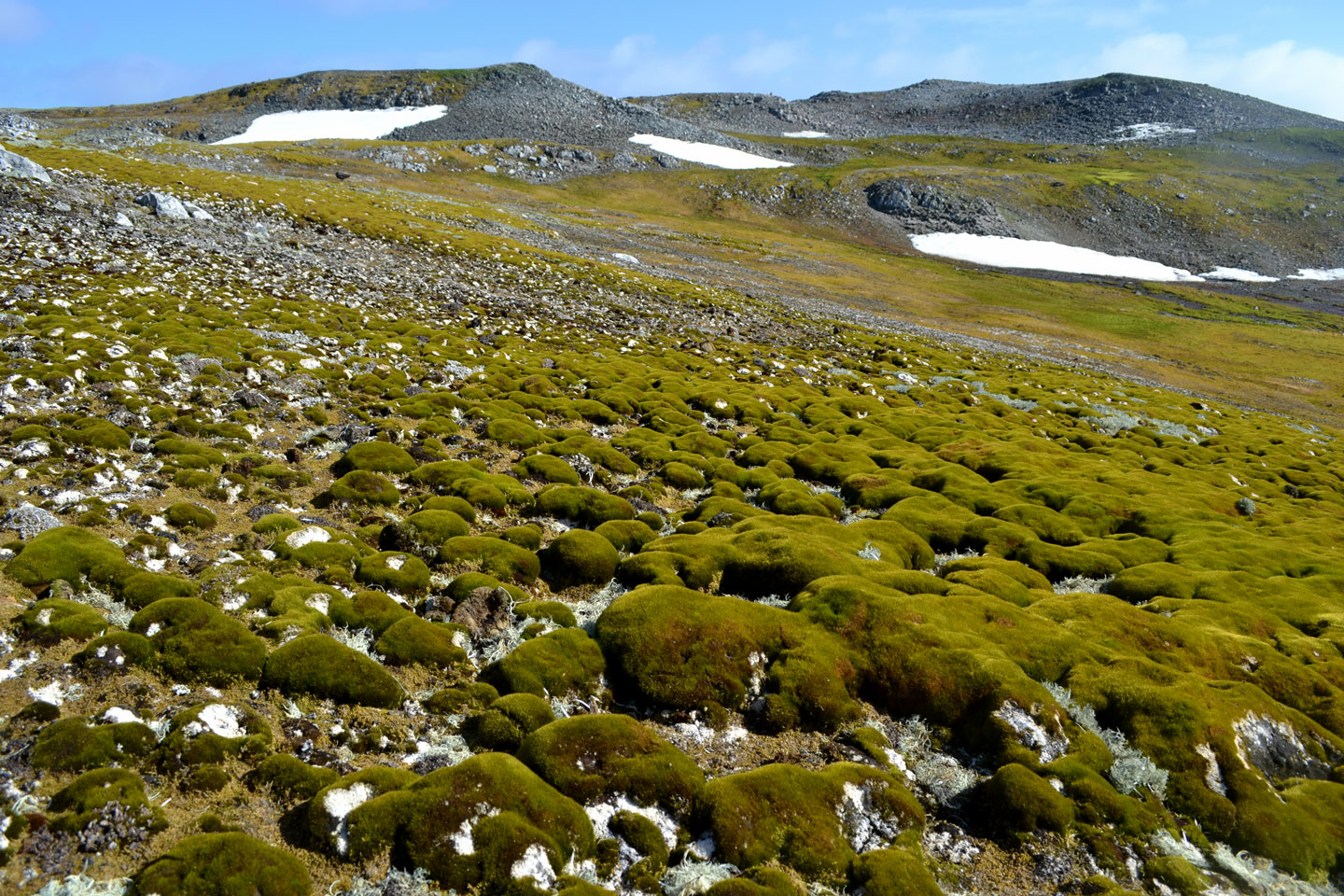
At rare places along the Antarctic Peninsula, the ground is covered by a carpet of moss and lichens that creeps over the rocks. The vast majority of Antarctica, however, remains covered by a deep blanket of glacial ice (seen in background).
Felix Grewe/Field Museum
This is a human-written story voiced by AI. Got feedback? Take our survey . (See our AI policy here .)
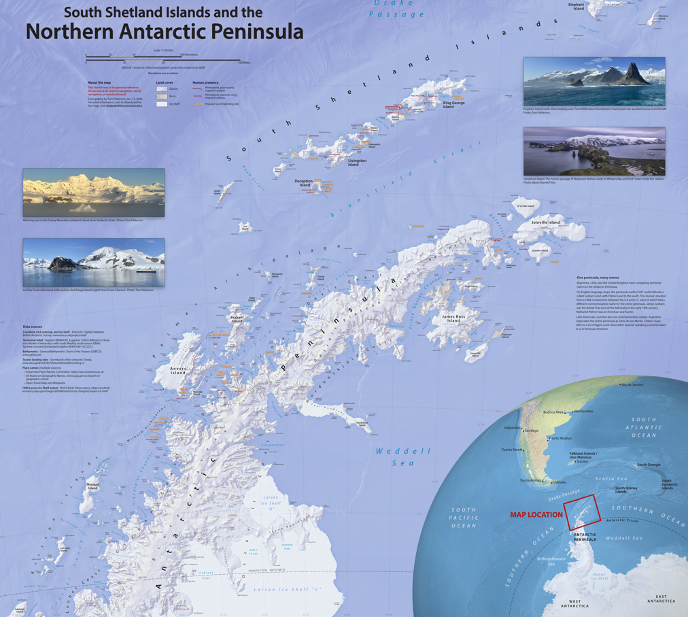
If you want a glimpse of the future of Antarctica, look at King George Island. It sits at the northern tip of the Antarctic Peninsula. This finger of land, which reaches toward South America, is the warmest part of the continent.
Thick ice blankets most of this island. But a rare oasis sits on its western edge. During summer, melting snow reveals rocky ground covered by a mushy green carpet. It’s mostly moss and lichens, with a few other plants sprinkled in.
As our climate warms, this island’s ice will shrink, expanding the green oasis. This will allow alien species from other parts of the world to take root. Human visitors are already unintentionally bringing in non-native species. These invaders could steamroll native plants and animals, transforming the landscape.
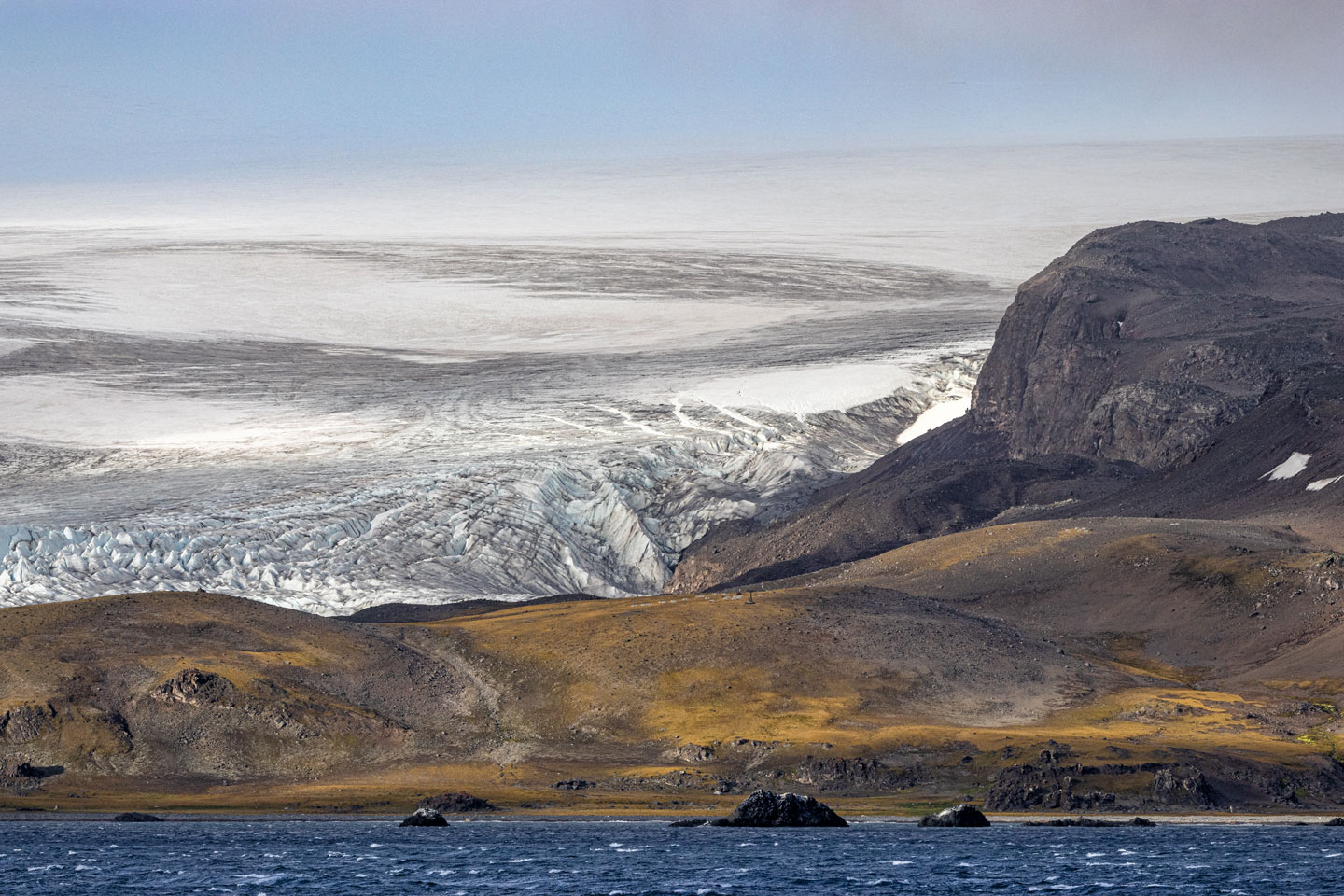
Within 200 or 300 years, scientists worry, the northern Antarctic Peninsula will likely look a lot different.
“The biggest threat is that we’ll get something that will look like South American [grassland],” says Stef Bokhorst. A terrestrial ecologist, he works at Vrije University Amsterdam in the Netherlands. He envisions “an open scrubland” of miniature trees, like what’s found in Patagonia, at the bottom tip of South America.
Since 1850, Earth has warmed by around 1.44 degrees Celsius (2.60 degrees Fahrenheit), on average. But the Antarctic Peninsula is currently warming nearly twice as quickly. Summer snows are slowly turning to rains, says Steven Chown. A biologist, he studies the conservation of polar species at Monash University in Melbourne, Australia.
And Antarctica’s warmer, wetter climate might not be good for its natives.
Vegetation at the south end of the world is “very unique,” notes Bokhorst.
Plants and animals found in the extreme north — the Arctic — resemble those elsewhere. The warmest parts of Greenland, Iceland and Svalbard Island (to their east) bustle with grasses, flowers, butterflies and bees. Rodents and foxes creep about.
Antarctica, in contrast, has been far more isolated, for 30 million years. It plunged into a far deeper cold than the Arctic. And its simple ecosystems look very different from those in the Arctic.
Across all of Antarctica and its islands, only two species of insects naturally exist. Both are flies, though one of them — a midge — lacks wings.
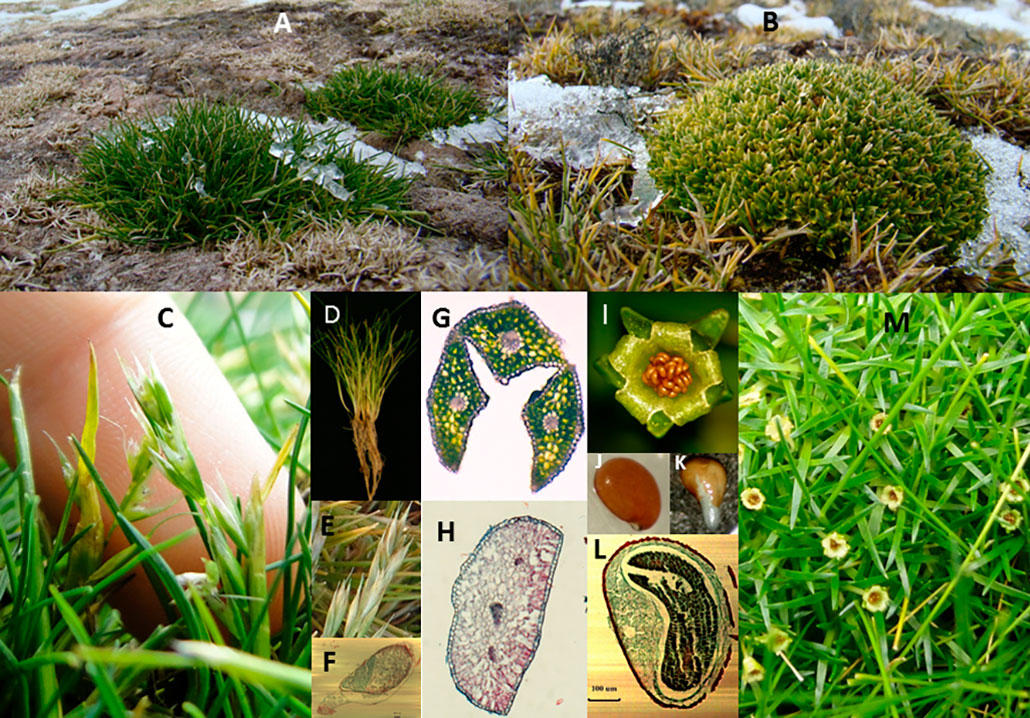
Antarctica hosts greenery only in a few places. Most of it is moss and lichens that creep over rocks. Across the whole Antarctic continent, you’ll find only two native species of vascular plants (those with roots, stems and leaves). One is a wispy hair grass. The other, a pearlwort, resembles a puffy green pincushion with tiny yellow flowers.
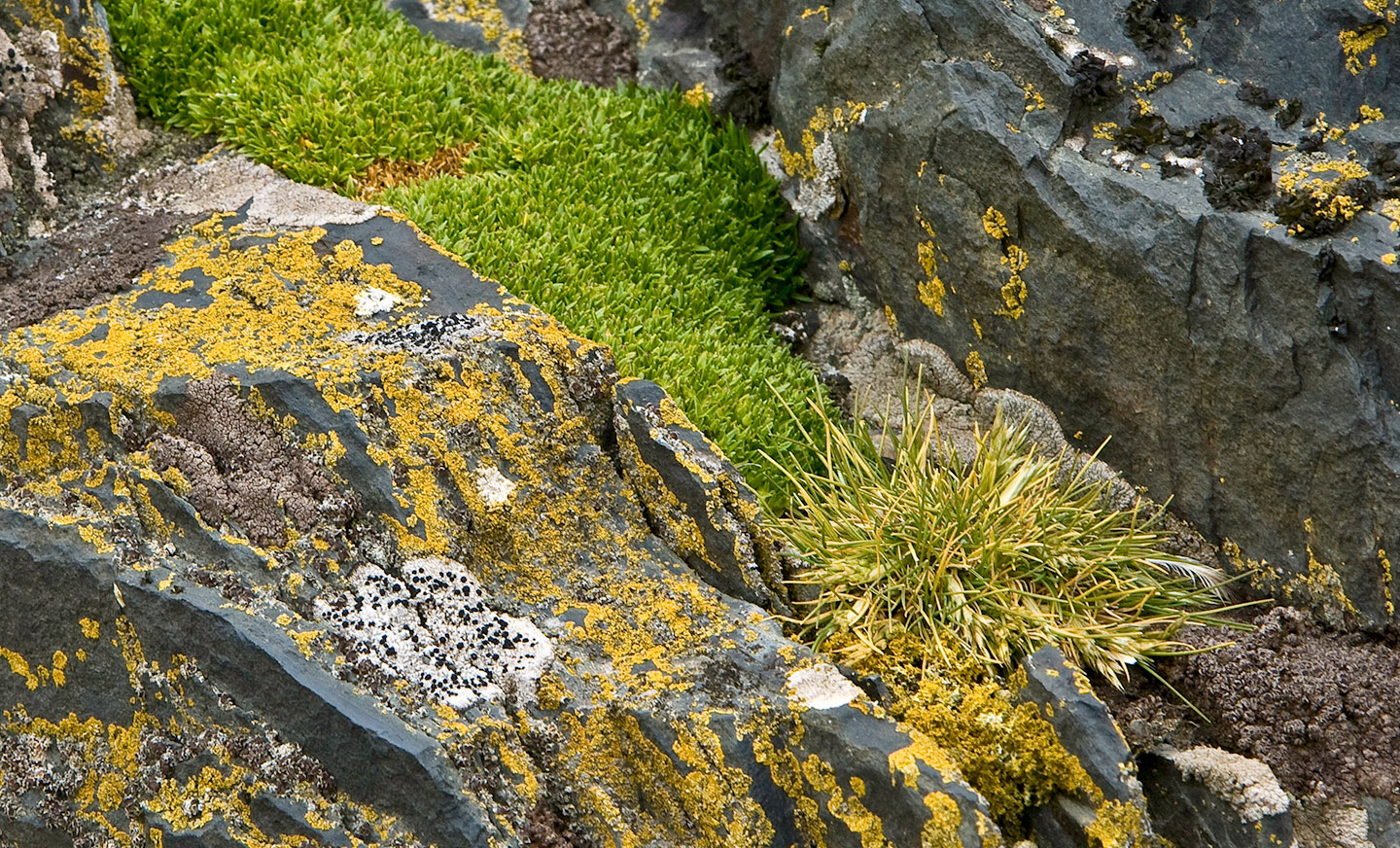
“You will not find [this sparse ecosystem] anywhere else on the planet,” says Bokhorst. And it’s now threatened by climate change and invasive species. Within two or three centuries, alien species could replace many of the natives. Parts of the Antarctic Peninsula may look lush and green during summer.
Polar biologists don’t welcome this.
Vanished forests
Today, it’s hard to imagine parts of Antarctica turning green. After all, ice up to four kilometers (2.5 miles) thick now blankets 98 percent of the continent. Most of the rest is bare gravel and rock — a frigid polar desert. Seals, penguins and seabirds (such as skuas and petrels) inhabit only the outer coastal fringes.
But it wasn’t always that way.
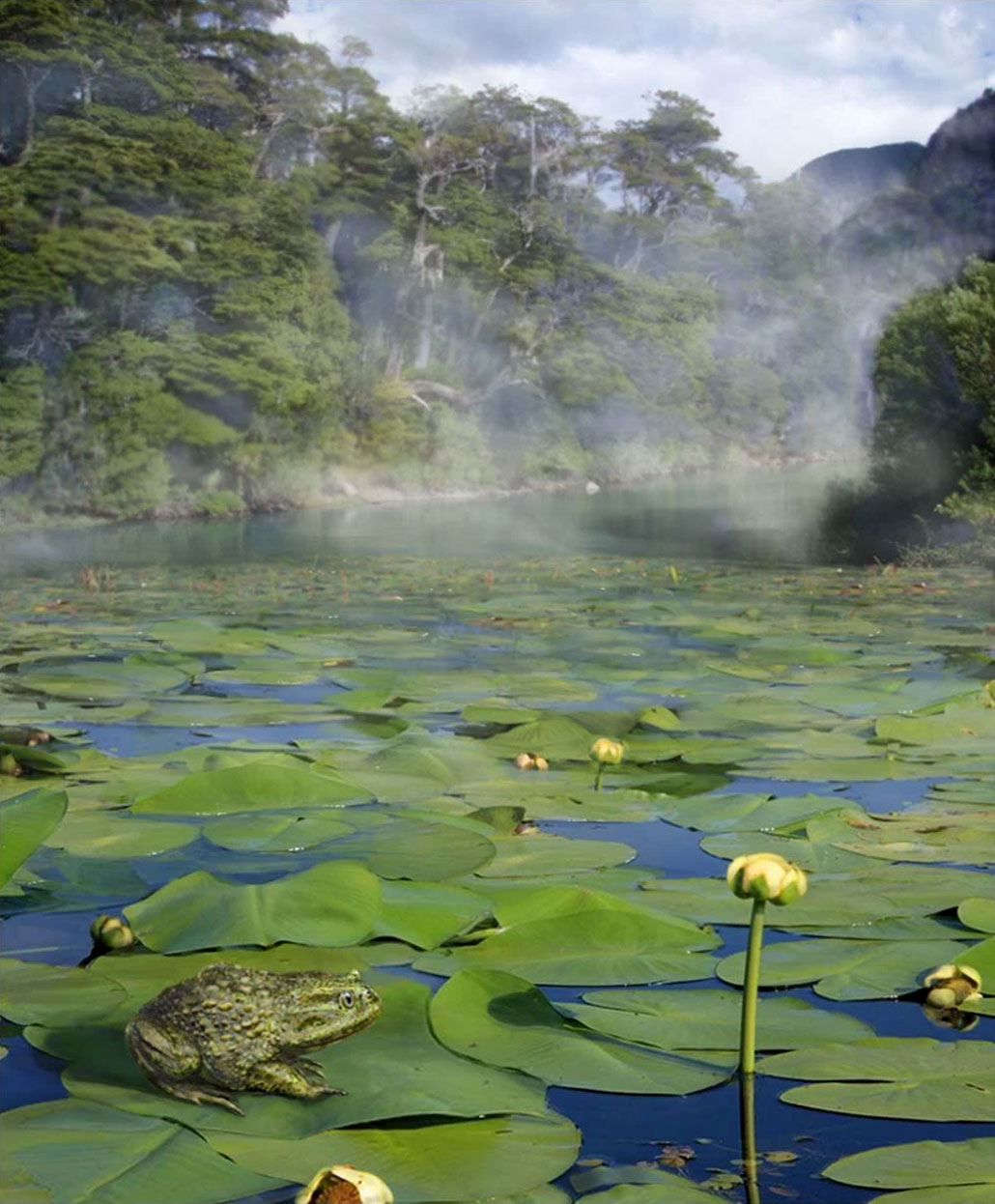
Forty million years ago, forests of southern beech trees covered much of Antarctica — perhaps even the South Pole. Furry marsupials, similar to modern-day possums and badgers, prowled the undergrowth.
“It was a warmer, more pleasant climate,” says Byron Adams. A polar biologist, he works at Brigham Young University in Provo, Utah. That ancient climate, he says, was more like South America’s modern-day Patagonia.
Until 35 million years ago, Antarctica was linked to South America. Then the two continents started drifting apart.
South America still hosts southern beech trees and marsupials. But Antarctica, isolated at the bottom of the world, plunged into permanent cold. Thousands of its species died off, including trees and mammals.
Antarctic rocks hold fossils of beech trees, water lilies, frogs, mammals and other creatures. Only a few types of land animals — all quite small — have survived.
Turn over a rock and you may find insect-like critters called springtails. Each is no larger than a comma on a page. Some soils harbor microscopic tardigrades, mites and worms. Mosses and lichens sparsely dot rocky sites that get water and direct sunlight in summer. But oases that are lush with native grass, pearlwort and flies exist only on the northern Antarctic Peninsula.
Some moss clumps have grown there for thousands of years. Scientists have studied their layers, like tree rings — and discovered something alarming.
An ominous growth spurt
For a long while, the mosses had grown at a slow, even rate. But as the Peninsula started warming around 1950, their growth started to spurt. By 2010, they were growing two to four times faster than before.
“We were surprised,” says Thomas Roland of these findings. This speedup, he notes, is “unprecedented in the last 4,000 years.” A paleoecologist, Roland works at the University of Exeter in England.
A more recent study found something similar on Signy Island. It lies 650 kilometers (400 miles) northeast of King George Island. Nicoletta Cannone is a botanist at Insubria University in Italy. She’s studied the expansion of Antarctica’s native grass and pearlwort. And between 1960 and 2018, the area covered by these two plants roughly tripled. Her team reported the finding in 2022.
Most recently, Roland and Oliver Bartlett studied satellite images. They used color to analyze extent of vegetation over a wide swath of the Antarctic Peninsula. Bartlett is a remote sensing scientist at the University of Hertfordshire in England. The pair’s analysis suggested that green areas on the Peninsula expanded rapidly from 1986 to 2021.
Such data suggest Antarctica’s sparse greenery is already responding to a climate-related fever of just 1 to 2 degrees C (1.8 to 3.6 degrees F). By 2100, total warming on the Antarctic Peninsula will likely reach 2.3 to 6.1 degrees C (4.1 to 11 degrees F). That’s according to new projections published February 20 in Frontiers in Environmental Science. Even if warming happens more slowly, it’s possible that by 2300, the Peninsula could warm by 4 to 8 degrees C (7.2 to 14.4 degrees F). It will depend on how much more greenhouse gases humans produce.
That much warming could have huge effects. Right now, the average summer temperature on King George Island is around 1.5 °C (34.7 °F). But by 2300, its average summer temperature could hit 5 to 9 °C (41 to 48 °F). That’s similar to some cities in northern Siberia, in Russia, where trees line the streets.
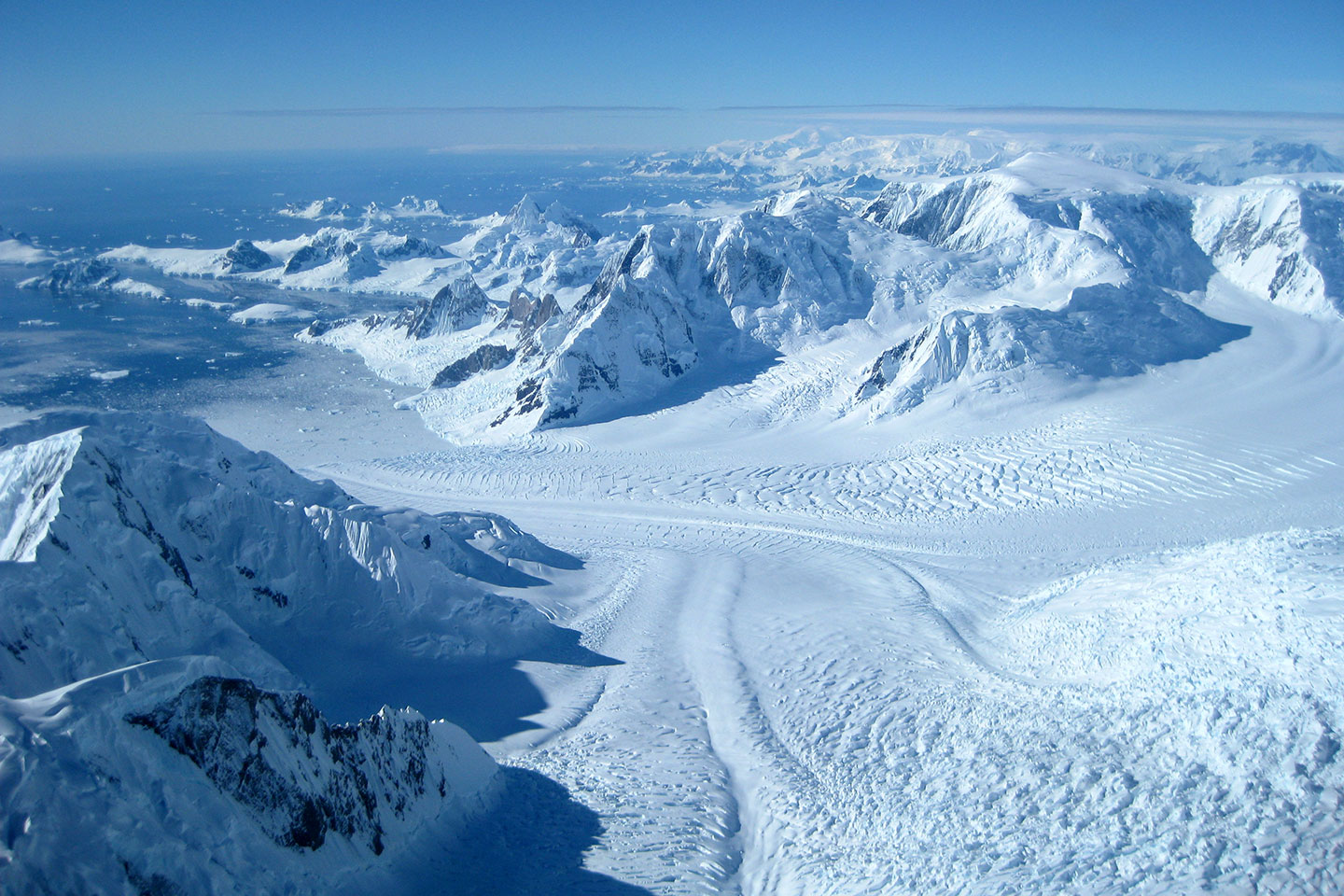
Warm summers are already causing hundreds of Antarctic glaciers to melt and retreat. One study estimates that within 75 years, ice-free sections of the northern Peninsula could nearly triple — to 19,000 square kilometers (7,300 square miles). That’s an area larger than the state of Connecticut.
Even then, ice will still cover most of the Antarctic Peninsula. But retreating glaciers will leave thousands of ice-free patches along coastlines. Green landscapes could take root in these.
Ecology Glacier on King George Island has already retreated 800 meters (half a mile) since 1985. The newly exposed ground is strewn with rocks and sand. Soil will have to form before most plants and animals can easily take hold.
But that can happen in just decades, says Adams at Brigham Young.
Ice-free future
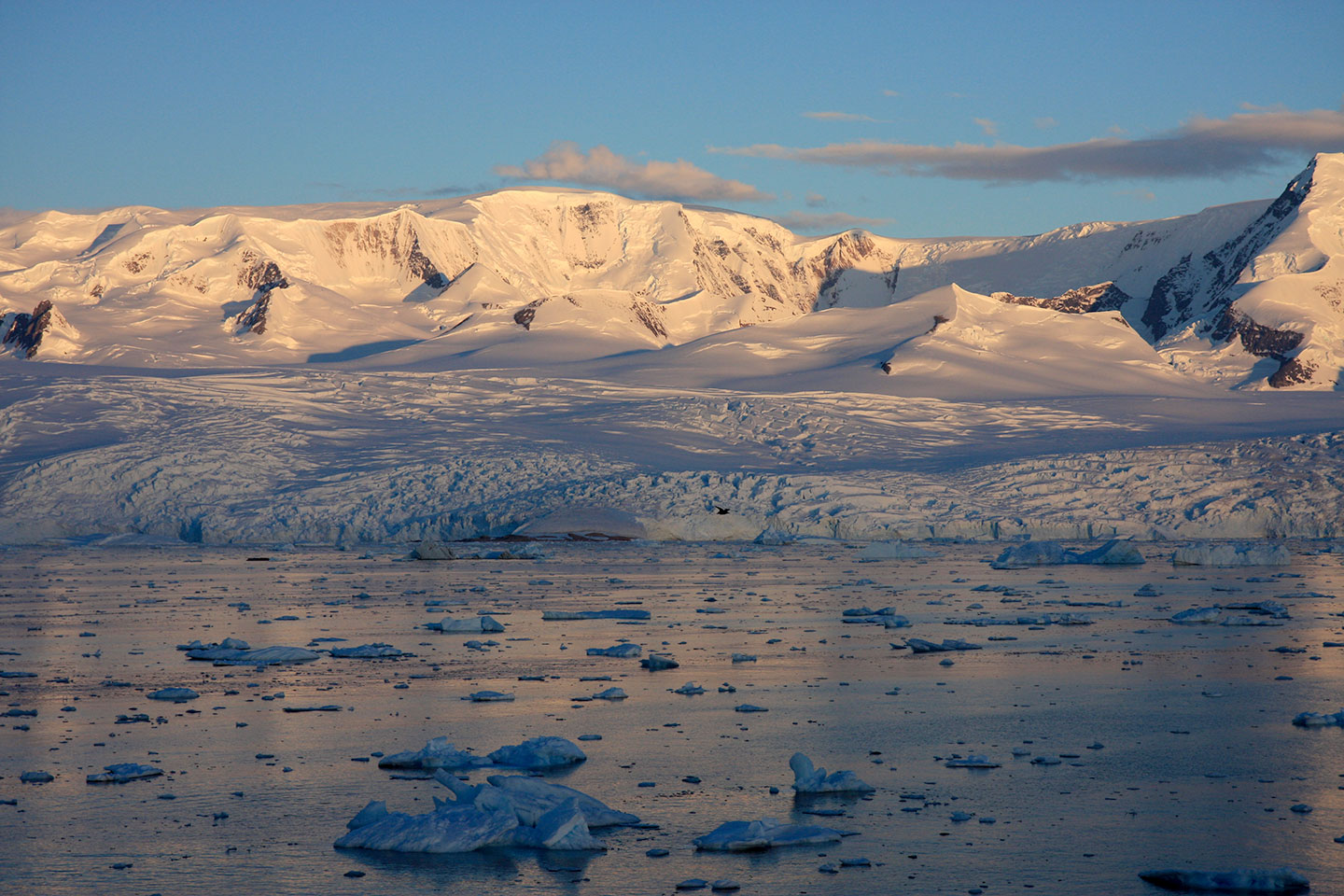
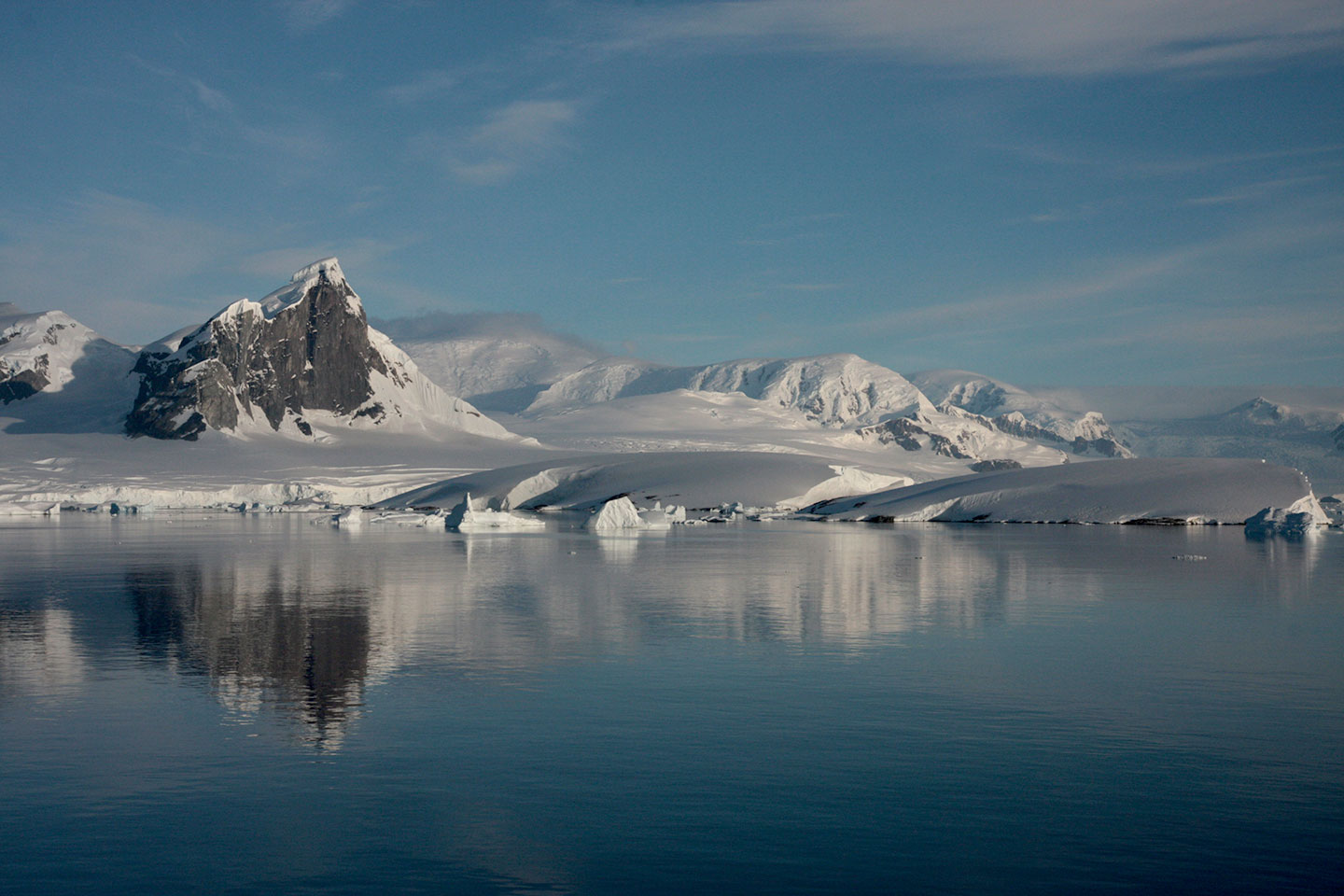
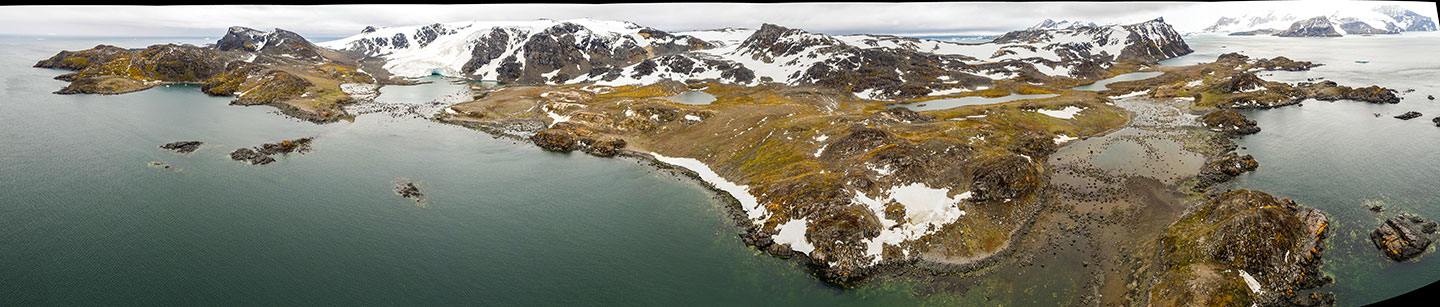
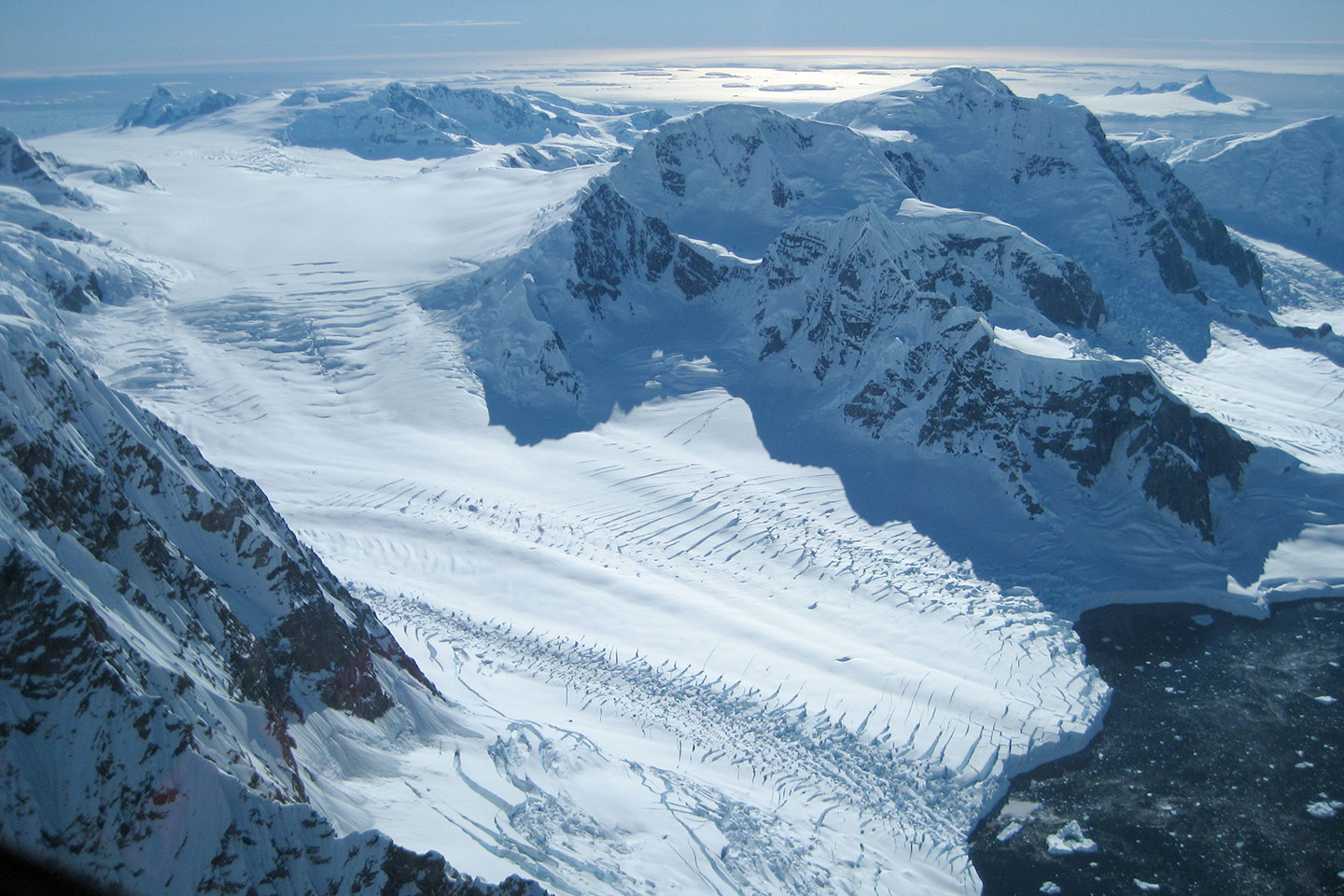
Even in the relatively warm Antarctic Peninsula, glaciers (seen here in the vicinity of Barilari Bay) still cover most land. Within 75 years, however, the area of ice-free land could nearly triple — to about the size of Connecticut. This would provide new areas where plants and animals can take hold, including invasive species.
Stinky fish and penguin poo
Adams has studied the return of life in other places where glaciers have retreated.
At first, single-celled microbes chew on rocks. They release nutrients, such as phosphorus, iron and calcium. That allows lichens and moss to move in, followed by Antarctic grass or pearlwort.
Plants accelerate soil-forming, Adams says. “They’re actually physically cracking rocks open with their roots.”
Seabirds, penguins or seals may form new summer colonies. This could further speed the arrival of plants, says Juliana Souza-Kasprzyk. She works at Adam Mickiewicz University in Poznań, Poland. A biologist, she’s spent several summers studying these colonies on King George Island.
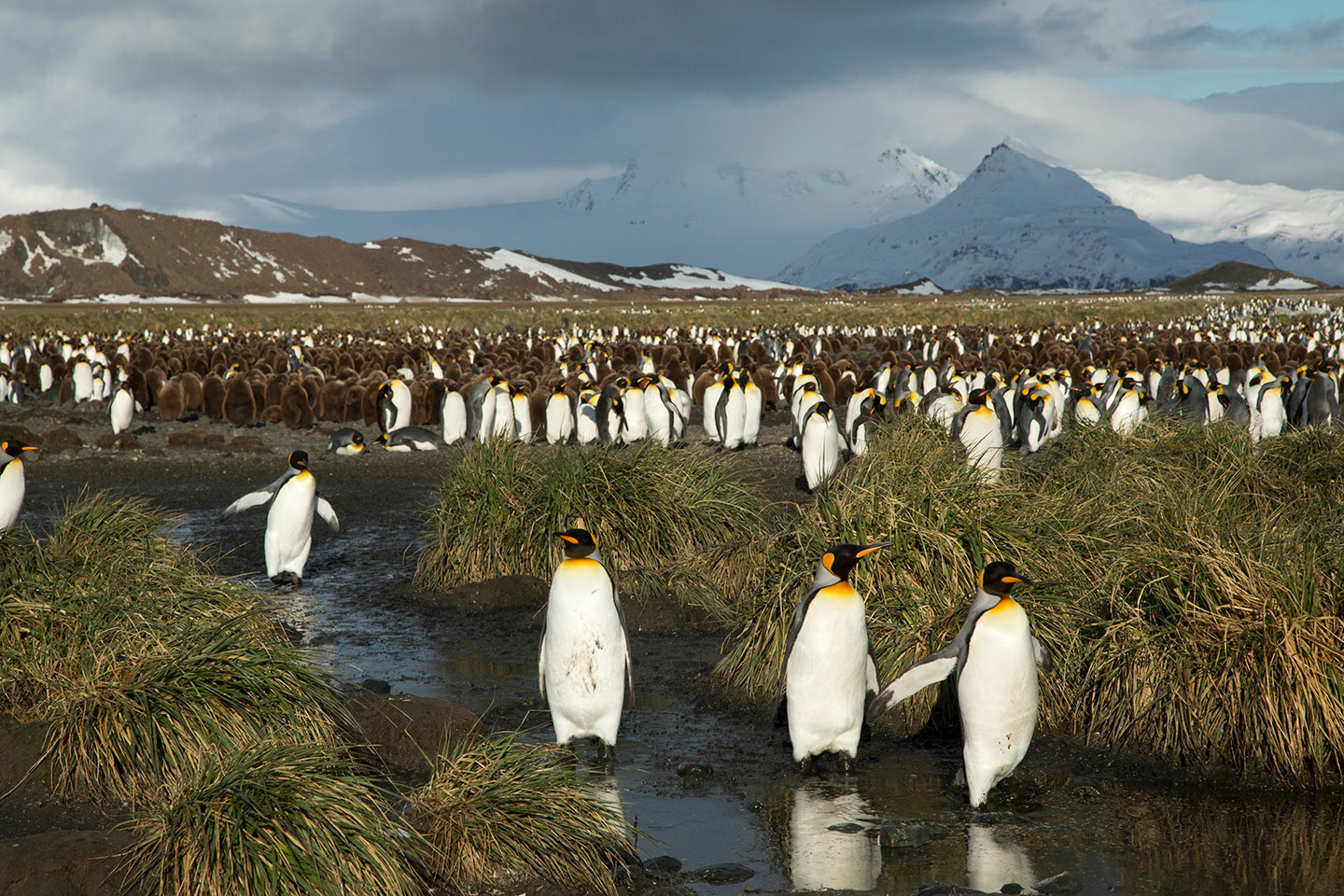
“In these areas,” Souza-Kasprzyk says, “you have more vegetation.” And that makes sense. Birds and seals hunt fish and krill in the ocean, then poop on land. Their wastes ferry tons of fertilizing nutrients from ocean to land each year. “They are enriching the soils,” she explains.
In 200 years, the Antarctic Peninsula will be significantly greener, Peter Convey predicts. A polar ecologist, he works for the British Antarctic Survey in Cambridge, England.
Invading species may contribute to that greening.
Already, thousands of scientists and tourists visit Antarctica every year. Stray seeds, insects and other critters hitchhike along on their ships and planes.
“There are already quite a lot of [species] that could survive [here] year-round,” says Convey. At least 18 non-native species now live in Antarctica. Three are spreading quite quickly on the Peninsula.
An invasive grass, Poa annua, is growing on King George Island, Signy Island and a dozen other places. In experiments, it outcompetes the native grass and pearlwort. On King George, it is already taking hold in the bare rocky spaces that emerge as Ecology Glacier retreats.
Poa annua is hardly some special, rugged pioneer. This annual bluegrass is the same turf “sometimes used on golf courses,” notes Chown. “You find it in the cracks of the pavement” in cities across Europe and North America.
‘Boom town’ growth
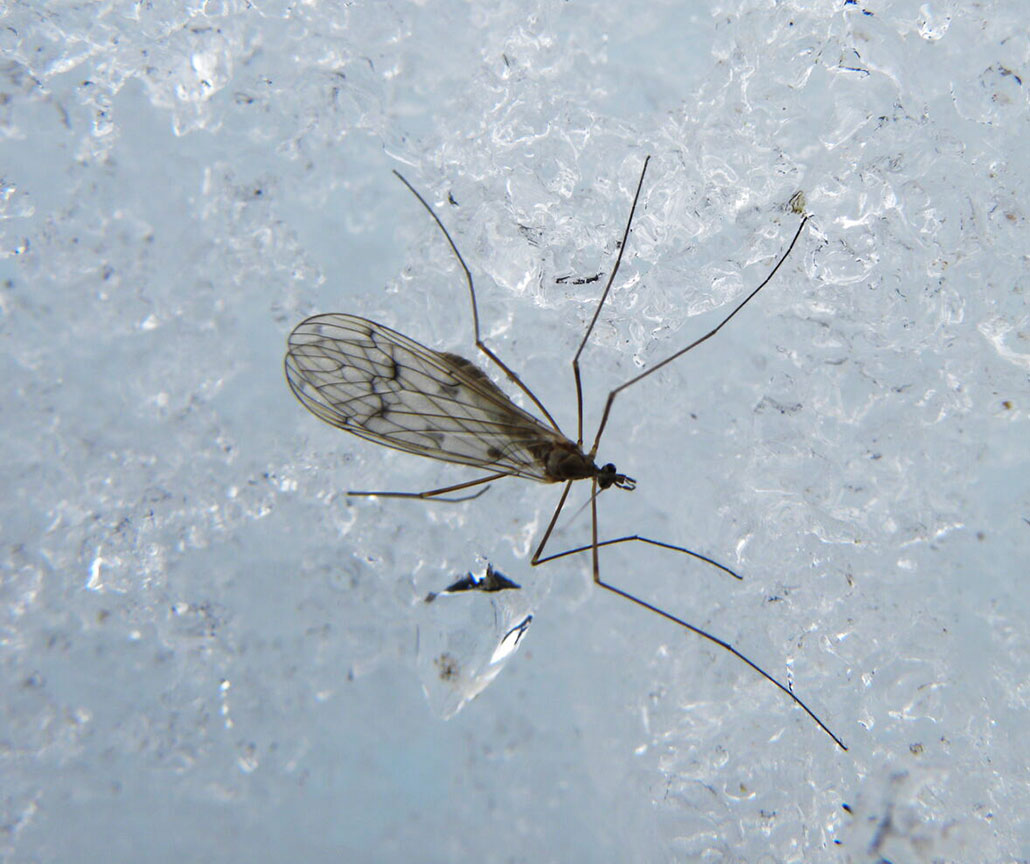
Two species of fast-growing invasive flies are also spreading on King George Island: the winter crane fly and the moth fly. Both took hold in the sewage systems at research stations on the island. The flies are now spreading, gorging on stinky seal carcasses, penguin poo and rotting plants.
These invaders exhibit a fast-growing, “boom town” lifestyle. And that makes them a threat to Antarctic natives.
At first glance, Antarctica’s native plants and creepy-crawlies seem tough. “You can send them to space, you can put them in liquid nitrogen” at -196 °C (-320 °F), and they survive, says Claudia Colesie. She’s a polar plant ecologist at the University of Edinburgh in Scotland. In some cases, retreating glaciers have revealed mosses — buried under ice for 600 years — that can revive and grow.
But Antarctic species are also surprisingly vulnerable. Many of these mosses, springtails, worms and other critters spend most of their time dried out, in suspended animation. They only wake to grow when conditions are good. But the growth rates of “the local species are very, very slow,” explains Colesie. That allows them to survive in soils with few nutrients.
Coming warmer, wetter summers might favor the invaders. Species that live and grow faster, says Colesie, “can outcompete some of the local species.”
Worst of all, those invaders could change the environment in ways that give them an even greater advantage.
Invasive species could enrich the nutrient-poor soils. For instance, an invasive midge has been spreading on Signy Island. Its larval maggots live in soil. They have strong mouthparts and can eat tough, dead plant matter that native critters cannot. As they poop out digested material, the nutrients in it will fertilize plant growth.
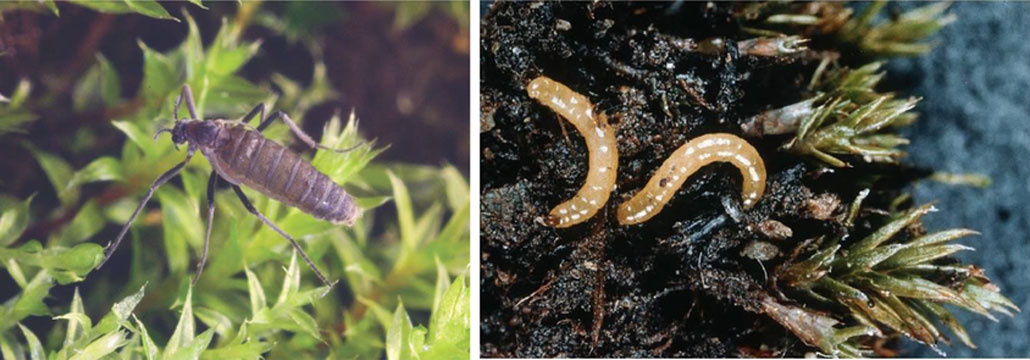
On Signy Island, Convey and Jesamine Bartlett have found that soils with this invasive midge have three to five times more nitrogen (a fertilizer) than normal. Bartlett is a polar biologist at the Equinor Research Center in Trondheim, Norway.
Bokhorst at Vrije University has done experiments showing that one species of wood louse (often called a roly-poly, or pill bug) would have similar effects if it took hold in Antarctica. (So far it has not.) But the invasive moth fly on King George Island might enrich soils there. If it does, these invasive insects could pave the way for fast-growing invasive plants to take over.
Invaders on a sugar high
“My biggest concern,” says Bokhorst, is that a new insect and plant invade as a team. As the insect enriches the soil, the invading plant will grow taller and faster. These traits would let them “start enhancing each other,” he says. In short order, he worries, their changes could spiral out of control.
Enriched soils would allow even more invasive plants to take hold. Bokhorst believes this could occur more easily than most people realize.
Several years ago, Bokhorst ran some lab experiments. These looked at how 26 non-native plant species would do if their seeds landed on a typical Antarctic soil.
After six months of simulated winter at -5 °C (23 °F), he warmed them to a summer temperature of 2 °C (36 °F). Eighteen species sprouted and grew. After a second winter and summer, 15 were still growing. Concludes Bokhorst, Antarctica’s “current climate conditions are already suitable for a lot of plants” from other places.
Return of rodents … and trees?
A few islands north of King George Island show how this might play out. These “subantarctic” islands are cold, rocky, treeless and weather-beaten. They have penguin colonies. Some host glaciers. All are warmer than the Antarctic Peninsula but colder than Patagonia.
People have visited them since the 1800s, initially to hunt seals and whales. Dozens of non-native species now inhabit these islands. On South Georgia and Kerguelen islands, entire hillsides shimmer in summer with dandelions’ yellow blooms. It’s the same weed that pops up in U.S. lawns and playgrounds. Bokhorst found that this flower can already grow and survive winters in Antarctic soils.
Make a wish?
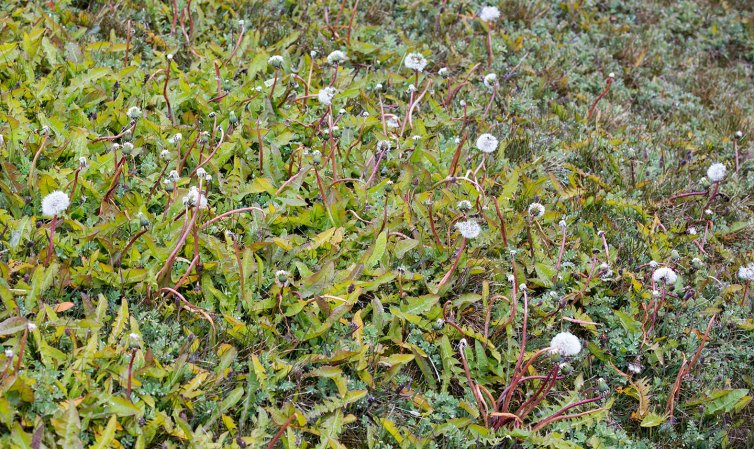
Dandelions growing on South Georgia, a subantarctic island. The non-native weed has spread rapidly and begun outcompeting native species. Dandelions arrived when Norwegian whalers insisted on putting soil from Norway atop the grave of a shipmate who had died on the island.
“Anything that is already established in the subantarctic, we could plausibly regard as a risk [for invading the Antarctic Peninsula],” says the British Antarctic Survey’s Convey.
This is why Chown at Monash University worries about mice. A lot.
While working on subantarctic Marion Island, he saw evidence of house mice. After arriving from Europe in the 1800s, these rodents devoured native insects. By the 1980s, when Chown was there, they were preying on local seabirds called wandering albatross. They killed chicks and chewed on the heads of adult birds.
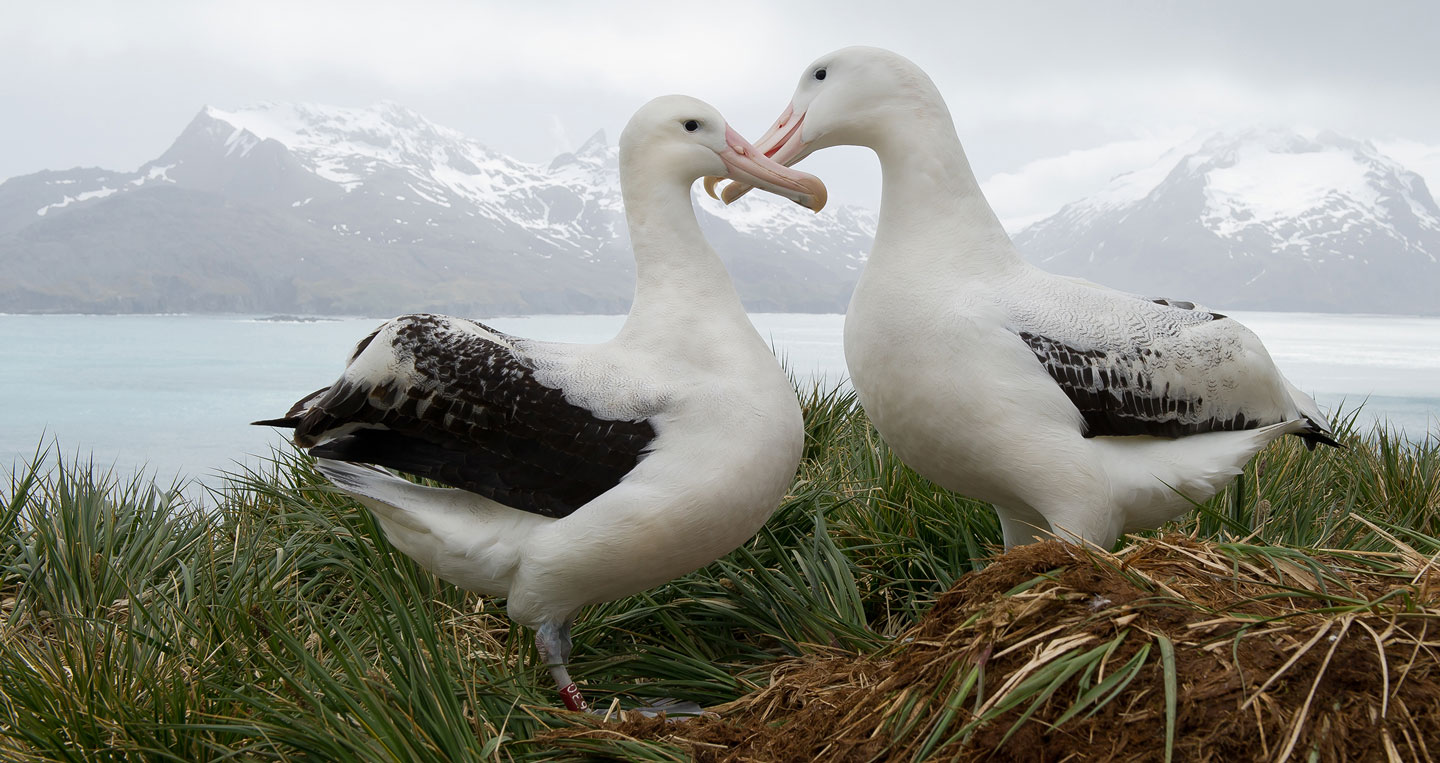
Says Chown, “that would just be a nightmare” on the Antarctic Peninsula. Rodents could attack local seabirds, including penguins.
At least one dead rat has been found on King George Island. It probably hitchhiked there in a shipment of lumber. The little buck-toothed fellow didn’t survive the cold. But by the 2080s, parts of the Peninsula might be warm enough for mice or rats. And that’s “not far off,” Chown notes.
Some invading species on the Peninsula might be returnees. Fossil wood, leaves and pollen from southern beech trees have been found across Antarctica. Beeches may have grown on King George Island as recently as 20 million years ago. Forests of them still live close by, in Patagonia.
The past could be the future
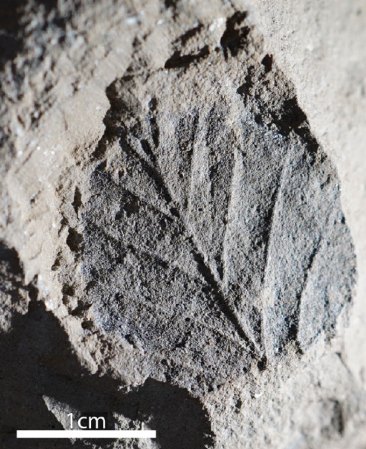
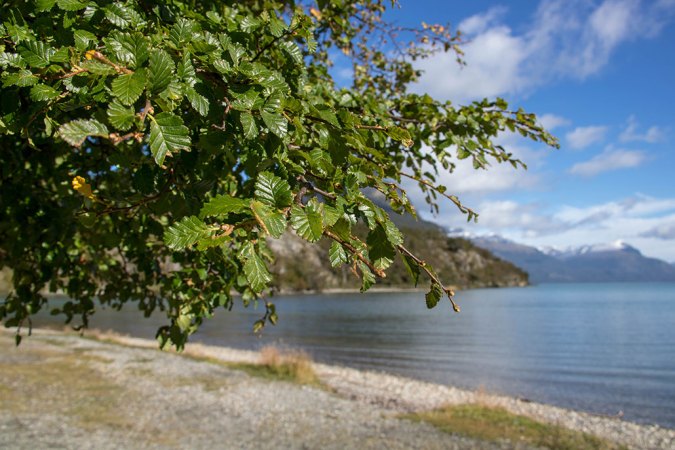
This fossil (above, left) shows the leaf of a southern beech tree that grew on the Antarctic Peninsula 20 million years ago. Closely related trees (right) still live at the tip of South America, which was once connected to Antarctica. These trees grow in cold, mountainous areas of South America (below).
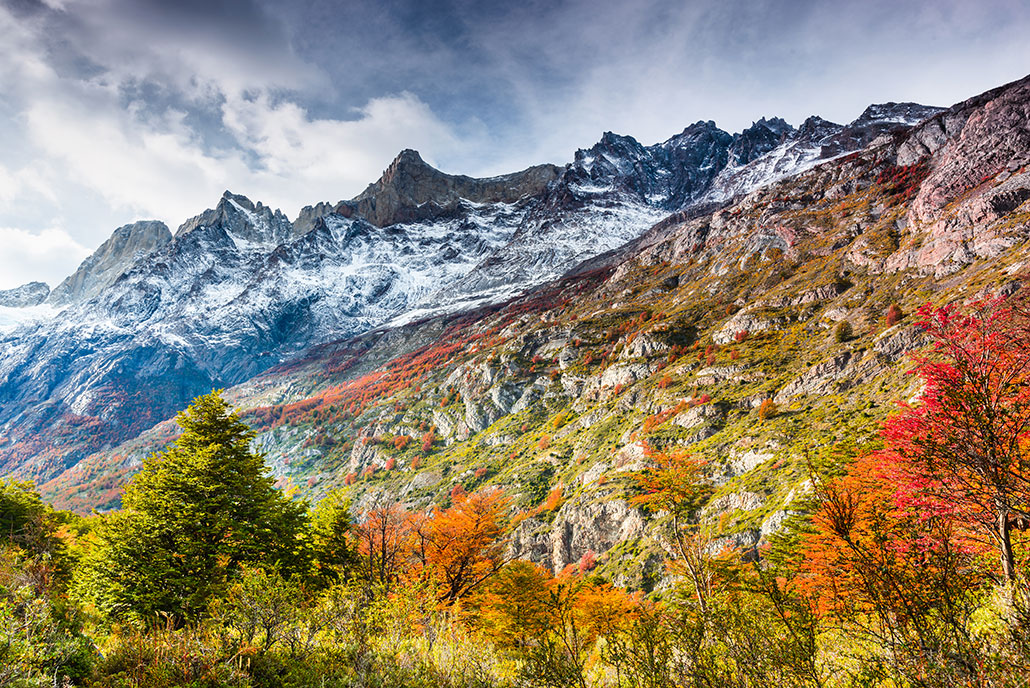
On the Antarctic Peninsula, “there are probably some sweet spots where they will already be able to grow,” says Bokhorst. He imagines a rare north-facing cove with summer sunlight and water melting off a nearby glacier. The trees would be small and stunted, like bushes. And at first, they wouldn’t easily spread beyond these isolated spots.
But if rapid warming continues for centuries, says Convey, “all bets are off.”
A return of southern beech forests to the Antarctic Peninsula would not restore the continent to its distant, lush past. These trees would lack the other species that filled those ancient ecosystems. They would mingle instead with many of the weeds and pests inhabiting cities and farms across the globe. Moth flies and mice might flit around penguin colonies. Dandelions and bluegrass could sprout from rocky meadows.
That mishmash of weeds and wildlife would replace current landscapes. And that “would be a real shame,” says Bokhorst. The unique ecosystem that took 30 million years to evolve could vanish in a few short centuries.