
All Stories by Stephen Ornes
- Health & Medicine
Star Trek gets closer to becoming home tech
Inspired by Star Trek, inventors have created handheld devices to diagnose common medical ailments.
- Life
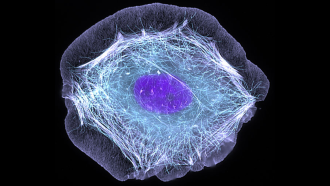
‘Nanostraws’ safely sneak a peek inside cells
Scientists have developed tiny straws that let them peek inside a living cell without killing it or even damaging it.
- Physics
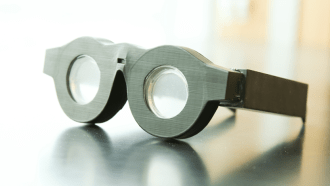
Auto-focus eyeglasses rely on liquid lenses
Engineers have designed what could be the last eyeglasses anyone would need. Right now, they’re bulky but smart. Liquid lenses are key to their adjustability — and those lenses focus automatically.
- Computing
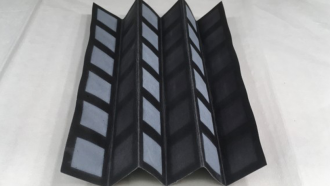
Germs power new paper batteries
New paper-based batteries rely on bacteria to generate electricity. These ‘papertronic’ power systems may be a safer choice for remote sites or dangerous environments.
- Computing
When your stuff spies on you
More ordinary objects are going online. These make up the Internet of Things. But as they collect data about you and your world, they also bring security risks.
- Computing
The Internet of Things wants to link all facets of our world
The Internet of Things means everyday objects are becoming computers. Can people harness this technology to make the world better?
- Computing
How to build computer chips only 3 atoms thick
Scientists have engineered an ultrathin material only three atoms thick. The material could be used to make extremely slender computer chips.
- Computing
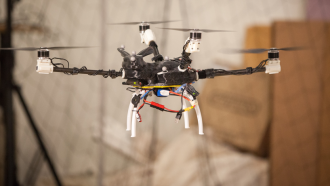
Build the drone of your dreams
Drone fans can now use new computer software to design and ‘test’ their own customized flying machines before putting time and money into building them.
- Computing
Computer hackers take to the cloud
People use cloud computing for storing files online. A new study shows the dark side of the cloud: These services can harbor malware.
- Materials Science
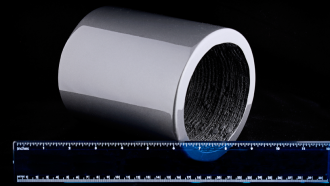
3-D printers offer better way to make some magnets
3-D printers produced magnets as strong as conventional ones with less material wasted.
- Computing
Star Trek technology becomes more science than fiction
On Star Trek, the characters used devices that seemed wild, futuristic and impossible. But those sci-fi gadgets are inspiring real-world, useful inventions.
- Physics
Hack: How to spy on a 3-D printer
Computer scientists have found that a hacker can eavesdrop on a 3-D printer using a smartphone. The technique uses sound and energy data produced by the printer.