
All Stories by Susan Milius
- Animals
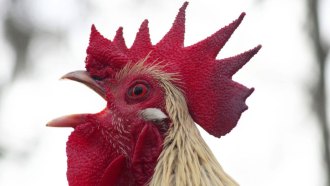
Top rooster announces the dawn
Roosters know their places in the chicken world. Lower-ranking birds defer to the guy at the top of the pecking order. And they show it by holding their crows until after he greets the new day.
- Animals
Why seahorses have square tails
The unique shape of a seahorse tail provides strength, and it may also help the fish to grasp objects.
- Animals
This is no cold fish!
The opah is the fish closest to the whole-body warm-bloodedness typical of mammals and birds. This trait may give the species an edge in the ocean’s cold depths.
- Plants
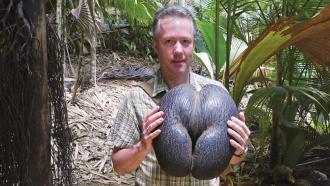
Picture This: The world’s biggest seed
This monster seed develops on a super-slow-growing island palm. Key to that palm’s survival are leaves that funnel fertilized water to nutrient-starved roots.
- Animals
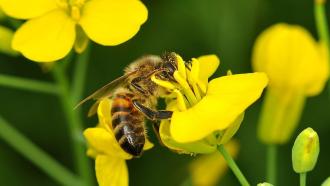
Pesticides offer bees a risky allure
Honeybees and bumblebees sometimes cannot taste or avoid pesticides called neonicotinoids. And that may expose some of these important pollinators to harm.
- Animals
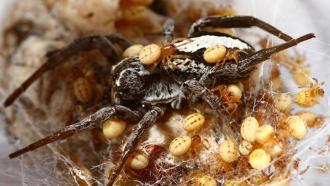
What’s for dinner? Mom.
Female spiders of one species make the ultimate sacrifice when raising their young: The mothers feed themselves to their children.
- Animals
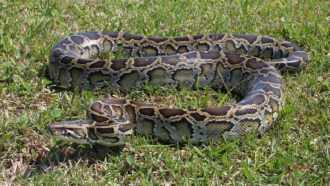
News Brief: Rabbit-hunting pythons are altering Everglades
Rabbits may breed rapidly, but not fast enough to compensate for the huge summer appetites of huge pythons roaming Florida’s Everglades.
- Animals
Eyelashes: The ‘sweet’ length
New mathematical and aerodynamics studies find what seems to be the optimal length for eyelashes — the length that protects best. And surprise: Longer is not always better.
- Animals
Bat signals jammed
Mexican free-tailed bats can jam each other’s signals while hunting at night. The interference makes snagging an insect supper even more competitive for the flying mammals.
- Animals
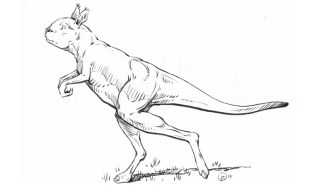
News Brief: No hopping for these ancient ‘roos
By hopping, today’s kangaroos can scoot swiftly through the countryside. That was not true for some of their ancient cousins. True giants, those now-extinct kangaroos would have walked on two feet — and relied on their tippy-toes.
- Animals
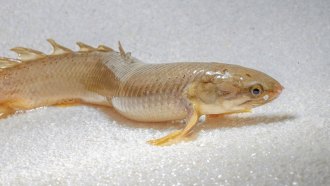
A fish out of water — walks and morphs
When this modern ‘walking’ fish was raised on land, its body changed. How it adapted resembles some prehistoric fish. These alterations hint at evolutionary changes that may have made life on land possible.
- Animals
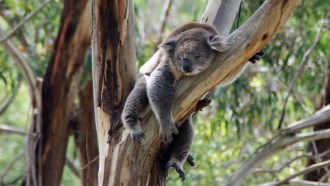
Trees: Koala air conditioning
When koalas sprawl over a tree branch, they may not be lazy. They just might be taking advantage of some natural cooling — enough to survive a heat wave.