Questions for ‘The Okefenokee’s dark waters hold secrets about climate and more’
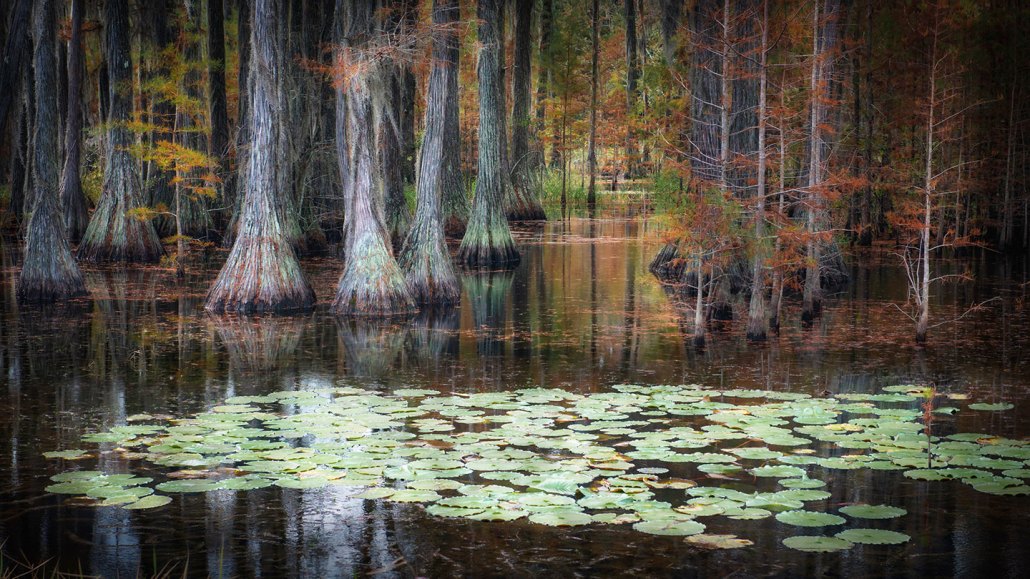
Spending time in the Okefenokee is like traveling back in time. “It’s very mysterious,” says river advocate Rena Peck. “All of a sudden you hear sandhill cranes. They sound like the pterodactyls from Jurassic Park. … It’s exhilarating.”
shutterjack/RooM/Getty Images
Share this:
- Share via email (Opens in new window) Email
- Share on Facebook (Opens in new window) Facebook
- Share on X (Opens in new window) X
- Share on Pinterest (Opens in new window) Pinterest
- Share on Reddit (Opens in new window) Reddit
- Share to Google Classroom (Opens in new window) Google Classroom
- Print (Opens in new window) Print
To accompany ‘The Okefenokee’s dark waters hold secrets about climate and more’
SCIENCE
Before Reading:
- Explain what an ecosystem is as though you were explaining it to a child.
- Sketch a picture of a swamp ecosystem. (It doesn’t need to be completely accurate. Just use your current knowledge to create this drawing.) Point to three aspects of the ecosystem — such as animals, plants or even non-biological aspects such as water or soil — and briefly explain how each one is connected to another aspect depicted in your drawing.
During Reading:
- List three animals you might find in the Okefenokee swamp.
- From what language does the word Okefenokee originate? What does it mean?
- What is peat?
- Describe the relationship between levels of dissolved oxygen in water and the number of bacteria. As dissolved oxygen gets lower, what generally happens to the number of bacteria?
- Explain what it means for an ecosystem or aspect of an ecosystem to be a carbon “sink.”
- Give an example of how studying peat layers might tell us about something that occurred in the distant past.
- Approximately how deep in feet is the Okefenokee peat at its deepest?
- Approximately how many years would it take to build up 4 inches of peat, based on estimates mentioned in this story?
- What was Kristen Zemaitis looking for when she analyzed alligator blood?
- Give three examples of World Heritage Sites.
- What year did the Muscogee lose their rights to Okefenokee? What role did Andrew Jackson play in this change of ownership?
After Reading:
- Refer back to your picture of a swamp ecosystem from Question 2 in Before Reading. Consider what you’ve read in this story about carbon moving through an ecosystem. Use arrows to point out three ways that carbon might move from one aspect of this ecosystem, such as a plant, to another aspect (such as peat or the atmosphere, for instance). Feel free to add additional aspects of the ecosystem that you didn’t include when you first created this drawing. For each arrow, explain at least one process (such as photosynthesis, decomposition, etc.) that might cause this carbon transfer to occur.
- Review the role of peat in helping the Okefenokee swamp handle changing water conditions. Explain how peat helps regulate, or buffer, water in the region in times of drought. Then explain how it helps the region in times of flood. Consider how this property of peat might help the living things in this region. Speculate on how peat might help a species, such as a plant or animal. Be specific in your answer. And feel free to be creative.
- Do you believe protecting the Okefenokee swamp region is very important, mostly important or unimportant? Explain your answer. Make a list of three ways that people have stepped in to preserve the region in the past. Finally, come up with one future action (be specific) that could be taken to help protect this region.