Biological Evolution: Unity and Diversity
- Earth
New beetle species found in fossil poop of this dino relative
Whole beetles preserved in fossilized reptilian poop suggest that ancient droppings may deserve a closer look.
- Animals
Dinosaur families appear to have lived in the Arctic year-round
Fossils of baby dinosaurs in northern Alaska challenge the idea that northern dinosaurs only spent their summers in the high Arctic.
- Fossils
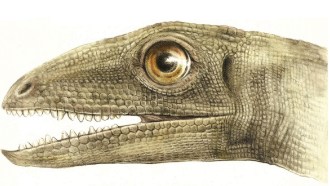
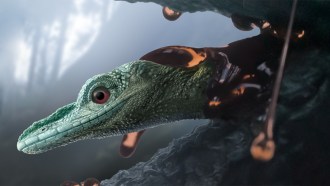
Ancient creature revealed as lizard, not a teeny dinosaur
CT scans of 99-million-year-old fossils of hummingbird-sized specimens trapped in amber reveal a number of lizardlike features.
- Archaeology
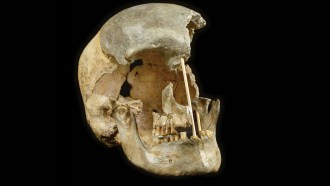
Fossils unearthed in Israel reveal possible new human ancestor
They come from a previously unknown Stone Age group that may represent a complex mashup of early members of our genus Homo.
- Animals
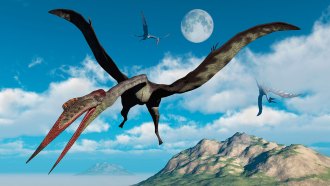
Let’s learn about dinosaurs’ fearsome neighbors
Dinosaurs may get much of our attention, but there were plenty of other interesting critters during the Age of Reptiles, including our mammal ancestors.
- Animals
Let’s learn about whales and dolphins
Whales, dolphins and porpoises are all cetaceans — mammals that live in water and have a streamlined body similar to a fish.
- Health & Medicine
Will we all need COVID-19 booster shots?
Experts say not yet, but booster vaccines may be coming as new SARS-CoV-2 virus variants keep emerging.
- Animals
The secret to T. rex‘s incredible biting force is at last revealed
The force of a T. rex bite was roughly 6 metric tons. A new study points to what’s behind that mighty force.
- Fossils
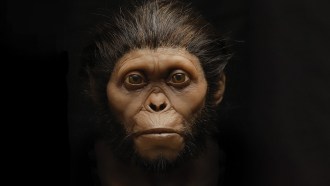
How scientists can get a better picture of our extinct relatives
Facial reconstructions of extinct species have historically been more art than science. Some researchers hope to change that.
- Archaeology
Europe’s ancient humans often hooked up with Neandertals
DNA from ancient bones shows humans and Neandertals were regularly mixing genes by about 45,000 years ago.
- Animals
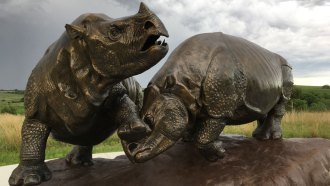
Rhinos, camels and bone-crushing dogs once roamed Nebraska
Scientists digging into the remnants of an ancient watering hole in Nebraska discovered evidence of an Africa-like savanna, complete with rhinos.
- Animals
Scientists Say: Genus
A genus is a group of closely related species. It’s the first part of the two-part system called binomial nomenclature, used to name living things.