Biological Evolution: Unity and Diversity
- Archaeology
Remains of long-ago child sacrifices found in Belize cave
Thousands of bones in Belize’s Midnight Terror Cave show that the Maya had a long tradition of human sacrifices. New data show that many had been children.
- Fossils
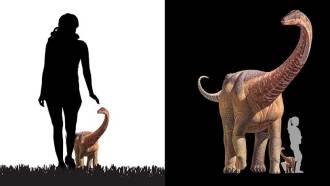
Baby titanosaur was a mini version of its parents
Fossils show that baby titanosaurs looked like mom and dad. They may have been active and independent from a young age.
- Animals
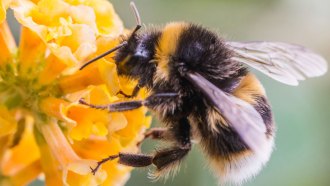
Pollen can become bee ‘junk food’ as CO2 rises
Increasing levels of the greenhouse gas are changing diminishing the food value of pollen, bees’ only source of protein.
- Fossils
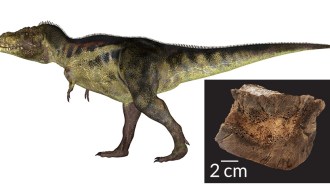
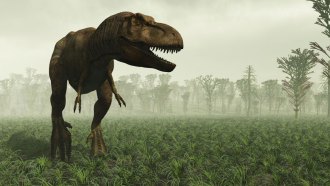
How to tell if a T. rex is expecting
A chemical test of tyrannosaur bone can determine whether the dino was pregnant — and therefore a female.
- Genetics
Pacific islanders got a double dose of Stone Age DNA
Unlike other people, certain Pacific Islanders inherited DNA from two ancient human ‘cousins.’
- Animals
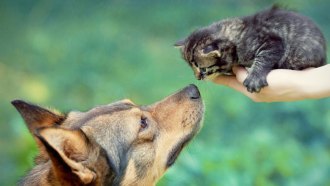
Cool Jobs: Pet science
Pets make great subjects for research. These scientists work to make our animals — and us — healthier and happier.
- Humans
Slicing meat may have aided human evolution
An experiment with modern-day humans shows how slicing meat could have saved human ancestors energy — and let their bodies and brains get bigger.
- Fossils
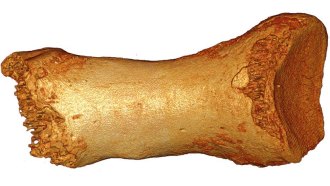
Neandertal toe contains human DNA
DNA from a 50,000-year-old Neandertal woman’s toe bone shows humans left a mark on the ancient species — and much earlier than scientists had thought.
- Animals
Picture This: Plesiosaurs swam like penguins
A computer model suggests plesiosaurs — ancient marine reptiles — swam like penguins, using front flippers for power and back flippers for steering.
- Earth
Bubbles may have sheltered Earth’s early life
For Earth’s earliest inhabitants, a bubble on the beach would have been the next best thing to a safety blanket.
- Humans
News Brief: Ancient teeth point to Neandertal relatives
New analyses of some teeth found in Siberia indicate that Neandertal cousins known as Denisovans lived there for at least 60,000 years. That would have had them around the same place as modern humans — and at nearly the same time.
- Fossils
Predatory dinos were truly big-mouths
Large meat-eating dinosaurs could open their mouths wide to grab big prey. Vegetarians would have had a more limited gape, a new study suggests.