Earth and Human Activity
- Climate
Stashing more CO2 in the ocean could slow climate change
More research is needed on ways to safely remove some CO2 from the water to make room for more — such as by seaweed farming and iron fertilization.
- Climate
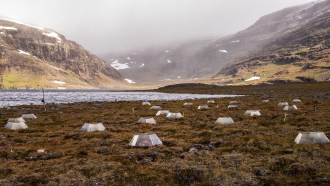
Microbes in the Arctic may be releasing more climate-warming gases
Mini greenhouses in the wild show how the tiny organisms lurking underground in a ‘sleepy biome’ could play a big role in climate change.
- Physics
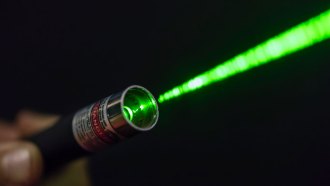
Experiment: Measure the speed of light with a laser
Grab a laser pointer and some Jell-O, because today we’re measuring the speed of light.
- Climate
Climate change is changing how scientists measure time
Polar ice sheets are melting faster. This is slowing Earth’s spin, which changes how we sync our clocks to tell time.
- Oceans
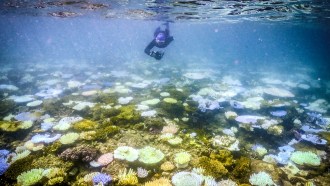
The seas’ record-breaking hot streak may bring unwelcome changes
Off-the-charts warming could fire up more hurricanes, intensify coral bleaching and accelerate the melting of Antarctic sea ice.
- Tech
Bioelectronics research wins top award at 2024 Regeneron ISEF
Three grand-award winners each took home at least $50,000. Hundreds more teens shared more than $9 million in prizes at the international competition.
- Animals
Surprise! These animals can help fight climate change
Some animals help fight climate change by boosting the amount of carbon dioxide that plants, algae and bacteria absorb from the atmosphere.
- Environment
To limit pollution, new recipe makes plastic a treat for microbes
Microplastics made from fossil fuels take centuries to disappear. But the plant- and algae-based plastic can break down in weeks to months.
- Animals
Dancing spiders inspired this biologist to teach others
Inspired by his research in animal communication, Echeverri began exploring ways to teach others about science while finishing his Ph.D. Today, he shares his passion for spiders as a science communicator.
- Chemistry
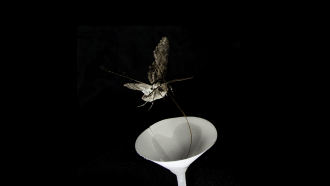
Air pollution can make it harder for pollinators to find flowers
Pollutants that build up in night air can break down the scents that attract pollinating hawkmoths to primrose blooms, disrupting their pollination.
- Chemistry
Turning jeans blue with sunlight might help the environment
When dipped in indican and exposed to sunlight, yarn turns a deep blue. This process is more eco-friendly than the current denim dyeing method.
- Earth
Experiment: Can plants stop soil erosion?
Soil erosion washes pollutants into streams and rivers — but plants may help limit that.