Earth's Place in the Universe
- Physics
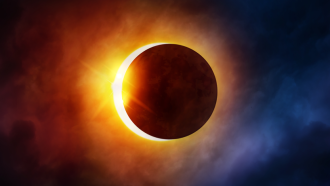
Eclipses come in many forms
Eclipses are one of nature’s most awesome spectacles, and scientists have learned a lot by observing them and related celestial alignments — occultations and transits.
- Space
Cosmic mystery: Why are many galaxies dark?
Dark galaxies went unnoticed until 2015. Since then, scientists have now found more than 1,000 — and there may be many, many more.
- Earth
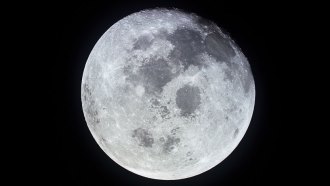
How Earth got its moon
How did our moon form? Scientists are still debating the answer. It may be the result of some one big impact with Earth — or perhaps many small ones.
- Math
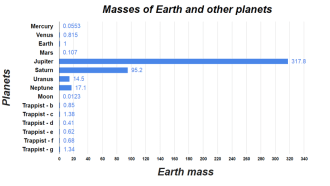
Analyze This: The masses of planets
Scientists discovered a solar system with planets that are similar in size and mass to Earth. Using data, we take a closer look at that similarity.
- Science & Society
Cool Jobs: Reaching out to E.T. is a numbers game
From figuring out if we’re alone in the universe, to writing messages to aliens, scientists use math in many ways in their search for extraterrestrial intelligence.
- Planets
Scientists Say: Dwarf planet
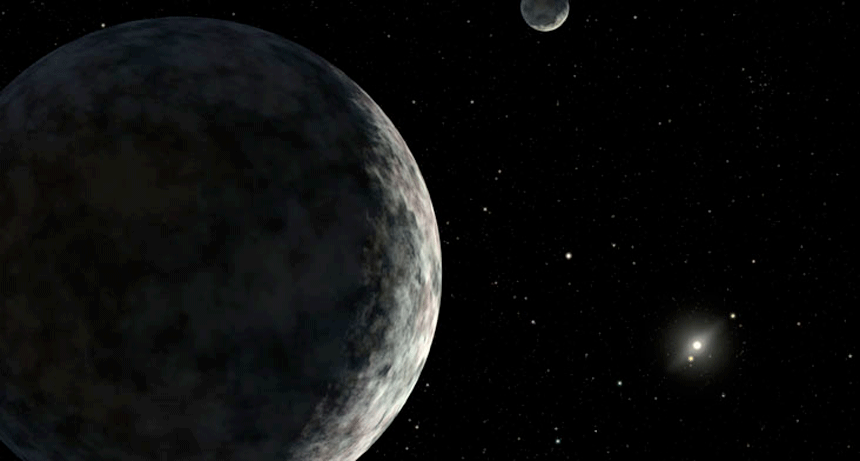
Dwarf planets are distinct from the full-size models. A little too small, they also have a lot of space stuff filling their path around the sun.
- Animals
Cool Jobs: A world aglow
Three scientists probe how the natural world makes light, in hopes of using this information to design new and better products.
- Physics
Star caught passing gas before exploding
Stars can become unstable as they near death, a new study suggests. Some may even spew gas for a year or so before they explode.
- Earth
Is Zealandia a continent?
Geologists are making the case for a new continent, that they would dub Zealandia. It can be found largely submerged beneath the southwestern Pacific Ocean.
- Planets
Scientists Say: Goldilocks zone
Not too hot, not too cold. Just right. This is the region around a star where water could be a liquid, instead of a solid or gas.
- Physics
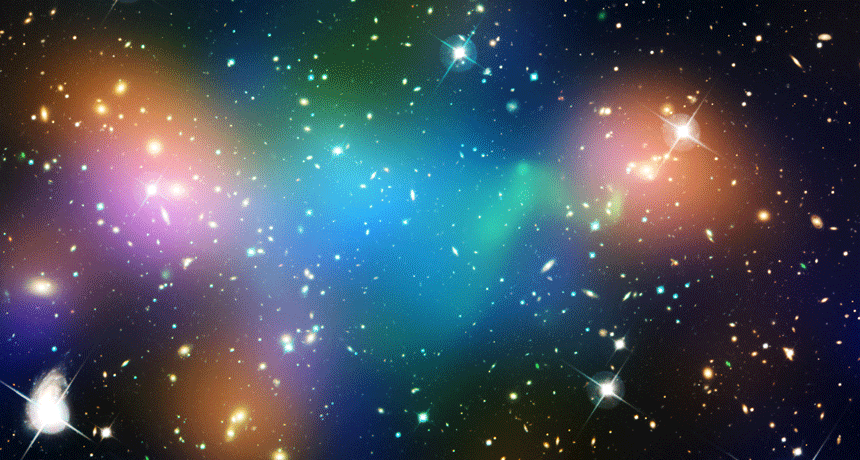
Scientists Say: Dark matter
Most of the universe isn’t made of stuff we can see. Scientists think some of it might be made of dark matter — matter that emits no radiation.
- Physics
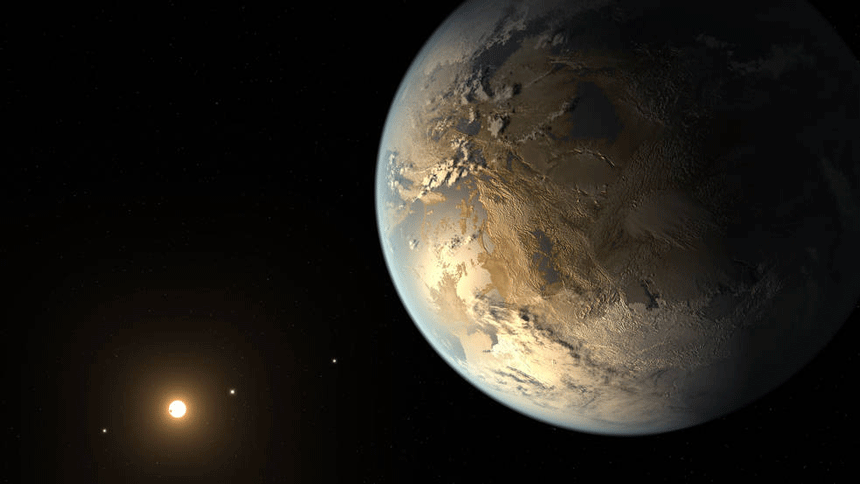
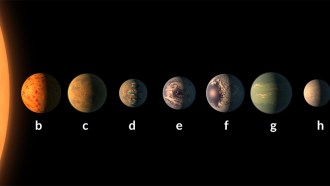
New solar system found to have 7 Earth-size planets
A neighboring star system hosts seven Earth-like planets. Especially surprising: Three of those planets appear to reside in a zone that could support life as we know it.