HS-PS2-1
Analyze data to support the claim that Newton's second law of motion describes the mathematical relationship among the net force on a macroscopic object, its mass, and its acceleration.
- Physics
Staying grounded in space requires artificial gravity
On TV, people in space walk around like they’re on Earth. How can science give real astronauts artificial gravity? Spin right round, baby.
- Earth
Light levitation might help explore Earth’s ‘ignorosphere’
A toy called a light mill inspired researchers to invent a new way to fly. They’re using light to levitate small nanotube-coated discs.
- Physics
Scientists Say: Acceleration
Acceleration is a change in velocity. That could mean a change in speed or in direction.
- Physics
Researchers reveal the secret to the perfect football throw
The tip of a spiraling football follows the ball’s path. If you know a thing or two about gyroscopes, this is not what you’d expect.
- Math
Scientists Say: Velocity
Velocity is more than speed. It is both speed and the direction in which an object is traveling.
- Physics
How physics lets a toy boat float upside down
Buoyancy’s upward force keeps objects afloat even in unusual conditions.
- Planets
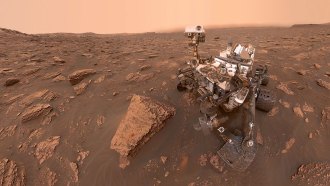
Let’s learn about space robots
Space robots can take pictures of other planets, analyze samples of their surface and even peer into their interiors.
- Physics
Glass beads help scientists puzzle out how baby planets grow
Researchers have mimicked the first stages of planet formation in the lab. All they needed were glass beads and a catapult.
- Physics
Disabilities don’t stop these experts in science and tech
People with disabilities are as varied as the careers some of them pursue in science, technology, engineering and math.
- Tech
Teens garner some $4 million in prizes at 2017 Intel ISEF
Hundreds of teens collectively took home about $4 million in awards from the Intel International Science and Engineering Fair this week.
- Earth
Falling through Earth might be a long and fruitless trip
A classic physics problem asks what would happen if you plunged through Earth’s center. A new study contends you could never make it to the other side.
-
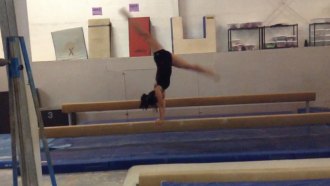
Teen gymnast finds how best to keep her grip
Unsatisfied with anecdotal opinions on which type of gymnastics chalk was best, a teen used science to find out for herself.