Animals
Physics explains how snakes climb and stand without limbs
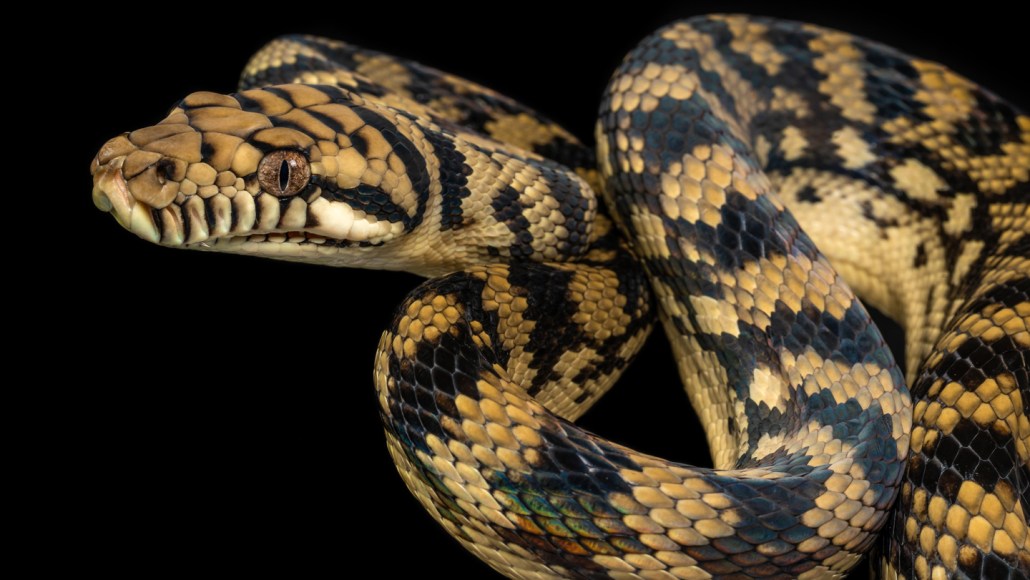
Tree snakes can raise their body into the air without falling over. They keep their balance by bending their bodies close to their base.
Let’s strap skis to an action figure to see how long sticks of wood help people glide gracefully over snow.
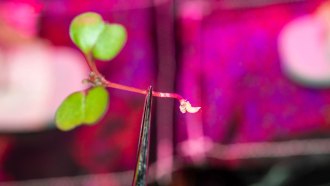
Without constant gravity, plants waste energy twisting and coiling, trying to reach toward the sun. Teen ISEF finalists might have found a solution.
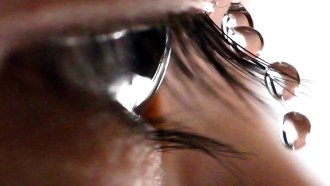
The “micro-ratchet” structure and curvature of eyelashes could help keep eyes clear of rain, sweat and tears.
Architecture is full of arched doors, windows and other structures. But how strong is the natural arch of eggshells?
The force of friction always acts to slow things down. It depends on just two factors: the surfaces and how hard they press together.
When an object experiences a force, its change in motion — or acceleration — depends on its mass.
This clock measured how gravity changes the passage of time in different places — even spots just one millimeter apart.
A handful of rules can describe the route some object repeatedly takes around another in space. Calculating that path, however, can be quite complex.
Four fundamental forces control all interactions between matter, from the smallest subatomic particles to the largest structures in the universe.