Archaeology
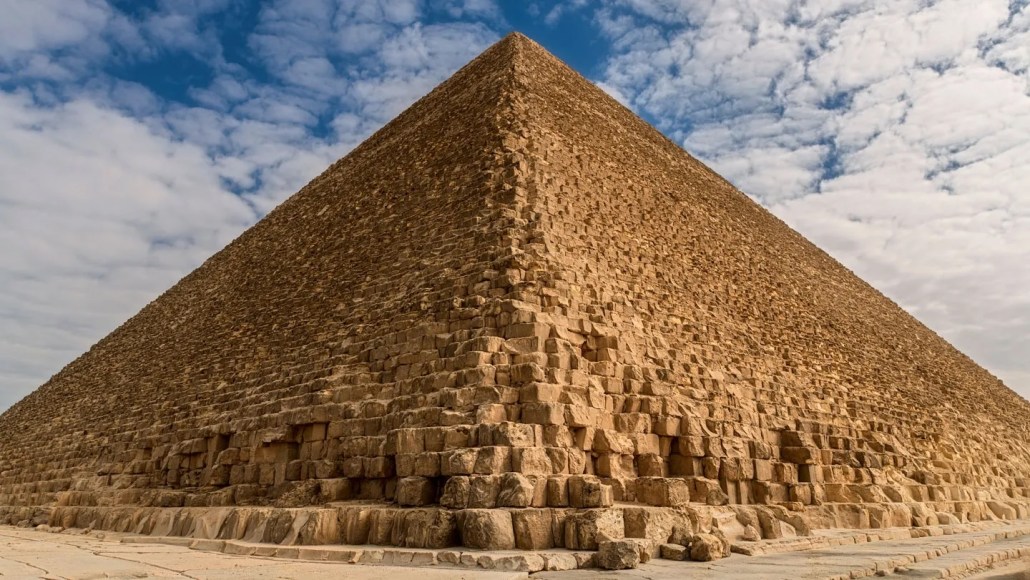
Mystery solved: Why earthquakes haven’t wrecked Egypt’s Great Pyramid
Its materials, shape and internal design have helped this ancient wonder withstand strong shaking.
By Skyler Ware
The insects’ nimble movements on the surface of water inspired a robot with automatically unfurling fans on its feet.
Without constant gravity, plants waste energy twisting and coiling, trying to reach toward the sun. Teen ISEF finalists might have found a solution.
The “micro-ratchet” structure and curvature of eyelashes could help keep eyes clear of rain, sweat and tears.
This ambipolar electric field is weak. Yet it’s still strong enough to control the evolution of Earth’s upper atmosphere — and maybe life as we know it.
If trees could act as natural antennas, one physicist proposes that they just might pick up signals of hard-to-spot ultra-high energy neutrinos.
When an object experiences a force, its change in motion — or acceleration — depends on its mass.
The force of gravity holds us on the ground, keeps planets in orbit and extends throughout space. A very weak gravitational pull is called microgravity.
On TV, people in space walk around like they’re on Earth. How can science give real astronauts artificial gravity? Spin right round, baby.
An electron beam is the newest tool being developed to remove sticky and damaging lunar dust from surfaces.