MS-ESS1-3
Analyze and interpret data to determine scale properties of objects in the solar system.
- Planets
Cosmic collision may have given birth to Pluto’s moons
Hubble Space Telescope photos reveal that the Pluto family may have formed from debris left behind after something slammed into the dwarf planet.
- Space
Scientists Say: Gravitational lens
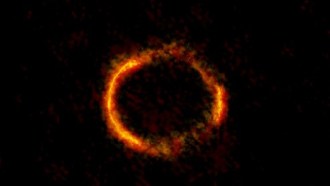
A gravitational lens is an effect that occurs when a massive object lies between a viewer and something further away. The massive object’s gravity bends light arriving from the more distant object.
- Planets
Mini-sats: The trick to spying Earth-bound asteroids?
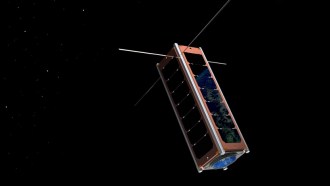
NASA is supposed to begin nonstop screening by 2020 for all asteroids that could pose a threat to Earth. Some astronomers now think the only way to affordably meet that deadline is by using mini-satellites
- Physics
Galaxy cluster creates ‘magnifying glass’ in space
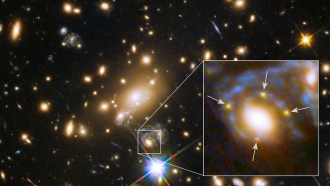
A massive galaxy’s gravity is so strong that it bends light, creating a “lens” in space. This natural magnifying glass is giving astronomers a rare view of a supernova on the other side of the universe.
- Space
Astronomers spy fastest speeding star
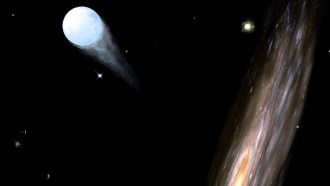
A few stars have been spotted departing our galaxy. The fastest of these might have been propelled by another exploding star, a new study finds.
- Physics
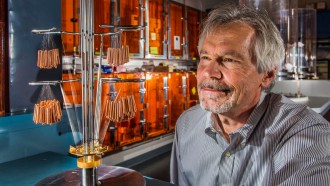
Machine simulates the sun’s core
A machine heats iron atoms to temperatures that match the interior of the sun. This has helped solve a solar mystery.
- Space
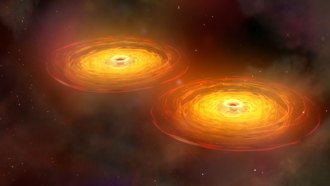
Black holes are on collision course
But be patient. The distant galactic smashup is still some million years away.
- Physics
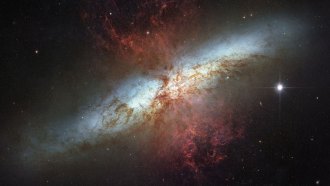
Light robs galaxy of star-making gas
Stars form from clouds of hydrogen and other gases. Astronomers have found the light from newborn stars can drive off that gas. That action can starve a galaxy of the ingredients needed to make more stars.
- Planets
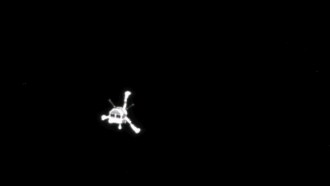
Picture This: Falling to a comet
After a more than decade-long ride, a robotic lander has left its spacecraft and floated down onto the surface of a comet. From there it should begin scouting for hints at how our solar system formed.
- Earth
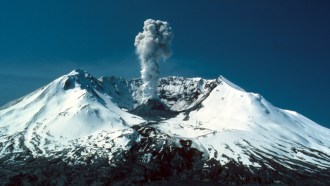
Explainer: The volcano basics
Here’s an overview of what they are, where they form and the many ways they pose dangers.
- Planets
Explainer: What are asteroids?
Leftovers from the creation of the solar system, asteroids are space rocks that orbit the sun. Let’s hope the big ones never become meteorites.
- Earth
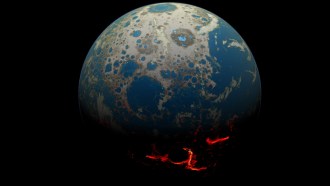
Meteorites likely wiped out Earth’s earliest life
Enormous meteorites appear to have slammed into Earth several times early in its history. Each mega-smashup would have boiled off oceans and obliterated any bit of life.