Brain
- Brain
Scientists discover itch-busting cells
A study in mice finds the body has a special way of dealing with an itch that’s caused by a light touch. The results could lead to treatments for chronic itch.
- Brain
Scientists Say: Neurotransmitters
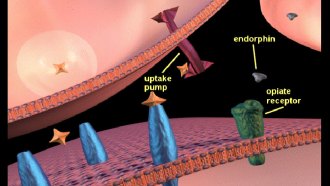
When brain cells need to communicate, they use chemicals as messengers. These molecules have a special name.
- Brain
Lessons from failure: Why we try, try again
We all suffer failures. But we don’t always try again. Focusing on what they can be learned might help people keep going, brain imaging data now show.
- Brain
Males and females respond to head hits differently
Men and women are playing sports equally — and getting concussions in comparable numbers. But how their brains respond may differ greatly.
- Brain
Can’t sing on-key? Blame the brain
Tone-deafness doesn’t mean that someone can’t hear music. The brain just misinterprets what it “hears”, a new study suggests.
- Brain
New light on brain science
A combination of physics, biology and engineering lets scientists use light to trigger actions by specific brain cells. Called optogenetics, this technology is shining new light on how the brain works.
- Brain
Explainer: What is anxiety?
Anxiety is the stress linked to worries about an upcoming event — one that may not even happen. But anxiety can affect the body every bit as much as does the stress provoked by staring down a hungry lion.
- Brain
Study challenges safety for teens of two depression drugs
Scientists reanalyze data on the safety of common drugs to treat depression and find that they don’t seem to help teens. Worse, the drugs may harm them.
- Brain
Stuffy classrooms may lower test scores
New research links fresh air in classrooms to test scores. Elementary-school students in stuffy classrooms, it found, may perform worse on standardized tests.
- Brain
Parents’ math anxiety can ‘infect’ kids
A study of first- and second- graders found that kids whose parents fear math learn less math at school ¬— but only when parents help with homework.
- Brain
Childhood stress can leave changes in the adult brain
A new study finds that young men who had experienced lots of stress early in life carried a lasting legacy — changes in the size and shape of their brains.
- Brain
Explainer: The nico-teen brain
Both e-cigarettes and tobacco products can release large amounts of nicotine during use. Nicotine is the chemical that makes tobacco addictive — and the teen brain is especially vulnerable to it.