Brain
- Brain
Trip to Mars could damage astronauts’ brains
Experiments in mice suggest the high-energy particles that would zap astronauts on a mission to Mars could leave the explorers with brain damage.
- Brain
Twisters: Can warning people too early backfire?
If people think they have enough time to flee a tornado, they may try to drive away, information shows. This could leave them stuck in traffic — with no protection — when the storm does show up.
- Health & Medicine
Stress for success
Stress and anxiety can lead to serious mental and behavioral problems. Identifying stressors can help people cope with anxiety. Even better, viewing stress as a strength can tone down anxious feelings and boost productivity.
- Brain
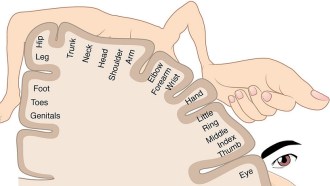
Scientists Say: Cortical homunculus
If you draw a representation of your body as seen by your brain, it’s called a homunculus. On it, parts sensitive to touch or used for fine movement are large, while others are small.
- Brain
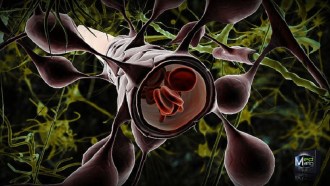
Scientists Say: Blood-brain barrier
Blood can contain nasty bacteria and other things you want to keep away from your delicate brain. The blood-brain barrier is up to the job.
- Brain
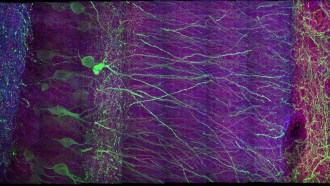
Blowing up the brain
When added to brain tissue, a chemical like one found in baby diapers expands. And it expands that brain tissue too, giving scientists a better view of how its cells connect.
- Brain
Scans show aging brains can leak
The blood-brain barrier gets leakier with age. That breakdown could contribute to memory problems.
- Brain
Screen time can mess with the body’s ‘clock’
Reading on an iPad in the evening can make it harder to fall asleep — and harder to wake up the next morning, a new study finds. The light from its screen tinkers with the body’s clock. And that could risk harming your health.
- Brain
A new ‘spin’ on concussions
Scientists have suspected that rotational forces in the brain may underlie concussions. A new study used athletic mouthguards containing sensors. Data on head movements during collisions suggest that a twisting of the brain may underlie mild brain injuries, including concussion.
- Brain
Harry Potter reveals secrets of the brain
Figuring out how the brain makes sense of what we read isn’t easy. So scientists enlisted the magical world of Harry Potter. It allowed experts to predict with great accuracy which brain areas would be active in a given part of the story.
- Brain
Nano air pollutants strike a blow to the brain
Most people think that air pollution poses the biggest risk to our lungs. In fact, pollution hits the brain too, sometimes by traveling a direct route — through our noses. These tiny pollutants can harm IQ and more.
- Brain
Banned drug reduces brain communication
Illegal drugs called “bath salts” can reduce communications among different brain regions. New research, done in rats, may explain the violent and unpredictable behavior seen in some people using these drugs.