Brain
- Health & Medicine
Identifying as a different gender
People grappling with gender identity issues (and their families) face difficult choices. As society increasingly accepts transgender youth, more research is needed to understand how better to support them.
- Brain
Soccer: Watch out for collisions!
Scientists discover that concussions among high school soccer players stem more from aggressive contact between players than from heading the ball.
- Health & Medicine
Gender: When the body and brain disagree
Researchers are working to untangle the highly complex relationship between our biology and our identity. In some individuals, a conflict can emerge, leading to a transgender identity.
- Brain
Explainer: Sometimes the body mixes up male and female
Certain medical conditions demonstrate how complicated biology can be. Being genetically male and female will not guarantee that your body won’t sometimes contain one or more features of both.
- Brain
Sugar makes mice sleepy
Sugar may amp up sleep-promoting cells in the brain, a new study in mice finds.
- Brain
To protect kids, get the lead out!
Lead poisons hundreds of thousands of children. In Chicago, experts show how the toxic metal hurts test performance in school.
- Brain
Smell test may detect autism
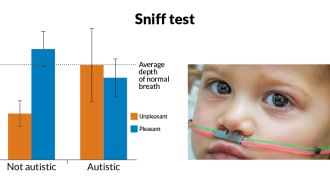
A new study finds that kids with autism sniff foul scents for as long as pleasing ones. The finding could lead to a test to diagnose the disorder.
- Animals
The bugs within us
Hordes of bacteria live inside people and other animals. This ‘microbiome’ can affect the development of the blood-brain barrier, food choices — even mating.
- Brain
Studying? Don’t answer that text!
Homework time? Put away the cell phone. Responding to texts gets in the way of learning and test-taking, teen researchers show.
- Brain
Scientists Say: MRI
MRI is a technique used to diagnose diseases and to study the body. The machine can map internal structures, all the way down to tiny blood vessels.
- Brain
Hands-free but still distracted
When people aren’t distracted, they can see a traffic light change very quickly. But a teen scientist now shows that texting — even with a hands-free device — gets dangerously slow.
- Brain
Back off, bullies!
Mental health is another reason to stop bullies. Victims of bullying are more likely to develop anxiety problems than are victims of abuse or neglect, a new study finds.