Earth
- Animals
As big animals poop out
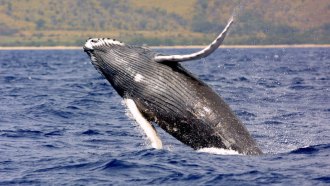
Whales move nutrients from deep ocean to surface waters. From there, nutrients move to land and fertilize continents. But the system is in trouble.
- Climate
Carbon dioxide has an unexpected effect in Antarctica
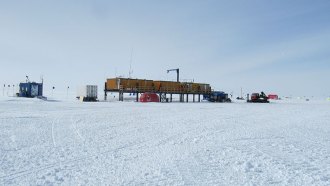
Antarctica’s frigid surface combined with excess carbon dioxide to create cooling above the remote continent, a new study finds.
- Environment
Water: Getting the salt out
A new water-cleansing technology passes electricity through a flow of salty water. This will generate a zone of fresh water that can then be collected.
- Agriculture
Banana threat: Attack of the clones
Researchers find that disease-causing fungi — all clones of one another — will continue to infect banana plants unless new steps are taken to stop their spread.
- Environment
Engineers consider liquid salt to generate power
A new type of power plant, a molten salt reactor, might provide electricity in a cleaner and safer way than current nuclear technology.
- Animals
Scientists identify plankton from space
Plankton are often too tiny for our eyes to see. But when huge numbers bloom at once, they now can be ID’d from space, a new study shows.
- Climate
Concerns about Earth’s fever
Burning fossil fuels is causing the planet to heat up, causing weather patterns to change, sea levels to rise and diseases to spread.
- Climate
Explainer: How scientists know Earth is warming
Scientists can calculate global temperatures, both present and past. Their findings show that the planet is rapidly heating up.
- Chemistry
Some 3-D printing can leave toxic taint
The ”ink” inside some 3-D printers can leave toxic traces. In tests, these chemicals harmed baby fish. But lighting could render the parts safer.
- Animals
Profile: A human touch for animals
Temple Grandin uses her own autism to understand how animals think. The animal scientist is famous for fostering the humane treatment of livestock.
- Animals
Taking attendance with eDNA
Environmental DNA, or eDNA, tells biologists what species are in an area — even when they’re out of sight.
- Animals
Wildlife forensics turns to eDNA
Environmental DNA, or eDNA, tells biologists what species have been around — even when they’re out of sight or have temporarily moved on.