Ecosystems
- Animals
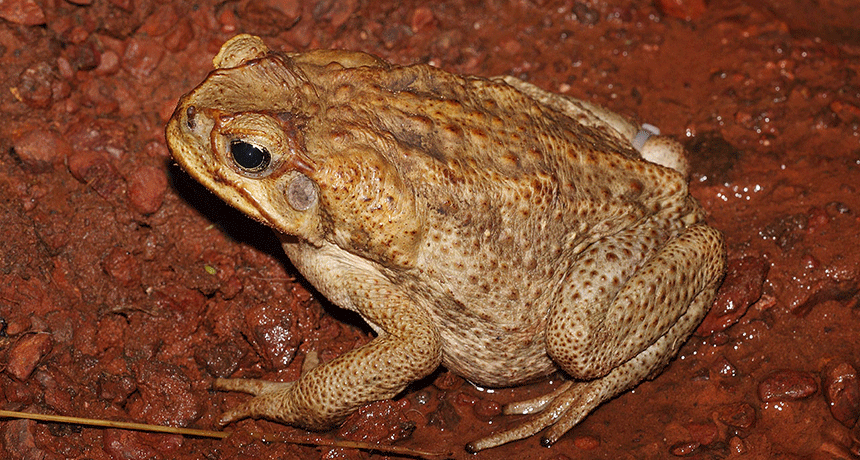
Scientists Say: Invasive species
These are foreign species that are causing problems for native organisms and ecosystems.
- Animals
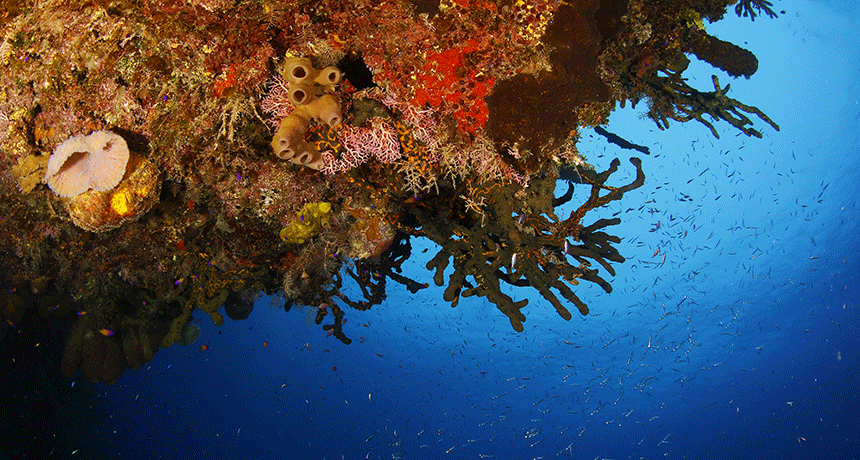
Exploring the mysteries of Cuba’s coral reefs
Researchers are studying the mysterious lives of creatures in and near Cuba’s coral reefs. What they learn could help protect ocean life globally.
- Animals
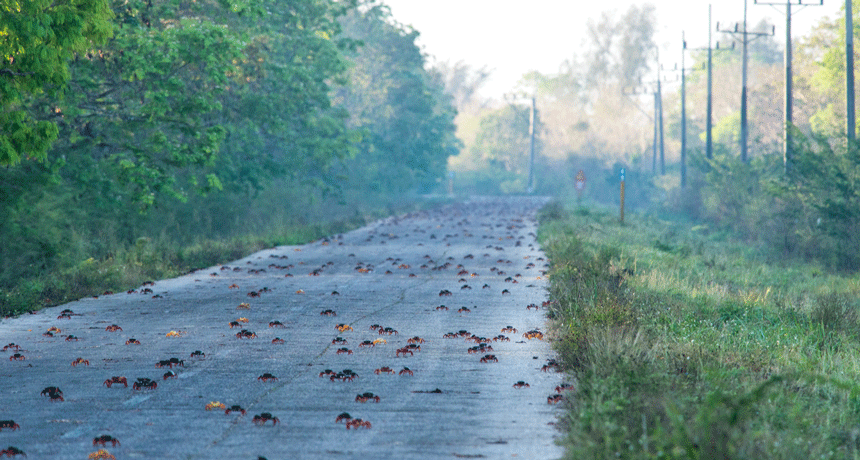
Migrating crabs take their eggs to the sea
Cuba’s colorful land crabs connect swamp and sea with their yearly mass migrations. Protecting their routes can help other animals too.
- Ecosystems
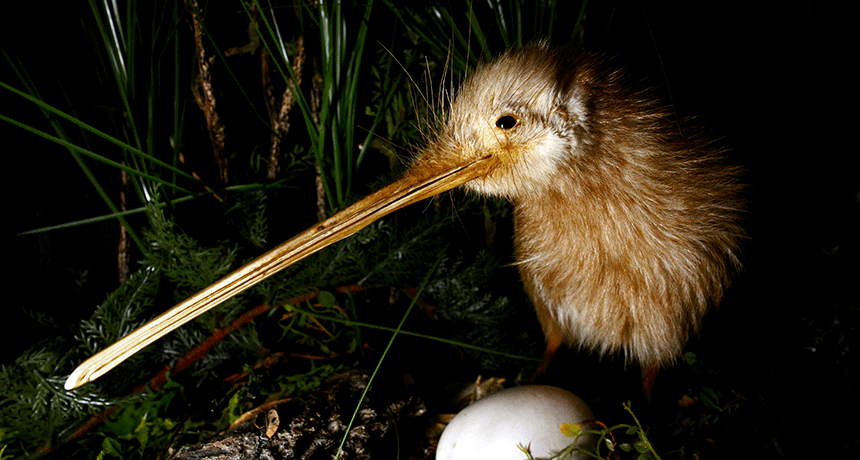
Can DNA editing save endangered species?
Scientists may be able to help endangered species by changing the genes of a whole population of wild animals. But some question whether that is wise.
- Animals
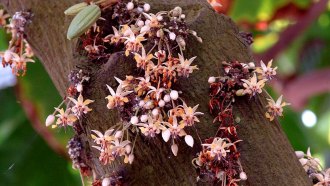
Blooms on ‘chocolate’ tree are crazy-hard to pollinate
The cacao trees must be pollinated or those seeds that give us chocolate will never form. The rub: The trees’ flowers challenge all but some of the tiniest pollen-moving insects.
- Climate
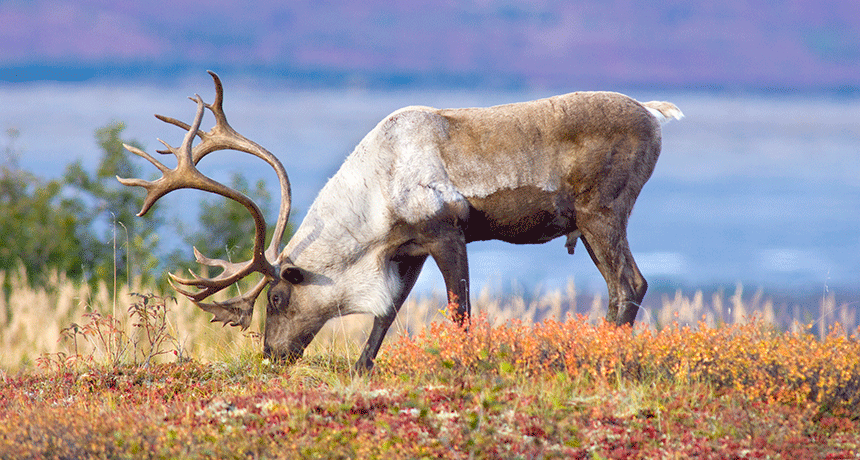
Here’s why scientists have been fertilizing the Arctic
For more than 30 years, scientists have been fertilizing small parcels of Arctic tundra. Here’s what happens when you push an ecosystem to the brink.
- Ecosystems
Scientists Say: Bog
Bogs are a type of wetland in which partially decayed plants sink down and form peat.
- Animals
Earthworm invaders may be stressing out some maples
Worms are great for soil when ecosystems have evolved with them. But in earthworm-free places, like parts of the U.S. Upper Midwest, they can cause problems for plants and animals.
- Earth
Expedition finds South Pacific plastic patch bigger than India
A giant, floating ‘garbage patch’ in the South Pacific off Chile’s coast is mostly tiny bits of plastic.
- Animals
As trees come down, some hidden homes are disappearing
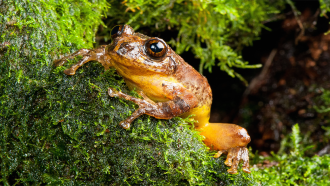
Animals such as frogs, toucans and possums live in tree hollows. But as people have cut down trees, a wildlife housing shortage has developed in some places.
- Ecosystems
Cool Jobs: Science deep beneath the waves
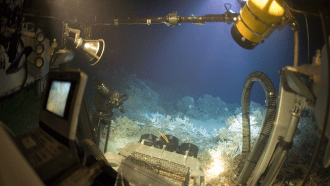
These scientists probe the sea’s depths, its strange inhabitants, the movement of water and how life evolves in extremes.
- Animals
Wildebeest drownings feed a river ecosystem for years
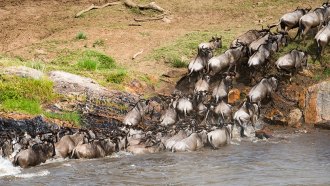
Hundreds or thousands of wildebeests can drown at a time in the Mara River. Those carcasses, however, will feed a succession of other animals.