Humans
- Health & Medicine
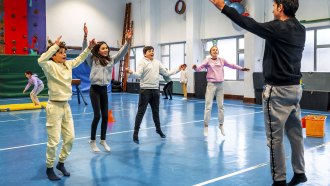
Short exercise workouts can boost classroom performance
When students spend just nine minutes doing high-intensity interval exercises, their brains can work more efficiently, new data show.
- Health & Medicine
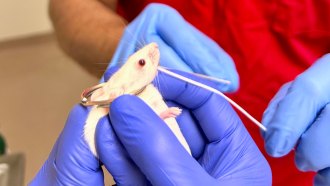
Floss delivers flu vaccine to mice needle-free
The creative solution may one day allow people to vaccinate themselves — no injection needed.
- Health & Medicine
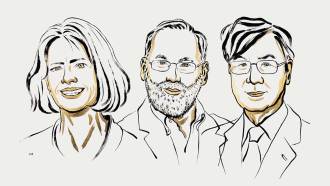
Finding cells that stop our body from attacking itself lands a Nobel
Shimon Sakaguchi won for discovering T-reg immune cells. Mary Brunkow and Fred Ramsdell won for showing the cells’ role in autoimmune disease.
- Environment
During heat waves, trees spew chemicals that worsen air pollution
New data point to how heat waves and other climate change will make it harder to curb ozone and other types of toxic air pollution — even outside of cities.
- Archaeology
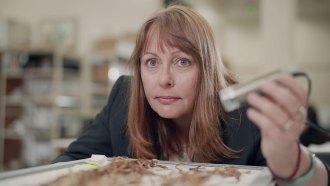
Knotted strands of 500-year-old hair tell a surprising story
Used in a device called a khipu, the hair reveals the owner’s simple diet. Those data now suggest that in Incan society, even some commoners kept records.
- Ecosystems
Scientists Say: Transplant
Transplant means to move something from one place to another. A transplant can involve something as small as a cell or as large as a whole population.
- Health & Medicine
Seeing sick faces revs up our immune system, new data show
It activates parts of the brain that detect threats and boosts the activity of at least one type of immune cell.
- Humans
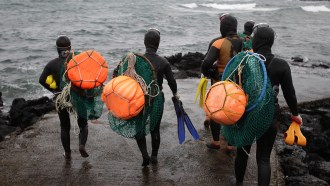
These Korean women spend more time underwater than any other humans
At an average age of 70, these divers in South Korea still forage in the sea for up to 10 hours a day. They spend more than half of that time underwater.
- Humans
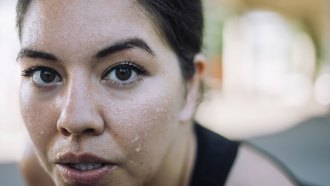
Forget droplets. Here’s how sweat really forms
This is the most detailed look yet at how we perspire. Beads of sweat are out, puddling is in.
- Archaeology
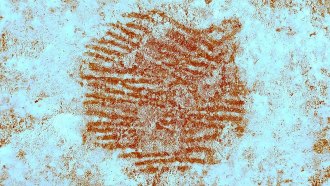
This may be the oldest, most complete Neandertal fingerprint ever seen
The print appears in a red ochre dot, which a Neandertal left on the ‘nose’ of a facelike rock roughly 43,000 years ago.
- Tech
Get a sneak peek at the tech you may use in the future
Holograms, 3-D printed clothing, personal robots — these technologies and more might one day transform your daily life.
- Health & Medicine
Sleeping in — but not too much — may ease anxiety
Getting up to two hours of weekend catch-up sleep lowers anxiety in teens, new research shows.