Life
- Health & Medicine
Stress for success
Stress and anxiety can lead to serious mental and behavioral problems. Identifying stressors can help people cope with anxiety. Even better, viewing stress as a strength can tone down anxious feelings and boost productivity.
- Animals
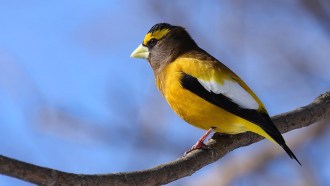
Finding out why birds are out of range
Sometimes people see large numbers of birds outside of their normal range. A student examined how to predict these excursions.
- Health & Medicine
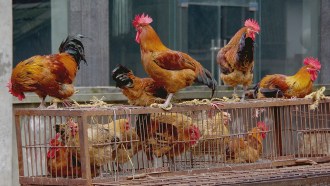
Chickens spread latest deadly bird flu
A new bird flu virus threatens to spread outside of China. Experts traced the germ to markets where live chickens are sold.
- Brain
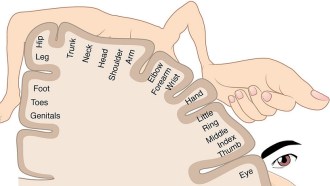
Scientists Say: Cortical homunculus
If you draw a representation of your body as seen by your brain, it’s called a homunculus. On it, parts sensitive to touch or used for fine movement are large, while others are small.
- Animals
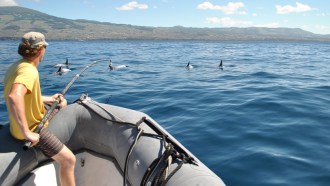
The social lives of whales
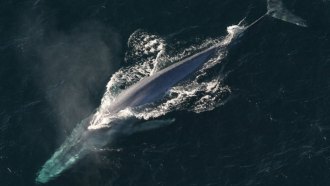
New tools are giving scientists an unprecedented glimpse into the behaviors of whales and dolphins. And these new data are upending long-held assumptions.
- Animals
Where an ant goes when it’s gotta go
The black garden ant has been spotted defecating inside its own nest. Scientists now characterize these spots as ant toilets.
- Animals
Penguins? How tasteless
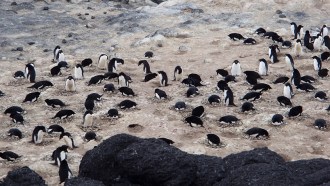
Penguins may look all dressed up in tuxedo-wear, but their taste buds are the bare minimum. This means that the birds will never sense more than a hint of their meals’ true flavors.
- Brain
Scientists Say: Blood-brain barrier
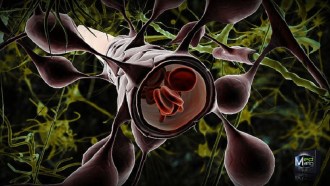
Blood can contain nasty bacteria and other things you want to keep away from your delicate brain. The blood-brain barrier is up to the job.
- Animals
Eyelashes: The ‘sweet’ length
New mathematical and aerodynamics studies find what seems to be the optimal length for eyelashes — the length that protects best. And surprise: Longer is not always better.
- Genetics
Mice can teach us about human disease
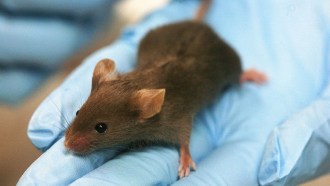
Humans and mice look and act very differently. But 85 to 90 percent of their genes are the same or quite similar. So an international group of scientists is deciphering the instructions in mouse genes to help us better understand our own.
- Animals
Ocean animals have mushroomed in size
Compared to a half-billion year ago, sea creatures are, on average, roughly 150 times bigger, a new study finds.
- Animals
Cats and foxes are eating up Australia’s mammals
Since the arrival of Europeans in Australia, a startling number of mammal species have disappeared. A new study puts much of the blame on cats and foxes introduced by the early settlers.